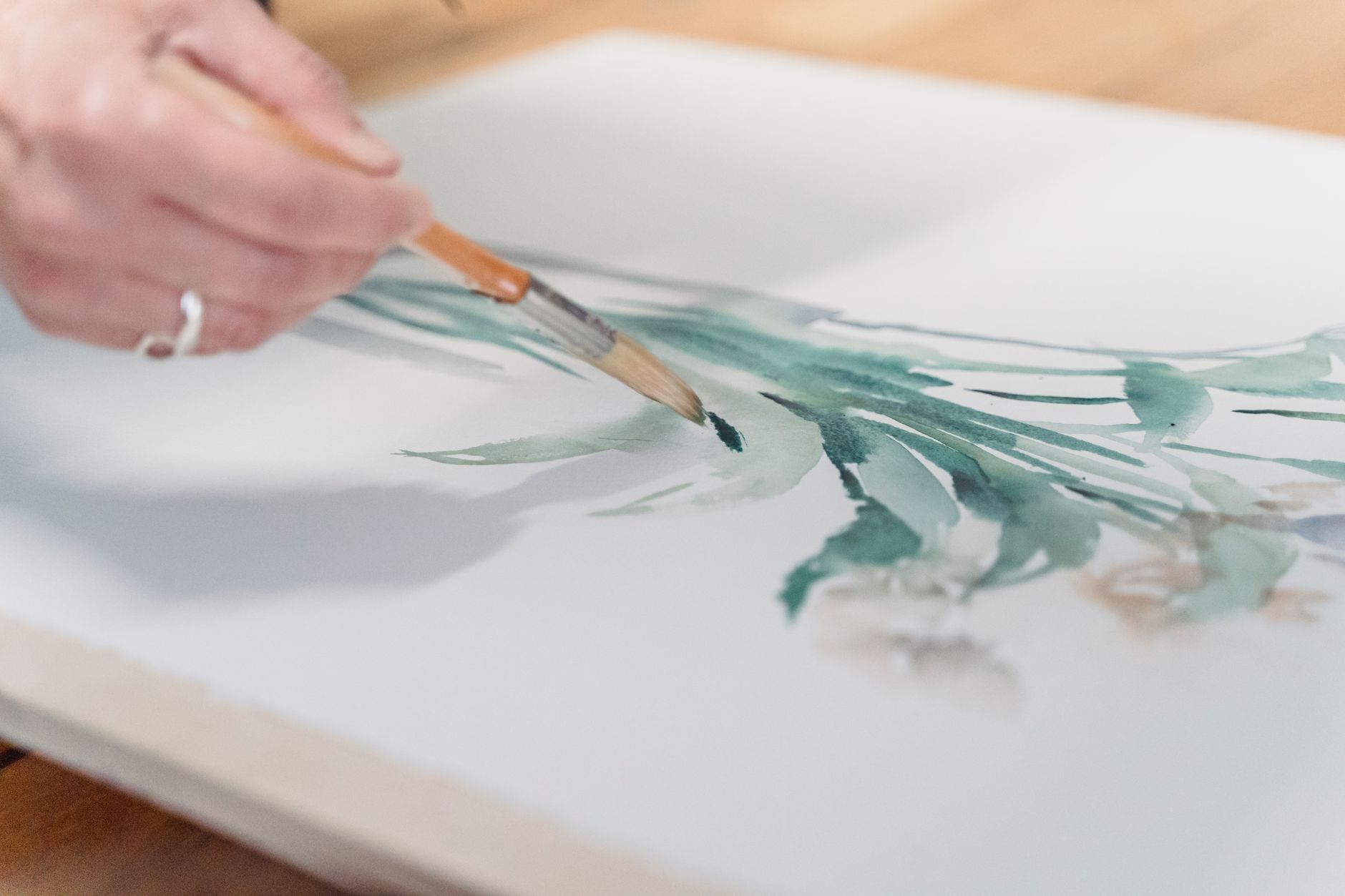
Watercolour painting is a type of painting that uses pigment mixed with water to create soft, transparent, and often delicate artwork. The paint is usually applied to paper with a brush, and the amount of water you use changes how light, dark, smooth, or loose the colour looks.
It’s a popular beginner art hobby because you don’t need lots of space or expensive equipment to get start. A small set of paints, a brush, water, and suitable paper are enough for simple practice.
How Does Watercolour Painting Work?
Watercolour paint is activated with water. When you add water to the paint, it becomes fluid and can be brushed onto paper. More water creates a lighter, softer colour. Less water creates a stronger, more concentrated colour.
Unlike some other types of paint, watercolour is usually transparent. This means the white of the paper often shows through the paint, helping to create light areas and a glowing effect.
Watercolour can be controlled carefully, but it can also move and blend in surprising ways. This is part of what makes it attractive, but also part of what beginners can find tricky.
What Can You Paint With Watercolours?
You can use watercolours to paint many different subjects, including:
- Flowers
- Landscapes
- Skies
- Trees and leaves
- Animals
- Buildings
- Simple patterns
- Cards
- Bookmarks
- Illustrations
- Abstract designs
- Loose colour washes
- Nature journals
Beginners often start with simple subjects like leaves, flowers, skies, or basic shapes because these allow you to practise colour, water control, and brush movement without needing lots of detail.
Is Watercolour Painting Good for Beginners?
Yes, watercolour painting can be good for beginners, especially if you enjoy gentle, creative, low-mess hobbies. You can start with simple exercises and small projects rather than trying to paint a detailed picture straight away.
The main challenge is in learning how much water to use. Too much water can make the paint spread more than expected. Too little water can make the paint look dry or uneven. This gets easier with practice.
Watercolour is also quite forgiving in a different way from other crafts. Even loose, imperfect paintings can look attractive because the paint naturally creates soft blends and interesting textures.
What Do You Need to Start Watercolour Painting?
To start watercolour painting, you need a few basic supplies:
- Watercolour paints
- Watercolour paper
- Paintbrushes
- A jar of clean water
- A palette or mixing area
- Paper towel or cloth
- A pencil and eraser, if sketching first
The most important item is usually the paper. Ordinary printer paper is often too thin and can wrinkle or tear when wet. Watercolour paper is designed to handle water better.
You do not need a huge paint set at the beginning. A small beginner set with basic colours is usually enough.
Do You Need Special Paper for Watercolour?
Yes, watercolour paper is strongly recommended. Because watercolour uses a lot of water, the paper needs to be thicker and more absorbent than normal paper.
Watercolour paper helps prevent problems such as:
- Buckling
- Tearing
- Paint soaking through
- Colours looking dull
- The surface breaking down
Beginners don’t need the most expensive paper, but using proper watercolour paper will usually make the experience much easier and less frustrating.
What Are Watercolour Pans and Tubes?
Watercolour paint often comes in pans or tubes.
Watercolour pans are small dry blocks of paint. You add water to the surface with a brush to activate the colour. Pans are tidy, portable, and good for beginners.
Watercolour tubes contain soft, wet paint. They are useful for mixing larger amounts of colour and can be very vibrant, but they may feel slightly less convenient when you are just starting.
For most beginners, a small pan set is a simple and practical choice.
Is Watercolour Painting Expensive?
Watercolour painting doesn’t have to be expensive. You can start with a small paint set, a few brushes, and a pad of watercolour paper.
It can become more expensive if you buy professional paints, specialist brushes, high-quality cotton paper, palettes, masking fluid, and lots of colours. However, beginners do not need all of that straight away.
A sensible starter setup would be:
- One beginner watercolour set
- One round brush
- One pad of watercolour paper
- A water jar
- A paper towel
That is enough to begin practising.
Is Watercolour Painting Messy?
Watercolour painting is usually less messy than many other types of painting. It uses water rather than strong-smelling solvents, and the supplies are easy to clean up.
However, it can still be a little messy if water spills, paint splashes, or wet paper is left on a table. It is a good idea to protect your surface with scrap paper, a mat, or an old cloth.
Because the supplies are small and easy to pack away, watercolour is a good hobby for small spaces.
What Are Basic Watercolour Techniques?
Some basic watercolour techniques include:
- Wet-on-dry: painting wet paint onto dry paper for more controlled marks.
- Wet-on-wet: painting onto wet paper so the colour spreads and blends softly.
- Wash: covering an area with a light layer of colour.
- Layering: adding colour in stages after earlier layers dry.
- Lifting: removing some wet paint with a brush, cloth, or paper towel.
- Dry brush: using less water to create texture.
- Colour mixing: combining colours on a palette or directly on the paper.
Beginners don’t need to learn every technique at once. Start off with simple washes and basic colour mixing, then try wet-on-wet and layering as you become more confident.
What Is the Easiest Watercolour Project?
Easy beginner watercolour projects include:
- Simple leaves
- Loose flowers
- A sunset sky
- Colour swatches
- Bookmarks
- Greeting cards
- Abstract colour shapes
- Simple trees
- Clouds
- Small landscapes
A good first project is a simple colour wash or a loose flower. These help you practise water control without needing perfect drawing skills.
Common Beginner Watercolour Mistakes
Common beginner mistakes include:
- Using too much water
- Using paper that is too thin
- Overworking the paint
- Trying to fix every mark
- Using too many colours at once
- Not letting layers dry
- Expecting complete control
- Using brushes that are too stiff or too small
One useful beginner tip is to let watercolour behave like watercolour. It will spread, blend, and dry slightly differently from how it looks when wet. That is part of the process.
Is Watercolour the Same as Acrylic Paint?
No, watercolour and acrylic paint are different.
Watercolour is usually transparent and is activated with water. It soaks into the paper and creates soft, light effects.
Acrylic paint is usually more opaque and dries into a more solid, plastic-like layer. It can cover mistakes more easily than watercolour, but it also has a different look and texture.
Watercolour is often better for soft washes, delicate colours, and portable painting. Acrylic is better for bolder, more opaque layers.
Who Might Enjoy Watercolour Painting?
Watercolour painting may suit you if you enjoy gentle, creative, and slightly unpredictable crafts. It is especially good if you like colour, nature subjects, sketchbooks, cards, or relaxed painting sessions.
It may also be a good hobby if you want something:
- Affordable to start
- Low mess
- Suitable for small spaces
- Relaxing
- Easy to pack away
- Good for cards and gifts
- Possible to practise in short sessions
However, watercolour may feel frustrating if you want total control straight away. It is better to treat early paintings as practice and enjoy the effects the paint creates.
Final Thoughts
Watercolour painting is a beginner-friendly art hobby that uses paint, water, brushes, and paper to create soft and colourful artwork. It can be simple to start, but it also has plenty of techniques to learn over time.
If you are new to watercolour, begin with a small paint set, proper watercolour paper, and a simple project such as leaves, flowers, or a colour wash. Focus first on learning how the paint moves with water. Once you understand that, watercolour becomes much more enjoyable.
Leave a Reply