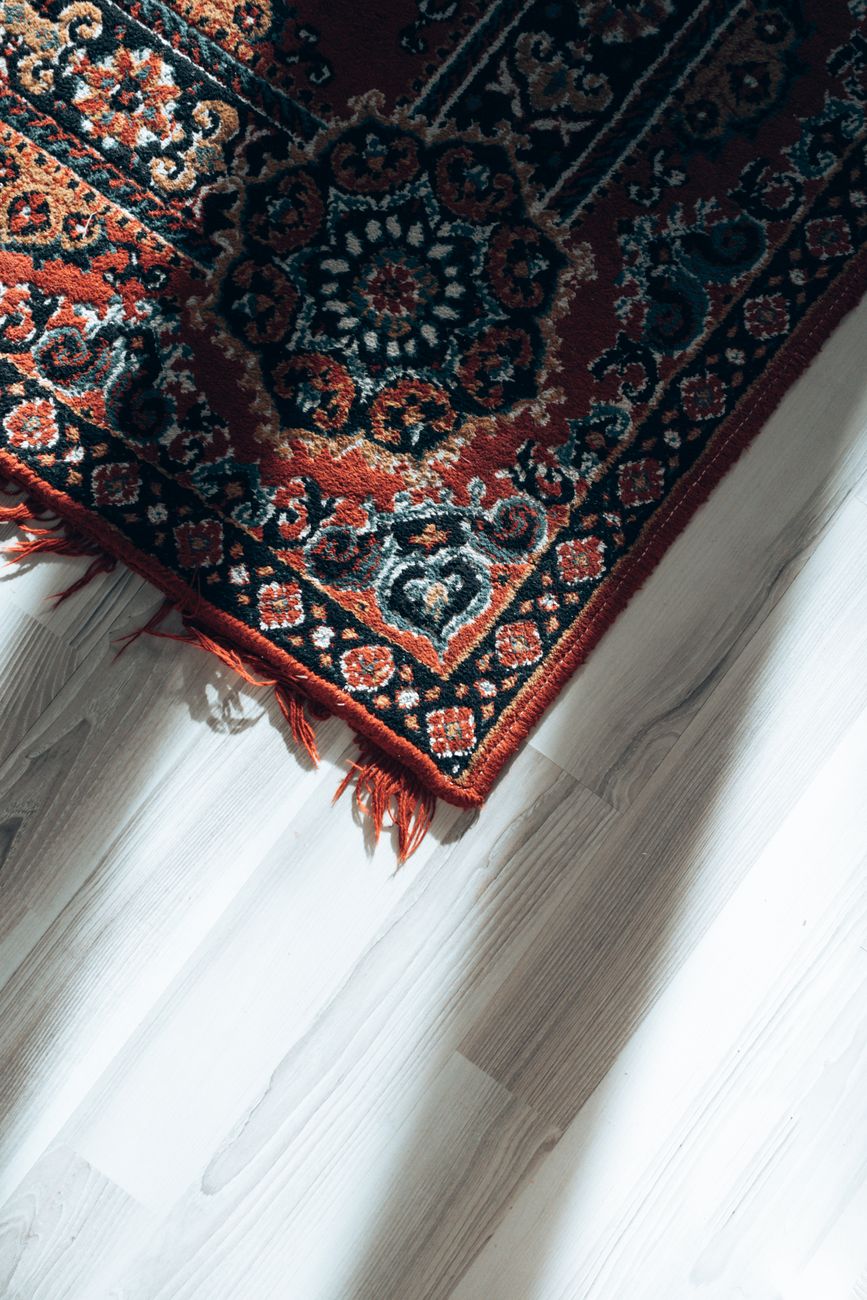
Rug tufting is a textile craft where yarn is pushed through a backing fabric to create rugs, wall hangings, cushions, mats, and other soft decorative pieces. It is best known for making custom rugs with bold shapes, colours, lettering, and graphic designs.
Most modern rug tufting is done with a tufting gun, which quickly punches loops or cut strands of yarn through fabric stretched tightly on a frame. Once the design is finished, the back is glued, covered, trimmed, and finished so the rug holds together.
How Does Rug Tufting Work?
Rug tufting works by feeding yarn through a tufting gun and pushing it into a stretched fabric backing. The tufting gun moves quickly, creating rows of yarn that build up the design.
The basic process is:
- Stretch tufting cloth onto a frame.
- Draw or project the design onto the fabric.
- Thread the tufting gun with yarn.
- Tuft the yarn into the fabric, following the design.
- Apply backing glue to secure the yarn.
- Add a secondary backing fabric.
- Trim, carve, and finish the rug edges.
The front of the rug shows the soft yarn surface, while the back is sealed so the yarn stays in place.
What Can You Make With Rug Tufting?
Rug tufting is most often used for rugs, but it can also be used for decorative textile projects.
Common rug tufting projects include:
- Small rugs
- Wall hangings
- Floor mats
- Cushions
- Chair pads
- Mirror frames
- Pet mats
- Decorative panels
- Logo rugs
- Personalised name rugs
Beginners usually start with a small rug or wall hanging because large rugs take more time, yarn, glue, and space.
What Do You Need for Rug Tufting?
Rug tufting needs more equipment than many beginner crafts. A basic setup might include:
- A tufting gun
- A tufting frame
- Primary tufting cloth
- Yarn
- Rug backing glue
- Secondary backing fabric
- Scissors
- A yarn threader
- Clippers or rug trimmers
- A projector or marker for designs
- A staple gun or tacks for the frame
The tufting gun is the main tool, but the frame is also important. The fabric needs to be stretched tightly so the gun can move through it properly.
What Yarn Is Used for Rug Tufting?
Many rug tufters use acrylic, wool, cotton, or blended yarn. The best yarn depends on whether the piece is decorative or practical.
Acrylic yarn is often cheaper and comes in many colours, which makes it useful for beginner practice and wall hangings. Wool yarn is usually more durable and is often preferred for rugs that will be walked on.
For a floor rug, durability matters more. For a wall hanging, colour and texture may be more important than hard wear.
Is Rug Tufting Difficult?
Rug tufting is not impossible for beginners, but it does have a bit of a learning curve. The tufting gun moves quickly, so it takes practice to control the speed, direction, pressure, and line spacing.
Common beginner problems include:
- Uneven lines
- Holes in the backing fabric
- Yarn falling out
- Loose areas
- Overcrowded stitches
- Wobbly curves
- Messy edges
Most beginners improve quickly once they practise on simple shapes. Straight lines and basic blocks of colour are easier than detailed lettering or tiny curves.
Is Rug Tufting Expensive?
Rug tufting can be more expensive to start than other crafts because it requires a tufting gun, frame, backing cloth, yarn, glue, and finishing tools.
The cost depends on the size of the projects you want to make. Larger rugs need more yarn, more fabric, more glue, and a bigger frame.
For beginners, it’s sensible to start small. A small wall hanging or mat lets you learn the process without wasting too many materials.
Is Rug Tufting the Same as Punch Needle?
Rug tufting and punch needle are similar because both push yarn through fabric to create a textured surface. The main difference is the tool and the speed.
Punch needle uses a handheld punch needle tool and is usually slower and more manual. Rug tufting usually uses a powered tufting gun, which makes it much faster and better for larger pieces.
Punch needle can be easier and cheaper to try first. Rug tufting is better if you want to make larger rugs or bold custom designs.
Is Rug Tufting Safe?
Rug tufting uses a powered tool with a moving needle, so safety matters. Beginners should keep their hands away from the front of the tufting gun while it is running and always turn it off when adjusting yarn or fabric.
It’s also important to work in a clear space, keep cables out of the way, and follow the instructions for the specific tufting gun. Trimming and carving rugs can also create fluff and dust, so good ventilation and clean up are useful.
Is Rug Tufting Good for Beginners?
Rug tufting can be good for beginners who are willing to invest in the equipment and practise the technique. It’s quite a satisfying craft because you can create bold, impressive-looking pieces quite quickly once you get the hang of it.
However, it’s probably not the cheapest beginner craft. If you only want to try the general idea of yarn-on-fabric designs, punch needle may be a simpler first step. If you like the idea of making custom rugs, textile art, or colourful home décor, rug tufting can be a very rewarding hobby.
Final Thoughts
Rug tufting is the craft of creating rugs and textile pieces by pushing yarn through backing fabric, usually with a tufting gun. It can be used to make rugs, mats, wall hangings, cushions, and personalised decorative items.
For beginners, the best way to start is with a small design, a sturdy frame, suitable tufting cloth, and simple shapes. Rug tufting takes practice and equipment, but it can be a fun way to make bold, colourful, handmade pieces for your home.