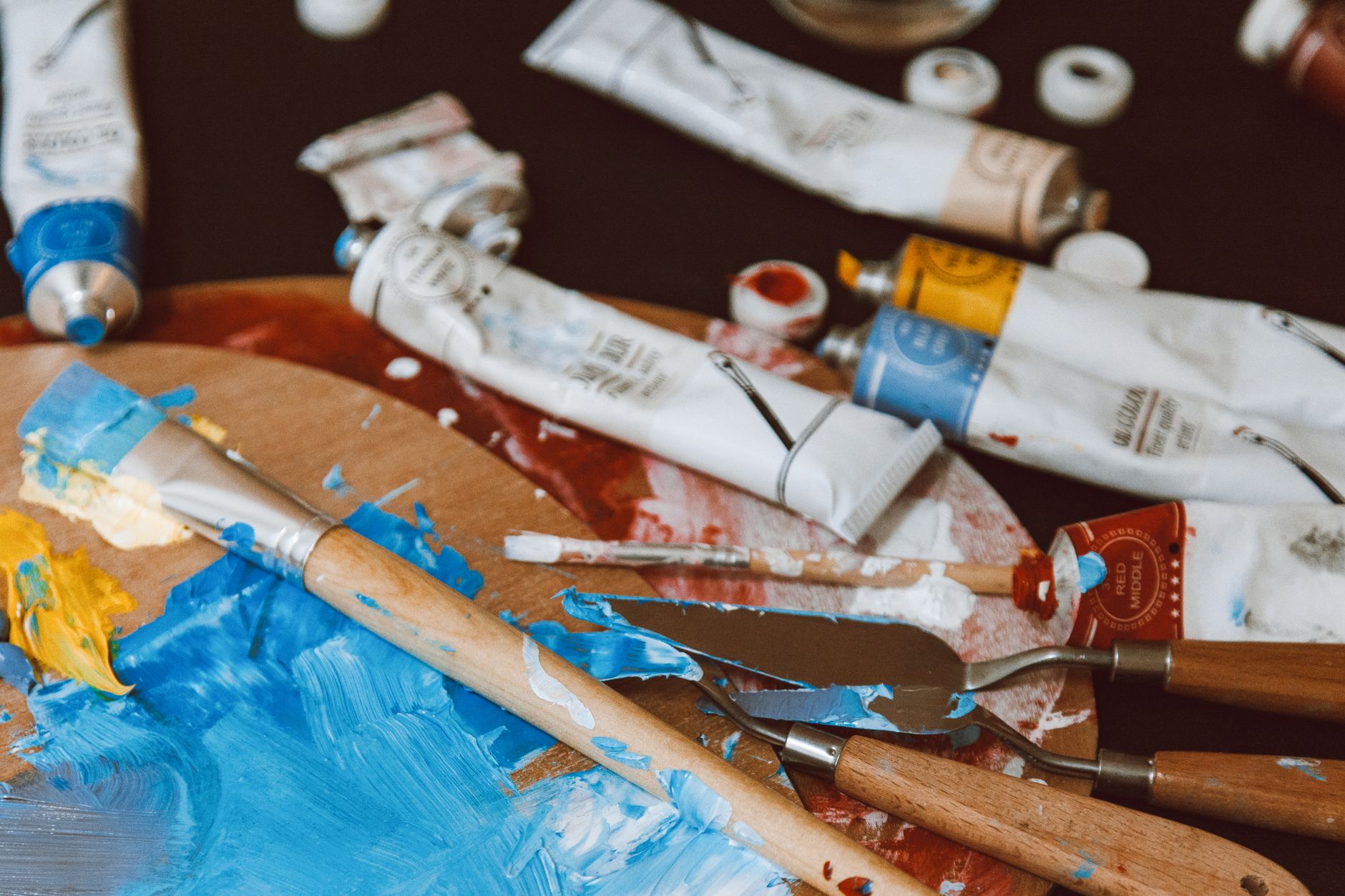
Acrylic painting is a type of painting that uses acrylic paint, a water-based paint that dries quickly and creates bold, colourful artwork. Acrylic paint can be used on paper, canvas, wood, card, and other craft surfaces.
It is a popular choice for beginners because it is easy to use, widely available, and doesn’t need you to use complicated equipment. You can start with a small paint set, a few brushes, water, and something to paint on.
How Does Acrylic Painting Work?
Acrylic paint comes out of the tube or bottle as a thick, wet paint. You can use it straight from the container for strong colour, or mix it with a little water to make it thinner and easier to spread.
Once acrylic paint dries, it becomes water-resistant. This means you can add new layers on top without disturbing the layer underneath too much. This makes acrylic painting forgiving for beginners because you can cover mistakes more easily than with some other paints.
Acrylics can be used for smooth painting, bold brush marks, textured effects, simple crafts, abstract art, and more detailed pictures.
What Can You Paint With Acrylics?
Acrylic paint can be used for many creative projects, including:
- Canvas paintings
- Abstract art
- Landscapes
- Flowers
- Animals
- Portraits
- Signs
- Bookmarks
- Greeting cards
- Painted boxes
- Wooden decorations
- Plant pots
- Craft projects
- Mixed media artwork
- Basing miniatures
Beginners often start with simple subjects such as flowers, sunsets, abstract shapes, trees, or basic patterns because these allow you to practise brush control and colour mixing without needing too much detail.
Is Acrylic Painting Good for Beginners?
Yes, acrylic painting can be very good for beginners. It’s one of the easiest types of painting to start because the supplies are simple and the paint is easy to clean up while wet.
Acrylic paint also dries quickly, which can be helpful if you want to add layers or finish a small project in one sitting. If you make a mistake, you can usually wait for the paint to dry and paint over it.
The main challenge is that acrylic paint can dry faster than beginners expect. This means you may need to work fairly quickly, use small amounts of paint at a time, or keep your brush slightly damp.
What Do You Need to Start Acrylic Painting?
To start acrylic painting, you need a few basic supplies:
- Acrylic paints
- Paintbrushes
- A canvas, acrylic paper, wood, or card
- A palette or plate for mixing
- A jar of water
- A paper towel or cloth
- A pencil, if sketching first
- An apron or old clothes
You do not need a huge set of paints at the beginning. A small beginner set with basic colours is enough to learn with.
A simple starter setup could include red, yellow, blue, white, and black paint, a few brushes, and a small canvas or pad of acrylic paper.
Do You Need a Canvas for Acrylic Painting?
No, you do not always need a canvas. Acrylic paint can be used on many surfaces, including canvas, acrylic paper, wood, cardboard, and some craft blanks.
Canvas is popular because it is strong and gives paintings a finished look. However, acrylic paper is often cheaper and easier when you are just practicing.
If you are just starting, acrylic paper or a small canvas board can be a good choice. You do not need to practise on expensive stretched canvases!
Is Acrylic Paint Expensive?
Acrylic painting can be inexpensive to start. Basic acrylic paints are widely available, and beginner sets are usually affordable.
However, it can become more expensive if you buy professional paints, many brush sizes, stretched canvases, mediums, varnishes, palettes, easels, and storage supplies. However, you do not need all of those at the beginning.
A sensible beginner setup is:
- One small acrylic paint set
- A few basic brushes
- Acrylic paper or canvas boards
- A water jar
- A mixing palette
That is enough to start learning.
Is Acrylic Painting Messy?
Acrylic painting can be a little messy, but it is manageable. The paint washes off brushes and palettes with water while it is still wet, but dried acrylic paint can be harder to remove.
It is a good idea to protect your table, wear old clothes, and rinse brushes before the paint dries on them.
Compared with some other types of painting, acrylics are fairly beginner-friendly because you do not need strong-smelling solvents. Most basic cleanup can be done with water.
What Are Basic Acrylic Painting Techniques?
Some basic acrylic painting techniques include:
- Layering: painting one layer, letting it dry, then adding another.
- Blending: mixing colours together while the paint is still wet.
- Dry brushing: using very little paint on the brush to create texture.
- Stippling: dabbing paint with the brush to make dots or texture.
- Colour mixing: combining colours to create new shades.
- Blocking in: filling large areas with simple colours before adding details.
- Glazing: using thin layers of transparent colour.
- Texture painting: applying thicker paint for raised effects.
Beginners don’t need to learn every technique at once. Start with simple colour mixing, layering, and basic brush control.
What Is the Easiest Acrylic Painting Project?
Easy acrylic painting projects for beginners include:
- A simple sunset
- Abstract colour blocks
- Flowers
- Trees
- A night sky
- A rainbow
- Simple leaves
- A beach scene
- Painted bookmarks
- Small canvas signs
A good first project is something with simple shapes and forgiving colours. Abstract paintings, skies, and flowers are often easier than realistic portraits or detailed animals.
Is Acrylic Painting the Same as Watercolour?
No, acrylic painting and watercolour painting are different things.
Acrylic paint is usually thicker, more opaque, and dries into a water-resistant layer. It can cover mistakes more easily and is good for bold colours and layers.
Watercolour paint is usually more transparent and relies on water, paper, and soft washes. It is harder to cover mistakes, but it creates delicate, light effects.
Acrylics may feel easier if you like strong colours and the ability to paint over mistakes. Watercolour may suit you if you prefer soft, loose, delicate artwork.
Common Beginner Acrylic Painting Mistakes
Common beginner mistakes include:
- Using too much paint at once
- Letting paint dry on the brush
- Not mixing enough paint for a section
- Using paper that’s too thin
- Overblending colours until they look muddy
- Trying very detailed subjects too soon
- Not letting layers dry before painting over them
- Using too many colours in one painting
A useful beginner tip is to start with a small painting and a limited colour palette. This keeps the project simpler and helps you learn how your paint behaves.
Who Might Enjoy Acrylic Painting?
Acrylic painting may suit you if you enjoy colour, creativity, and hands-on crafts. It is especially good if you want a painting hobby that is flexible, bold, and fairly easy to start.
It may also be a good choice if you want something:
- Beginner-friendly
- Affordable to start
- Good for canvas and craft projects
- Suitable for small spaces
- Easy to layer
- Colourful and expressive
- Possible to finish in short sessions
However, acrylic painting may not be ideal if you dislike quick-drying paint or want a completely mess-free hobby. It is still manageable, but you will need to clean brushes and protect your work surface.
Final Thoughts
Acrylic painting is a beginner-friendly art hobby that uses fast-drying, water-based paint to create colourful artwork on canvas, paper, wood, and other surfaces. It is easier to start than many people expect, and you don’t need a large collection of supplies.
If you are new to acrylic painting, start with a small paint set, a few brushes, and acrylic paper or a canvas board. Choose a simple project, practise basic colour mixing, and do not worry about making perfect artwork straight away. Acrylic paint is forgiving, flexible, and a good way to build painting confidence over time.
Leave a Reply