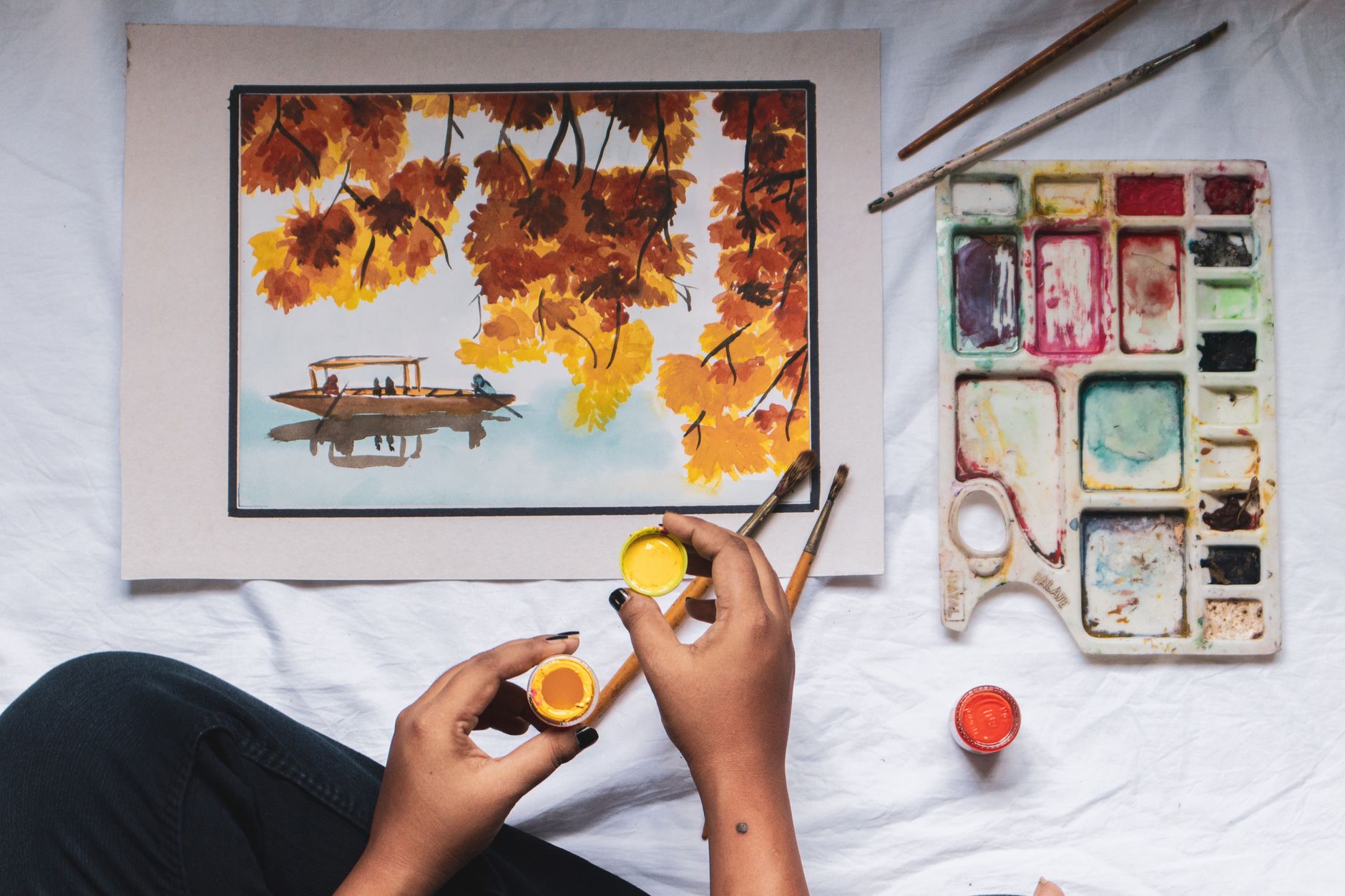
Gouache painting is a type of painting that uses opaque, water-based paint. It is similar to watercolour because it can be mixed with water, but it’s usually more solid, matte and bold in appearance. Gouache is often used for illustrations, sketchbook work, posters, design work, colour studies and small paintings.
Gouache is popular with beginners because it’s quite flexible. You can use it thinly like watercolour, or more thickly for strong, flat areas of colour. It’s also easy to correct mistakes because you can paint lighter colours over darker colours more easily than with traditional watercolour.
What Does Gouache Mean?
Gouache is a water-based paint made with pigment, binder and often extra ingredients that make it more opaque. It is sometimes described as “opaque watercolour” because it behaves like watercolour in some ways but it covers the paper more strongly.
The finish of gouache is usually matte rather than shiny. This makes it useful for artwork that needs clear blocks of colour, soft edges or a smooth illustrated look.
Gouache can be used by artists, illustrators, designers and hobby painters.
How Does Gouache Painting Work?
Gouache works by mixing the paint with water and applying it to paper or another suitable surface. The amount of water you add changes how the paint behaves.
With more water, gouache becomes thinner and more transparent. With less water, it becomes thicker, creamier and more opaque. This means you can use gouache for both soft washes and stronger painted areas.
Unlike acrylic paint, traditional gouache can usually be reactivated with water after it dries. This means you can blend it again, soften edges or make corrections later.
What Do You Need for Gouache Painting?
You don’t need many supplies to start gouache painting. A basic beginner setup might include:
- A small set of gouache paints
- Watercolour or mixed media paper
- Paintbrushes
- A palette or plate for mixing
- A jar of clean water
- Paper towel or cloth
- Pencil and eraser for sketching
- Masking tape if you want neat edges
It is usually better to start with a small set of colours rather than buying lots of paints straight away. You can learn a lot by mixing colours from a limited palette.
Is Gouache the Same as Watercolour?
Gouache and watercolour are similar because both are water-based paints. They can both be thinned with water, used on paper and cleaned up easily.
The main difference is opacity. Watercolour is usually transparent, so the white of the paper shows through the paint. Gouache is more opaque, so it can cover the paper more strongly.
Gouache also tends to dry with a flatter, matte finish. This makes it good for bold illustrations, graphic shapes and painted studies where you want stronger coverage.
Is Gouache the Same as Acrylic Paint?
Gouache is not the same as acrylic paint. Both can be used for colourful, opaque painting, but they behave differently.
Traditional gouache can usually be reactivated with water after it dries. Acrylic paint dries permanently and cannot be reactivated in the same way. Acrylic also tends to dry more plastic-like, while gouache usually has a softer matte finish.
There is also acrylic gouache, which looks matte like gouache but dries more permanently like acrylic. This can be useful, but it does not behave exactly the same as traditional gouache.
Is Gouache Good for Beginners?
Gouache is a good painting medium for beginners because it’s forgiving, compact and easy to clean up. You can paint over mistakes, adjust colours and work in layers.
It can take a little practice to control the water-to-paint ratio. If you use too much water, the paint may look streaky or weak. If you use too little water, it may feel thick and hard to spread.
A good first project is a simple colour chart, fruit study, landscape, flower painting or small sketchbook illustration.
What Can You Paint With Gouache?
Gouache can be used for many different types of artwork. Common gouache painting ideas include:
- Landscapes
- Flowers and plants
- Animals
- Food illustrations
- Pattern designs
- Colour studies
- Sketchbook pages
- Portrait studies
- Greeting card designs
- Decorative posters
Because gouache is good for flat colour and clear shapes, it works especially well for illustrative styles.
What Paper Do You Use for Gouache?
Gouache is usually used on watercolour paper or mixed media paper. The paper needs to be thick enough to handle water without buckling too much.
Smooth paper can be useful for detailed illustration, while textured paper can give paintings a more traditional art look.
Very thin printer paper is not ideal because it can wrinkle, tear or become soggy when wet paint is added.
Does Gouache Dry Lighter or Darker?
Gouache can change slightly as it dries. Dark colours may dry a little lighter, while light colours may dry slightly darker. This can surprise beginners at first.
The best way to understand your paints is to make a small colour chart and let it dry fully. This helps you see how each colour looks once it is dry, rather than judging it only while wet.
Why Do People Like Gouache Painting?
People like gouache because it gives strong colour without needing a complicated setup. It is less transparent than watercolour, but less permanent and plastic-like than acrylic.
Gouache is also useful for sketchbooks because it can create finished-looking studies on a small scale. You can use it for quick experiments, neat illustrations or more detailed paintings.
It is a good choice if you enjoy colour, design, illustration and painting in layers.
Final Thoughts
Gouache painting is a water-based painting technique that uses opaque, matte paint. It is similar to watercolour, but usually gives stronger coverage and bolder colour.
For beginners, gouache is a good medium because it is flexible and forgiving. You can use it thinly with water, build up thicker layers, paint over mistakes and experiment with different styles.
A small set of gouache paints, suitable paper and a few brushes is enough to get started. Once you understand how much water to use, gouache can become a very enjoyable and versatile painting medium.