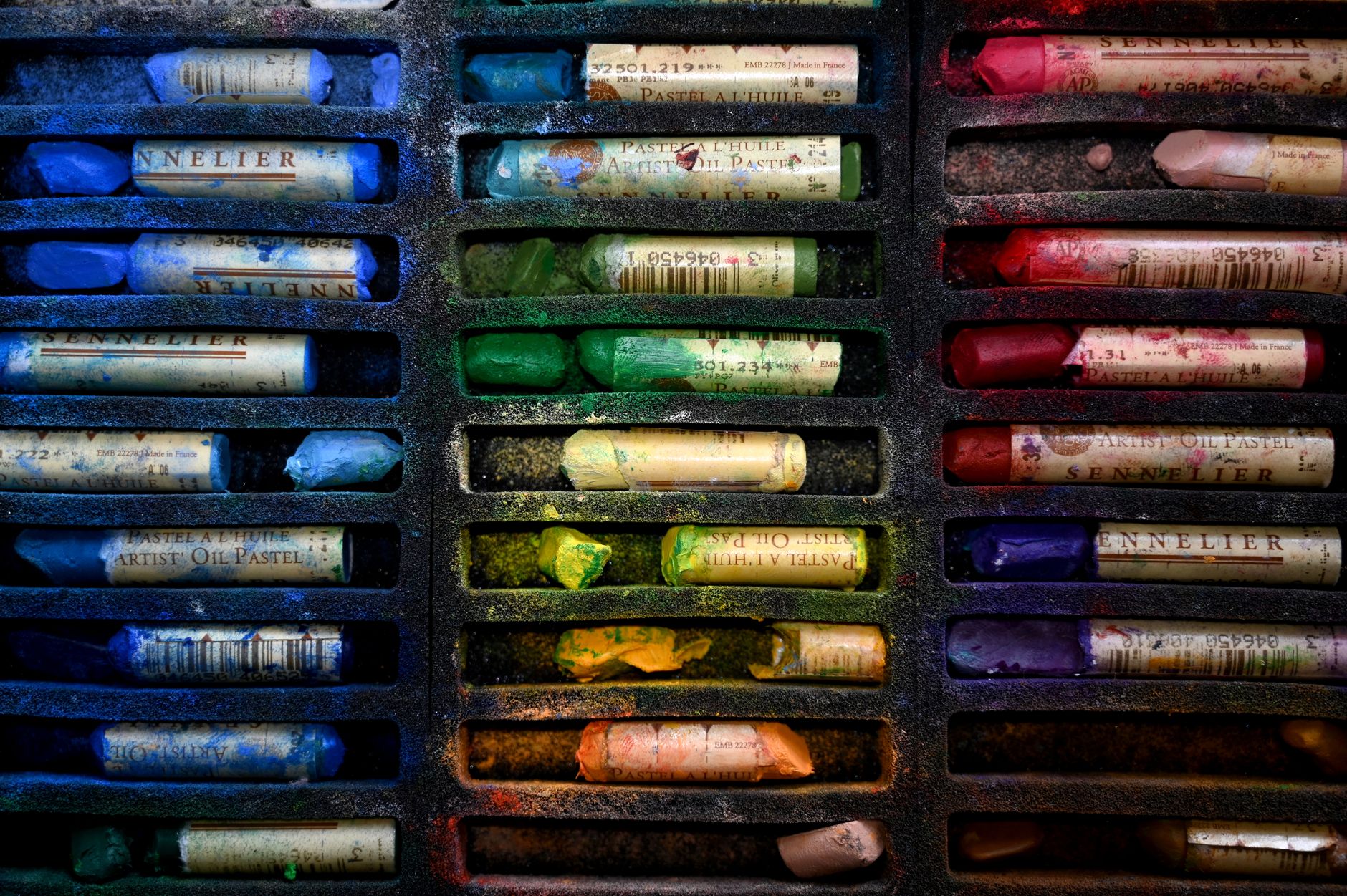
Oil pastel art is a drawing and painting technique that uses soft, waxy sticks of colour. Oil pastels look a little bit like crayons, but they usually have richer colour, a smoother texture and stronger blending potential.
They are often used for landscapes, flowers, portraits, animals, still life drawings, abstract art and sketchbook work. Oil pastels are popular with beginners because they are easy to use, colourful and don’t need water, brushes or complicated equipment.
What Does Oil Pastel Mean?
Oil pastels are art materials made from pigment mixed with a non-drying oil and wax binder. This gives them a creamy, slightly slippery texture.
Unlike soft pastels, oil pastels are not dry and powdery. They don’t create as much dust, and they stick to the paper more firmly. Unlike paint, they don’t need mixing with water or solvents before use.
Oil pastels can be used for quick colouring, bold marks, blending, layering and more painterly effects.
How Does Oil Pastel Art Work?
Oil pastel art works by applying colour directly onto paper or another suitable surface. You can press lightly for a softer mark or press harder for stronger colour.
Oil pastels can be layered over each other, blended with fingers or tools, and used to create thick, expressive marks. They can also be scratched back to reveal colours underneath, which is called sgraffito.
Because they are waxy and oily, oil pastels don’t fully dry in the same way that paint does. Finished artwork may stay slightly smudgeable, so it needs to be stored very carefully.
What Do You Need for Oil Pastel Art?
You don’t need many supplies to start oil pastel art. A simple beginner setup might include:
- A small set of oil pastels
- Drawing paper, mixed media paper or pastel paper
- Scrap paper for testing colours
- Paper towel or cloth
- Cotton buds or blending stumps
- Pencil for sketching
- Fixative or protective paper, if needed
- A folder or sketchbook for storage
A small beginner set is enough to start. You don’t need a huge range of colours straight away because oil pastels can be layered and blended.
Is Oil Pastel Art Easy for Beginners?
Oil pastel art is very beginner-friendly because the materials are simple and direct. You can pick up a pastel and start drawing straight away.
They are easier to control than paint in some ways because there is no water, drying time or brush cleaning. They are also less dusty than soft pastels.
The main challenge is that oil pastels can feel messy and thick. Fine details can be harder than with coloured pencils, and colours can become muddy if too many are blended together.
What Paper Do You Use for Oil Pastels?
Oil pastels work best on paper with a little texture. The texture helps grip the pastel and hold the colour.
Good surfaces for oil pastel art include:
- Mixed media paper
- Pastel paper
- Textured drawing paper
- Watercolour paper
- Card
- Canvas paper
Very smooth printer paper can work for practice, but it may not hold many layers. For better results, use thicker paper that can handle pressure and blending.
Can You Blend Oil Pastels?
Yes, oil pastels can be blended. Blending is one of the main reasons people enjoy using them.
You can blend oil pastels with:
- Your fingers
- Cotton buds
- Blending stumps
- Tissue
- Paper towel
- A soft cloth
- Another lighter pastel
Some artists use solvents to blend oil pastels, but beginners don’t need to start with this. Finger blending and layering are enough for simple projects.
What Can You Draw With Oil Pastels?
Oil pastels can be used for many different art projects. Popular oil pastel ideas include:
- Sunsets
- Flowers
- Fruit
- Landscapes
- Seascapes
- Animals
- Portraits
- Abstract patterns
- Still life drawings
- Trees and leaves
- Night skies
- Simple sketchbook studies
Oil pastels are especially good for bold colour, expressive marks and soft blended effects.
Are Oil Pastels the Same as Soft Pastels?
Oil pastels and soft pastels are not the same thing. Soft pastels are dry and powdery, whilst oil pastels are waxy and creamy.
Soft pastels are very blendable and can create delicate, velvety effects, but they create dust and smudge easily. Oil pastels are less dusty and more solid, but they can feel heavier on the paper.
Both can create colourful artwork, but they behave differently.
Are Oil Pastels the Same as Crayons?
Oil pastels are similar to crayons in shape, but they are not exactly the same. Crayons are usually harder and waxier, while oil pastels are softer, richer and easier to blend.
Oil pastels usually give stronger colour than children’s crayons. They can also be layered more heavily and used for more painterly effects.
For beginners, oil pastels can feel like a step up from crayons while still being simple to use.
Do Oil Pastels Dry?
Oil pastels do not fully dry like acrylic paint, watercolour or gouache. Because they contain oil and wax, the surface may remain slightly soft or smudgeable.
This means finished oil pastel art should be protected. You can place glassine paper, tracing paper or another protective sheet over the artwork when storing it.
Some fixatives are made for oil pastels, but not every fixative works well with them. It is best to test on a small sample first.
Is Oil Pastel Art Messy?
Oil pastel art can be a little messy because the sticks are soft and can transfer colour to your hands. However, it is usually less messy than paint and less dusty than soft pastels.
To keep things cleaner:
- Keep a paper towel nearby
- Wipe your fingers between colours
- Peel the paper wrapper back gradually
- Use scrap paper under your hand
- Store pastels in a tray or box
- Protect finished artwork from smudging
The mess is manageable, especially if you work on a small project.
Why Do People Like Oil Pastel Art?
People enjoy oil pastels because they are bright, simple and satisfying to use. The colour goes down quickly, and you can build up strong effects without needing many tools.
Oil pastels are also good for expressive art. You can make bold lines, soft blends, thick layers and textured marks.
They are a good choice if you want an art material that feels more colourful and painterly than pencils, but less complicated than paints.
Final Thoughts
Oil pastel art is a colourful drawing and painting technique that uses soft, waxy sticks of pigment. Oil pastels are easy to start, beginner-friendly and useful for bold, expressive artwork.
For beginners, a small set of oil pastels and some textured paper is enough to begin. Start with simple subjects like flowers, sunsets, fruit or abstract patterns, and practise blending and layering colours.
Oil pastels can be a little messy, but they are flexible, fun and a good choice for anyone who wants to explore colour without needing a full painting setup.