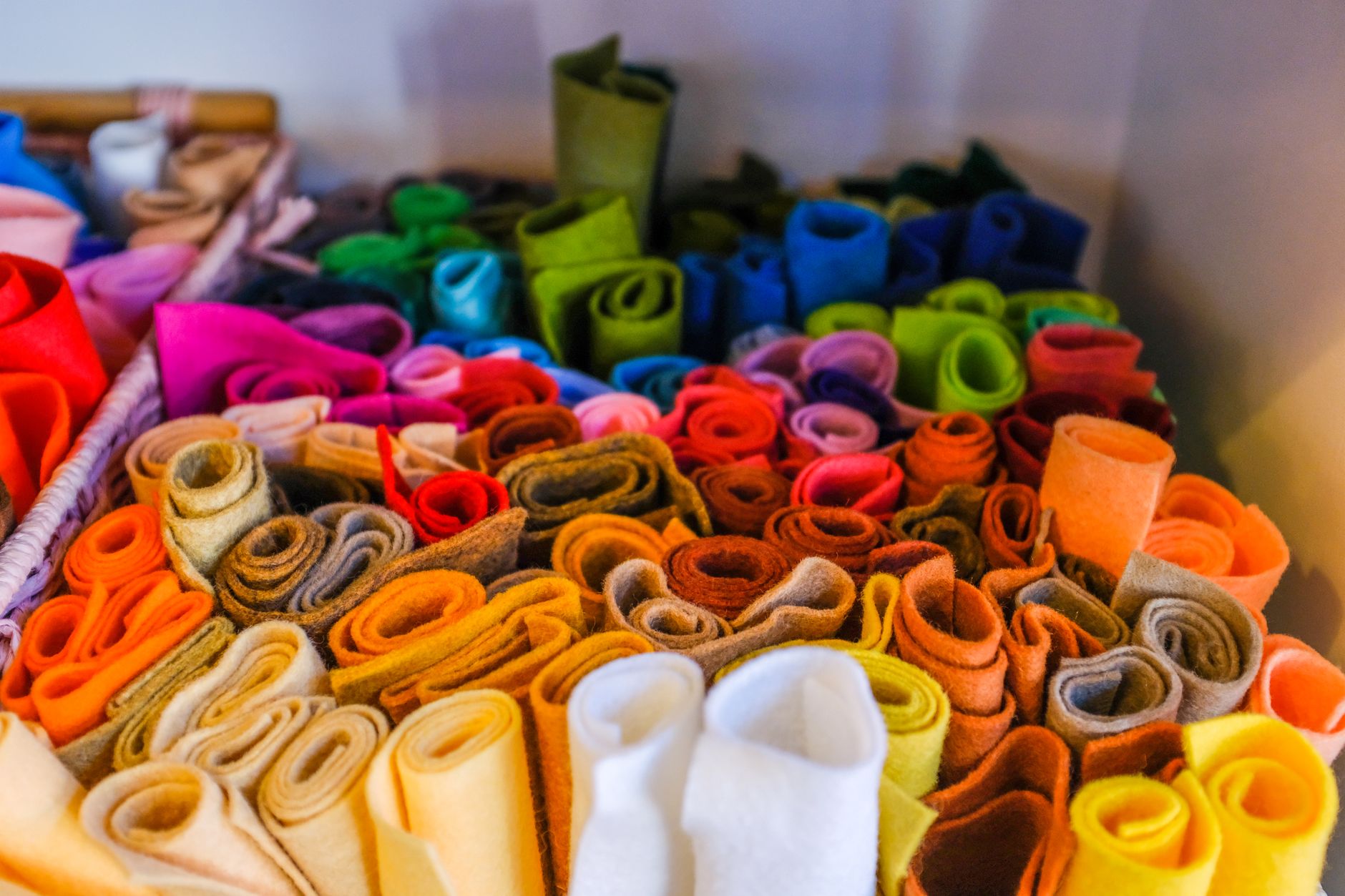
Wet felting is a textile craft where wool fibres are joined together using water, soap, friction, and pressure. As the fibres are rubbed and worked, they lock together to form a firm piece of felt.
It’s one of the oldest ways of making fabric and doesn’t require things like knitting, sewing, weaving, or a machine. You start with loose wool fibres and gradually turn them into a solid sheet, shape, or object.
How Does Wet Felting Work?
Wet felting works because wool fibres have tiny scales on their surface. When the wool is exposed to warm water, soap, and movement, the fibres begin to grip onto each other.
The basic process is as follows:
- Lay out thin layers of wool fibres.
- Add warm soapy water.
- Gently press the fibres down.
- Rub or roll the wool to create friction.
- Keep working the fibres until they bond together.
- Rinse, shape, and leave the felt to dry.
At first, the wool is soft and loose. As you continue rubbing and rolling, it becomes stronger, denser, and more fabric-like.
What Can You Make With Wet Felting?
Wet felting can be used to make both flat and shaped items. Beginners often start with simple flat felt because it’s easier to control.
Common wet felting projects include:
- Felt pictures
- Coasters
- Wall hangings
- Felt flowers
- Bowls
- Bags
- Jewellery
- Decorations
- Soap covers
- Scarves
- Small animals
- Textile art pieces
Wet felting is especially good for soft, colourful, textured projects. It can look neat and simple, or more artistic and layered.
What Do You Need for Wet Felting?
You don’t need a large kit to start wet felting. A basic beginner setup might include:
- Wool roving or wool tops
- Warm water
- Soap
- Bubble wrap or a textured mat
- Towel
- Netting or mesh fabric
- Spray bottle or small jug
- Rolling pin or pool noodle, optional
- Waterproof work surface
Wool is the most important material in the process. Not all fibres felt easily, so beginners should start with wool that is sold for specifically for felting.
What Wool Is Used for Wet Felting?
Merino wool is one of the most popular choices for wet felting because it’s soft, colourful, and felts easily. Other sheep wool can also be used, depending on your project.
Fine wool is useful for soft accessories and detailed work. Coarser wool can be useful for sturdier items such as bags, bowls, or textured pieces.
Synthetic fibres don’t wet felt in the same way because they don’t have the same natural scales as wool. Some decorative fibres can be added for texture, but wool usually needs to be the main material.
Is Wet Felting the Same as Needle Felting?
Wet felting and needle felting both use wool fibres, but they work in different ways.
Wet felting uses water, soap, and friction to make wool fibres lock together. It is often used for flat felt, scarves, bags, bowls, and larger textile pieces.
Needle felting uses a sharp barbed needle to repeatedly poke wool fibres together. It’s often used for small sculptures, animals, figures, decorations, and adding details.
A simple way to think of it is: wet felting uses water and rubbing, while needle felting uses a needle and stabbing motion.
Is Wet Felting Difficult?
Wet felting is not difficult to start, but it can take some patience. The process is physical and repetitive because the fibres need time and movement to bond properly.
The most common beginner problems are using too much water, moving the fibres too early, or not felting the piece long enough. If the wool is still loose and pulls apart easily, it usually needs more rubbing, rolling, or fulling.
Small projects are best for beginners because they are easier to manage and dry faster.
What Is Fulling in Wet Felting?
Fulling is the stage where the felt becomes firmer, denser, and stronger. Once the wool fibres have started to hold together, you continue working the felt with more pressure.
This may involve rolling, rubbing, throwing, squeezing, or pressing the felt. During fulling, the felt often shrinks. This is normal and helps create a stronger finished piece.
Because wet felt shrinks, beginners should remember that the final piece will usually be smaller than the original wool layout.
Is Wet Felting Messy?
Wet felting can be a bit messy because it uses water and soap. However, it’s manageable if you set up the space properly.
A towel, tray, waterproof table covering, or plastic sheet can help protect your work surface. It is also useful to keep a bowl or jug nearby and avoid adding too much water at once.
Compared with some crafts, wet felting is low-tech but hands-on. The mess is usually water, soap, and wool rather than paint or glue.
Is Wet Felting Good for Beginners?
Wet felting can be a good beginner craft because it uses simple materials and doesn’t need specialist equipment. You can learn the basic process with a small piece of wool, warm water, soap, and bubble wrap.
It is especially good for people who enjoy textile crafts, colour, texture, and slow hands-on making. It may not be the best craft if you want something completely dry or instant, but it can be very satisfying once the fibres start turning into felt!
Final Thoughts
Wet felting is the craft of turning loose wool fibres into felt using water, soap, friction, and pressure. It can be used to make flat felt, pictures, coasters, flowers, bowls, bags, scarves, and decorative textile pieces.
For beginners, the easiest way to start is with a small flat project using wool roving, warm soapy water, bubble wrap, and gentle rubbing. Once you understand how the fibres bond together, wet felting becomes a creative way to make soft, colourful, and textured handmade items.