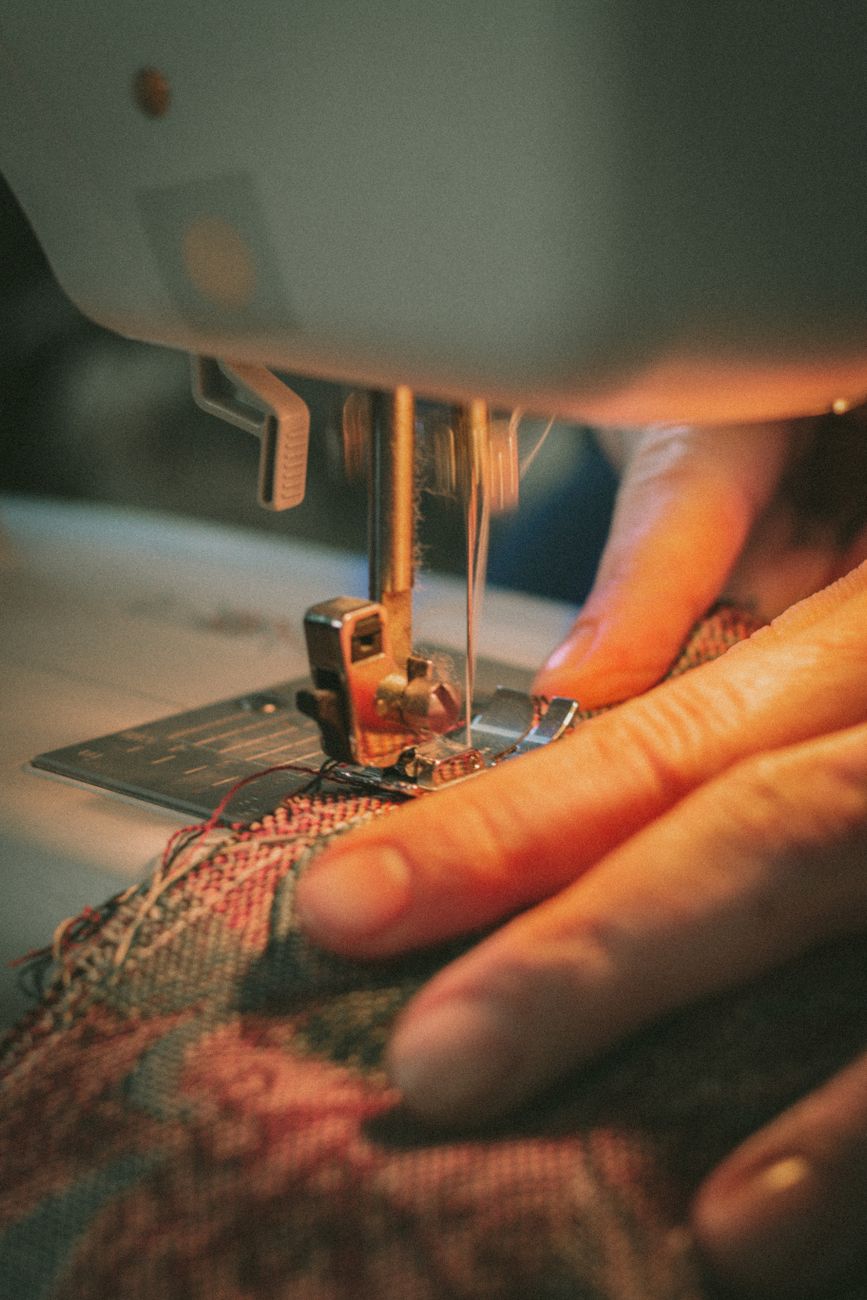
Sewing is a craft and practical skill where pieces of fabric are joined together using stitches. These stitches can be made by hand with a needle and thread, or otherwise with a sewing machine.
Sewing can be used to make clothes, repair fabric items, create home décor, personalise accessories, and complete craft projects. It’s a useful hobby as it can be creative, practical, and can help you save money, as opposed to throwing out clothes.
How Does Sewing Work?
Sewing works by using thread to hold fabric together. The thread passes through the fabric in repeated stitches, creating a seam, decoration, repair, or finished edge.
For instance, if you’re making a cushion cover, you would place two pieces of fabric together and sew around the edges. If you are repairing a small tear, on the other hand, you would use stitches to close or strengthen the damaged area (this is also known as darning).
Sewing can be very simple or very advanced. A beginner might start by sewing on a button or making a small fabric pouch, while an experienced sewer might make clothing, quilts, curtains, or detailed costumes.
Is Sewing Done by Hand or Machine?
Sewing can be done by hand or with a sewing machine.
Hand sewing uses a needle and thread. It is useful for small repairs, buttons, hems, embroidery, visible mending, and simple craft projects.
Machine sewing uses a sewing machine to make stitches more quickly and evenly. It is useful for larger projects, clothing, bags, cushions, curtains, and anything with long seams.
Beginners don’t have to start with a machine. Hand sewing is a good way to learn basic stitches and understand how fabric behaves.
What Can You Make With Sewing?
Sewing can be used for many projects, including:
- Clothing
- Tote bags
- Cushion covers
- Curtains
- Bunting
- Aprons
- Pencil cases
- Fabric baskets
- Scrunchies
- Quilts
- Patches
- Repairs
- Alterations
- Soft toys
- Table runners
- Reusable gift bags
Beginners often start with simple flat projects, such as tote bags, cushion covers, bookmarks, or fabric pouches, because these do not need complicated shaping.
Is Sewing Good for Beginners?
Yes, sewing is good for beginners. You can start with very simple projects and learn one skill at a time.
The easiest way to begin is with basic hand sewing or a simple machine project using straight lines. You do not need to make clothing straight away. In fact, clothing can be harder because it involves sizing, shaping, seams, hems, and sometimes zips or buttons.
A small, simple project is usually more encouraging than trying to make something complicated too soon.
What Do You Need to Start Sewing?
To start sewing, you may need:
- Fabric
- A needle
- Thread
- Scissors
- Pins or clips
- Measuring tape
- A fabric marker or chalk
- A seam ripper
- An iron
- A simple pattern or project instructions
If you are using a sewing machine, you will also need:
- Sewing machine
- Bobbins
- Machine needles
- Suitable thread
- A foot pedal and power lead
- An instruction manual
You don’t need every sewing tool at the beginning. For hand sewing, a needle, thread, scissors, and a piece of fabric are enough to start practising.
What Is a Sewing Machine?
A sewing machine is a tool that uses a needle and thread to stitch fabric quickly. Most machines can sew straight stitches, zigzag stitches, and other useful stitch types.
A basic sewing machine can be enough for many beginner projects. You don’t need a very expensive machine to start. It is more important that the machine is reliable, easy to thread, and suitable for basic fabric projects.
If you are new to sewing machines, it helps to practise on scrap fabric before starting a proper project.
What Are Basic Sewing Stitches?
Some basic sewing stitches include:
- Running stitch: a simple hand stitch that looks like a dashed line.
- Backstitch: a stronger hand stitch useful for seams and repairs.
- Whipstitch: useful for joining edges or closing openings.
- Blanket stitch: often used to finish edges decoratively.
- Straight stitch: the basic machine stitch used for many seams.
- Zigzag stitch: useful for stretchy fabric, finishing edges, or preventing fraying.
Beginners don’t need to learn every stitch straight away. Running stitch, backstitch, and straight stitch are enough for many simple projects.
What Fabric Is Best for Beginner Sewing?
Beginners usually find it easiest to start with stable woven fabric, such as cotton. Cotton fabric is easier to cut, pin, press, and sew than stretchy or slippery fabric.
Good beginner fabrics include:
- Cotton
- Calico
- Quilting cotton
- Cotton blends
- Old bedsheets for practice
- Medium-weight woven fabric
Harder beginner fabrics include:
- Stretchy jersey
- Silky fabric
- Thick denim
- Velvet
- Slippery satin
- Very thin sheer fabric
These can still be used later, but simple cotton is usually easier while you are learning.
Is Sewing Expensive?
Sewing can be inexpensive or expensive depending on the projects and tools you choose.
Hand sewing is cheap to start because you only need basic supplies. Machine sewing costs more because you need a sewing machine, but the machine can be used for many future projects.
Fabric can also vary a lot in price. Beginners can keep costs low by practising on scrap fabric, old clothes, charity shop fabric, or inexpensive cotton.
A sensible beginner setup is:
- A basic sewing kit
- Fabric scissors
- Pins or clips
- Cotton fabric
- Thread
- A simple project pattern
If using a machine, start with a basic reliable model rather than buying lots of accessories immediately.
Is Sewing Messy?
Sewing is not usually messy in the same way as painting or clay crafts, but it can create clutter. Fabric scraps, thread ends, pins, patterns, and tools can spread out quickly.
It helps to keep supplies organised in a small box, basket, drawer, or sewing bag. A pin cushion or magnetic pin dish is also useful for keeping pins under control.
Sewing can be done in a small space, but you need enough room to cut fabric and work safely with scissors, needles, or a machine.
What Is the Easiest Sewing Project?
One of the easiest sewing projects is a simple fabric bookmark, drawstring bag, cushion cover, or tote bag.
Good beginner sewing projects include:
- A fabric bookmark
- A simple tote bag
- A cushion cover
- A drawstring bag
- A scrunchie
- A reusable gift bag
- A small fabric pouch
- Bunting
- Napkins
- Simple patch repair
It’s best to start with straight lines and simple shapes. Projects with zips, curves, linings, and fitted sizing can wait until you feel more confident.
Is Sewing the Same as Embroidery?
Sewing and embroidery are related, but they are not the same.
Sewing usually focuses on joining fabric, making items, repairing things, or constructing a project. Embroidery focuses on decorating fabric with thread.
For example, sewing might be used to make a tote bag. Embroidery might be used to decorate the front of that tote bag with flowers, initials, or patterns.
Many fabric crafts overlap, and learning basic sewing can make embroidery, visible mending, quilting, and appliqué easier.
Common Beginner Sewing Mistakes
Common beginner sewing mistakes include:
- Using blunt scissors
- Choosing fabric that is too difficult
- Not measuring carefully
- Forgetting to leave seam allowance
- Pulling the fabric while sewing
- Using the wrong needle
- Using thread that does not suit the fabric
- Skipping pressing with an iron
- Starting with a project that’s too complicated
A useful beginner tip is to practise on scrap fabric first. This helps you test your stitches, thread, machine settings, and fabric before working on the real project.
Who Might Enjoy Sewing?
Sewing may suit you if you like practical crafts, fabric, clothing, home decor, or making useful items. It is especially good if you enjoy projects that can be both creative and functional.
It may also be a good hobby if you want something:
- Practical
- Creative
- Useful for repairs
- Good for handmade gifts
- Suitable for home décor
- Possible to learn gradually
- Linked to many other crafts
However, sewing may feel frustrating at first if you expect perfect results immediately. Cutting, measuring, pinning, stitching, and pressing all take practice.
Final Thoughts
Sewing is a useful beginner-friendly craft where fabric is joined, repaired, or decorated with stitches. It can be done by hand or with a sewing machine, and it can be used for clothing, bags, cushions, repairs, home décor, and many other projects.
If you are new to sewing, start with simple supplies and an easy project using stable cotton fabric. Learn a few basic stitches, practise on scraps, and choose small projects with straight lines before moving on to more detailed sewing patterns.