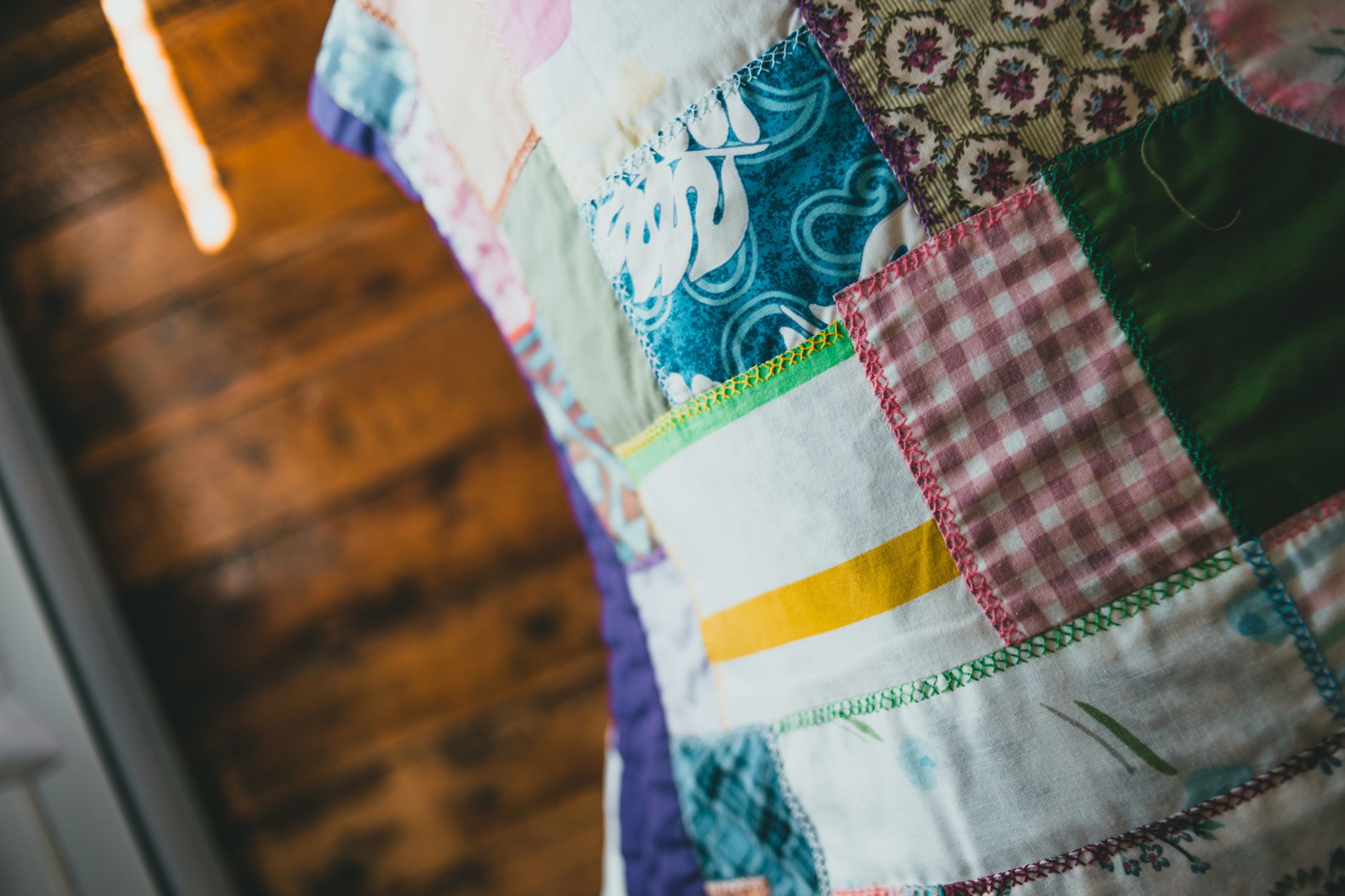
Quilting is a craft technique where layers of fabric are stitched together to make a thicker, padded textile. It is most commonly used to make quilts, but quilting can also be used for cushions, wall hangings, bags, table runners, clothing and small decorative projects.
A quilt is usually made out of three layers: a top fabric layer, a middle layer of wadding or batting, and a backing fabric. These layers are stitched together so they stay in place and create a warm, textured finish.
What Does Quilting Mean?
Quilting can refer to both the process and the finished style of stitching. When people talk about quilting, they might either mean making a full quilt from fabric pieces, or they might mean the stitching that holds the layers together.
Many quilts have a patchwork top, where smaller pieces of fabric are sewn together to create a pattern. However, quilting and patchwork are not identical concepts. Patchwork is the piecing of fabric shapes, while quilting is the stitching through the layers.
A quilt can include patchwork, but it does not have to.
How Does Quilting Work?
Quilting works by sandwiching layers of fabric together and stitching through them. The stitching keeps the middle layer from moving around and adds decoration to the finished piece.
A simple quilt usually has:
- A quilt top
- A layer of batting or wadding
- A backing fabric
- Stitching to hold the layers together
- Binding around the edges
The quilt top can be made from one whole piece of fabric, but it is often made from smaller fabric pieces sewn together into blocks or patterns.
What Do You Need for Quilting?
You can start quilting with basic sewing supplies. For a beginner project, you may need:
- Cotton fabric
- Batting or wadding
- Backing fabric
- Thread
- Sewing needles or a sewing machine
- Fabric scissors or a rotary cutter
- A ruler or measuring tape
- Pins or clips
- An iron
- Binding fabric for the edges
Many quilters use a sewing machine because it makes the process faster, but quilting can also be done entirely by hand.
Can You Quilt by Hand?
Yes, you can! Hand quilting is a traditional method where the layers are stitched together using a needle and thread. It takes longer than machine quilting, but many people enjoy it because it is slow, relaxing and portable.
Hand quilting is good for smaller projects, detailed stitching and people who enjoy quiet, repetitive crafts. It can also give a quilt a softer, more handmade look.
Machine quilting is usually faster and may be easier for larger projects.
Is Quilting the Same as Sewing?
Quilting is a type of sewing, but not all sewing is quilting. Sewing can include dressmaking, repairs, embroidery, bag making and home decor projects. Quilting specifically involves stitching layers of fabric together, usually with batting in the middle.
A beginner who already knows basic sewing may find quilting easier to understand, but you don’t need to be an expert sewer to start. A simple quilt can be made with straight lines and basic seams.
Is Quilting Difficult for Beginners?
Quilting can look complicated, but beginner quilting doesn’t have to be difficult. The easiest projects use simple squares, straight seams and basic stitching.
The main challenge is accuracy. Quilting often involves cutting fabric pieces to the same size, sewing consistent seams and keeping the layers smooth while stitching. These skills improve with practice.
A small project, such as a quilted coaster, placemat, cushion cover or baby quilt, is easier to do than starting with a large bed quilt.
What Is Patchwork Quilting?
Patchwork quilting is a style of quilting where smaller fabric pieces are sewn together to make a design. These pieces can be squares, triangles, strips or more complex shapes.
Patchwork is popular because it allows you to use different colours, patterns and fabric scraps. Traditional quilts often use repeated blocks, while modern quilts may use simpler, larger shapes or more abstract designs.
For beginners, square patchwork is one of the easiest styles to try.
What Is Batting or Wadding?
Batting, also called wadding, is the soft middle layer inside a quilt. It gives the quilt warmth, thickness and structure.
Batting can be made from cotton, polyester, wool, bamboo or blends of different fibres. The type of batting affects how warm, heavy, soft or puffy the quilt feels.
For a beginner project, cotton or polyester batting is commonly used because it is easy to find and works well for many simple quilts.
What Can You Make With Quilting?
Quilting is most often associated with bed quilts, but there are many smaller projects you can make. Beginner quilting projects include:
- Quilted coasters
- Pot holders
- Placemats
- Table runners
- Cushion covers
- Wall hangings
- Baby quilts
- Tote bags
- Simple lap quilts
Small projects are a good way to practise cutting, piecing, layering and stitching without taking on a large quilt straight away.
Why Do People Like Quilting?
Many people enjoy quilting because it combines creativity, practical skill and patience. You can choose fabrics, colours and patterns, then turn them into something useful and long-lasting.
Quilting can also be a good way to use fabric scraps or preserve meaningful textiles, such as old clothing or baby clothes. Some quilts are made for everyday use, while others are made as gifts, keepsakes or decorative pieces.
It’s also a craft that can grow with you. You can start with simple squares and gradually move on to more detailed patterns, hand quilting, free-motion quilting or more complex designs.
Final Thoughts
Quilting is the process of stitching layers of fabric together to create a padded textile. It is often used to make quilts, but it can also be used for smaller projects like cushions, bags, placemats and wall hangings.
For beginners, quilting is easiest when you start small, use simple shapes and focus on straight seams. You don’t need to make a large quilt straight away. A small quilted project can teach you the basic skills and help you to decide whether quilting is a craft you want to explore further.