Category: Macramé

  • Are Macramé Classes Worth It For Beginners?

    Are Macramé Classes Worth It For Beginners?

    Macramé classes can be a good option for beginners, especially if you like to learn by seeing others demonstrate something, and provide personalised support.

    Although some people really benefit from attending a class, it’s worth noting that you don’t have to take a class to learn the basics of macramé. Many of the basic techniques can be learned with online guides and videos.

    Whether a class is worth it depends on you and your unique circumstances. You may need to factor in how you like to learn, the money you are willing to spend, and the types of projects you wish to make.

    What Do You Learn in a Macramé Class?

    A beginner macramé class may teach you how to:

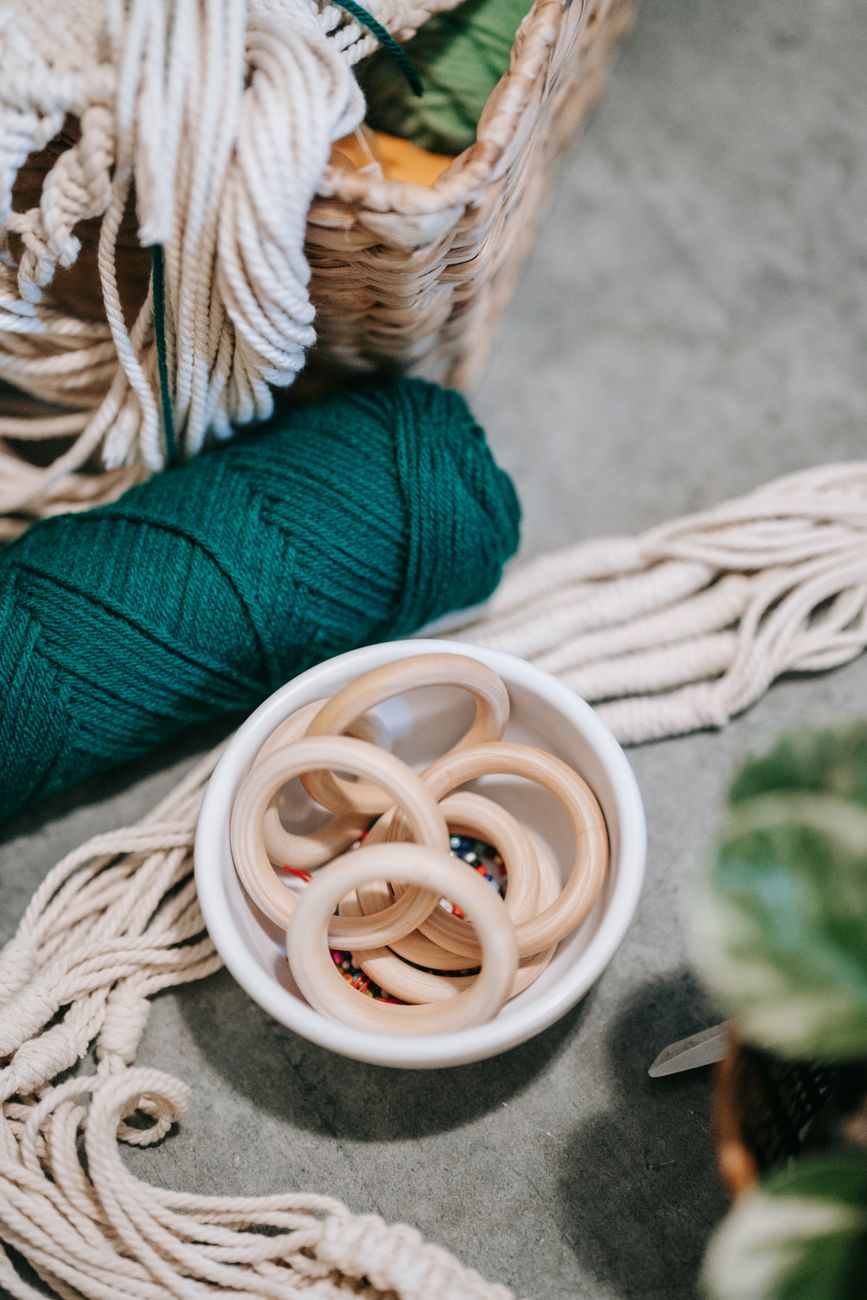
    • Choose suitable macramé cord
    • Measure and cut your cord
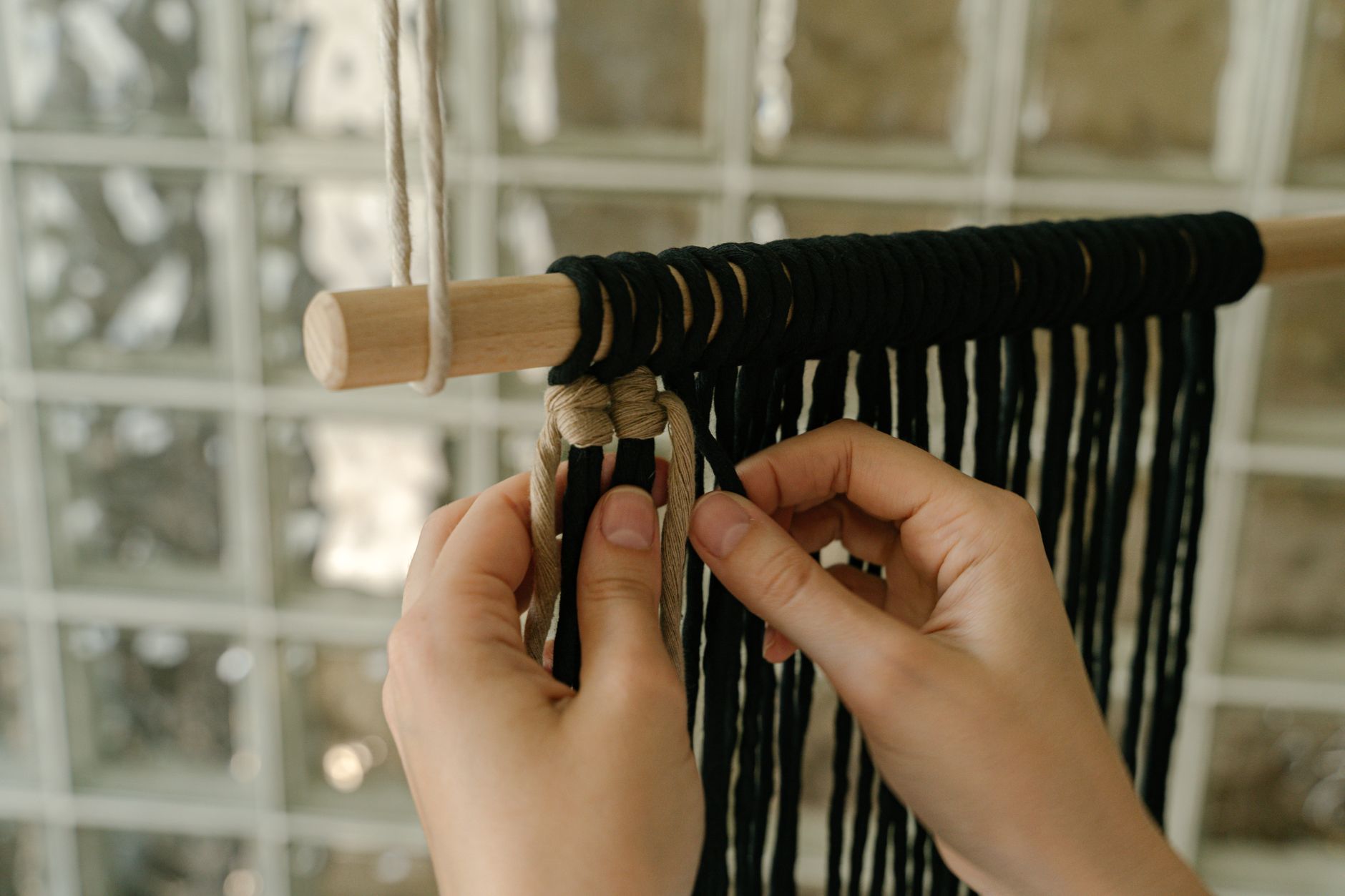
    • Attach cord to a dowel, ring, or base
    • Make a few basic knots
    • Keep your knots even
    • Follow a simple pattern
    • Finish and trim your project

    Many beginner classes will centre around one accessible project, such as a wall hanging, plant hanger, keyring, or coaster.

    A teacher might demonstrate each stage of the piece, and then assist you if you lose track of the pattern or your knots become uneven.

    What Are the Benefits of Taking a Class?

    Receiving Help and Support

    One of the most valuable parts of taking a class is the ability to ask the instructor questions as you work. This can be a lot more motivating than having to go it completely alone and then getting stuck or frustrated.

    Macramé knots can look quite easy when someone is demonstrating them, but beginners may struggle with knowing how tightly to pull each cord. A teacher can show you where you are going wrong and help you fix the issue pretty quickly. If you were doing this alone as a novice, you may be left scratching your head for quite a while, not knowing what you are doing wrong.

    Macramé Materials Are Provided

    One of the best things about classes is that they often provide the materials you need. This is convenient and potentially quite cost effective when you consider which supplies you would need to buy. Keep this in mind when looking at the cost of classes; you may not be paying for tuition alone.

    You Get Motivation to Finish a Project

    Finally, classes can make it easier to finish your first project. If you have the structure and dedicated time of a class, it’s easier to commit to staying the course and completing a piece, rather than having to have the discipline to do it all at home (when the TV is calling!)

    Do You Need a Macramé Class?

    You don’t strictly need a class to learn macramé.

    The basic knots that you need for beginner classes can be practiced at home using a small piece of cord. Once you have mastered introductory knots such as the lark’s head, square knot, and gathering knot, you can make a wide range of simple projects by yourself.

    A class, however, may be more useful if you:

    • Prefer learning in person
    • Find video instructions difficult to follow
    • Want help correcting mistakes
    • Are not sure which materials to buy
    • Want to complete a project in one session
    • Enjoy learning as part of a group

    When Might a Class Not Be Worth It?

    Although macramé classes can be a great option for some, they are not for everyone.

    A class may not be worth the cost if you are already comfortable learning from tutorials.

    It may also not be the best fit if it teaches you to make a very simple project that you would have been capable of making at home.

    Before you book a class, make sure you double check what the price includes. A course that looks a bit more expensive might actually be better value for money if it includes cord and tools, and allows you to work towards a project that you take home.

    Can You Try Macramé Before Booking a Class?

    It may be a good idea to test out a few cords or watch macramé content at home before you embark on a course. This allows you to dip your toes into macramé for free and read up on this craft to see whether it piques your interest.

    Are Online Macramé Classes Worth It?

    Online classes can be a cheaper alternative to attending an in-person workshop.

    A self-paced, pre-recorded course lets you pause, rewind, and repeat a demonstration as many times as you need to get comfortable.

    However, you won’t benefit from expert help if you are struggling. Free videos, such as those on YouTube can also give you similar material to follow in your own time. If creators are so kind, they may engage in the comment section and answer any questions you have (although this obviously won’t be ‘live’ help).

    So, Are Macramé Classes Worth It?

    Macramé classes are often worth it for beginners who want practical guidance, materials provided, and help as they complete their first project.

    Classes can make the learning process seem simpler and less frustrating.

    However, macramé is an activity that can be self-taught. You can start off with internet resources, practise a few basic knots, and then perhaps book a class later on if you need more support.

    A class can be very useful, but it’s not essential to learning macramé.

  • What Can You Do With Leftover Macramé Cord?

    What Can You Do With Leftover Macramé Cord?

    Leftover macramé cord can be reused for small projects, decorations, practice knots and finishing details.

    Even short pieces can be useful, so you don’t have to throw away every offcut after you’ve finished your project. Sort the cord by length and condition before deciding what you want to keep.

    Make Small Macramé Projects

    Longer leftover pieces can be used for projects that don’t need very much cord, such as:

    • Keyrings
    • Bag charms
    • Plant-pot decorations
    • Napkin rings
    • Bookmarks
    • Mini wall hangings
    • Christmas decorations
    • Small tassels
    • Simple bracelets
    • Gift decorations

    The exact project will depend on the length and thickness of the cord. A keyring may only need a few short working cords, whilst a small wall hanging will probably need much several longer pieces.

    Use It to Practise Macramé Knots

    Leftover cord is useful for practising unfamiliar knots before you test them out in a new project.

    You could use scraps to practise:

    • Square knots
    • Half-square knots
    • Spiral knots
    • Double half-hitch knots
    • Gathering knots
    • Lark’s head knots

    Practising first can help you work out how tightly to pull the cord and how much material a repeated knot uses.

    The sample you produce doesn’t have to look perfect. You can undo the knots and reuse the cord until it becomes too frayed or difficult to work with.

    Make Tassels or Fringe

    Short pieces of cord can be grouped together to make tassels, fringe and other finishing details.

    Add them to:

    • Wall hangings
    • Baskets
    • Keyrings
    • Bags
    • Garlands
    • Gift wrapping
    • Cushion covers

    You can leave the cord twisted or carefully unravel and brush it to create a softer fringe.

    Uneven scraps may work particularly well for fringe because the ends can be trimmed into shape after they have been attached.

    Add Cord to Gift Wrapping

    Macramé cord can replace ribbon or string when wrapping gifts.

    Use it to:

    • Tie parcels
    • Attach gift tags
    • Make a small tassel
    • Add a simple knot decoration
    • Secure rolled paper or fabric

    Natural cotton cord works particularly well with plain paper, handmade tags and other simple wrapping materials.

    Avoid using heavily frayed or dirty cord on gifts; think how your recipient would feel!

    Use It for Craft Organisation

    Leftover pieces can be used around your craft space.

    For example, you could tie them around:

    • Rolled fabric
    • Bundles of pencils or brushes
    • Groups of cords
    • Gift tags
    • Small storage baskets
    • Packets of craft materials

    A short loop can also be added to lightweight tools or decorations so that they can be hung from a hook.

    Don’t rely on scrap cord for holding anything heavy unless you know that the cord and knot are suitable for the weight of the project.

    Combine Different Colours

    Leftover cord does not have to match perfectly.

    Several colours can be combined in:

    • Tassels
    • Small rainbows
    • Decorative garlands
    • Keyrings
    • Braided cords
    • Practice samples
    • Abstract wall hangings

    Using scraps can be a good opportunity to experiment with colour combinations before using them in a larger project.

    Different cord thicknesses can also be combined decoratively, although they may behave differently when knotted together.

    Can You Join Leftover Macramé Cord?

    You can sometimes join shorter lengths to create a longer working cord.

    The join can be:

    • Hidden behind another knot
    • Covered with a gathering knot
    • Placed at the back of the project
    • Incorporated into a decorative section

    A joined cord may be visible, so it is not suitable for every design.

    It should also be avoided in parts of a project that must carry significant weight. For a plant hanger or another load-bearing item, it is safer to use continuous lengths of appropriate cord unless the pattern provides a secure joining method.

    Should You Keep Very Short Pieces?

    Tiny scraps can still be used as stuffing, texture in mixed-media crafts or material for small fringe details.

    However, you do not need to save every piece. Discard cord that is:

    • Dirty
    • Mouldy
    • Badly frayed
    • Weakened
    • Covered in unsuitable glue or paint
    • Too short to use realistically

    Keeping unusable scraps can quickly create clutter.

    How Should You Store Leftover Cord?

    Sort leftover cord into groups based on length, colour or material.

    You could wrap longer pieces around pieces of cardboard and keep shorter scraps in labelled bags or small containers. Try to store natural cord somewhere clean and dry.

    Writing the cord type and thickness on the container can help if you want to combine it with the same material later.

    Leftover macramé cord can be useful, but it doesn’t have to become another major project. A few small decorations, practice samples or finishing details can help you use scraps without creating another large collection of unfinished work.

  • Do You Need Pins for Macramé?

    Do You Need Pins for Macramé?

    No, you don’t need pins for every macramé project.

    Many projects can be made by attaching the cords to a wooden dowel, ring, branch or another secure anchor. You can then hang the project or hold the anchor in place while tying the knots.

    Instead of being a necessity, pins are optional tools that may make certain projects easier.

    When Are Pins Useful for Macramé?

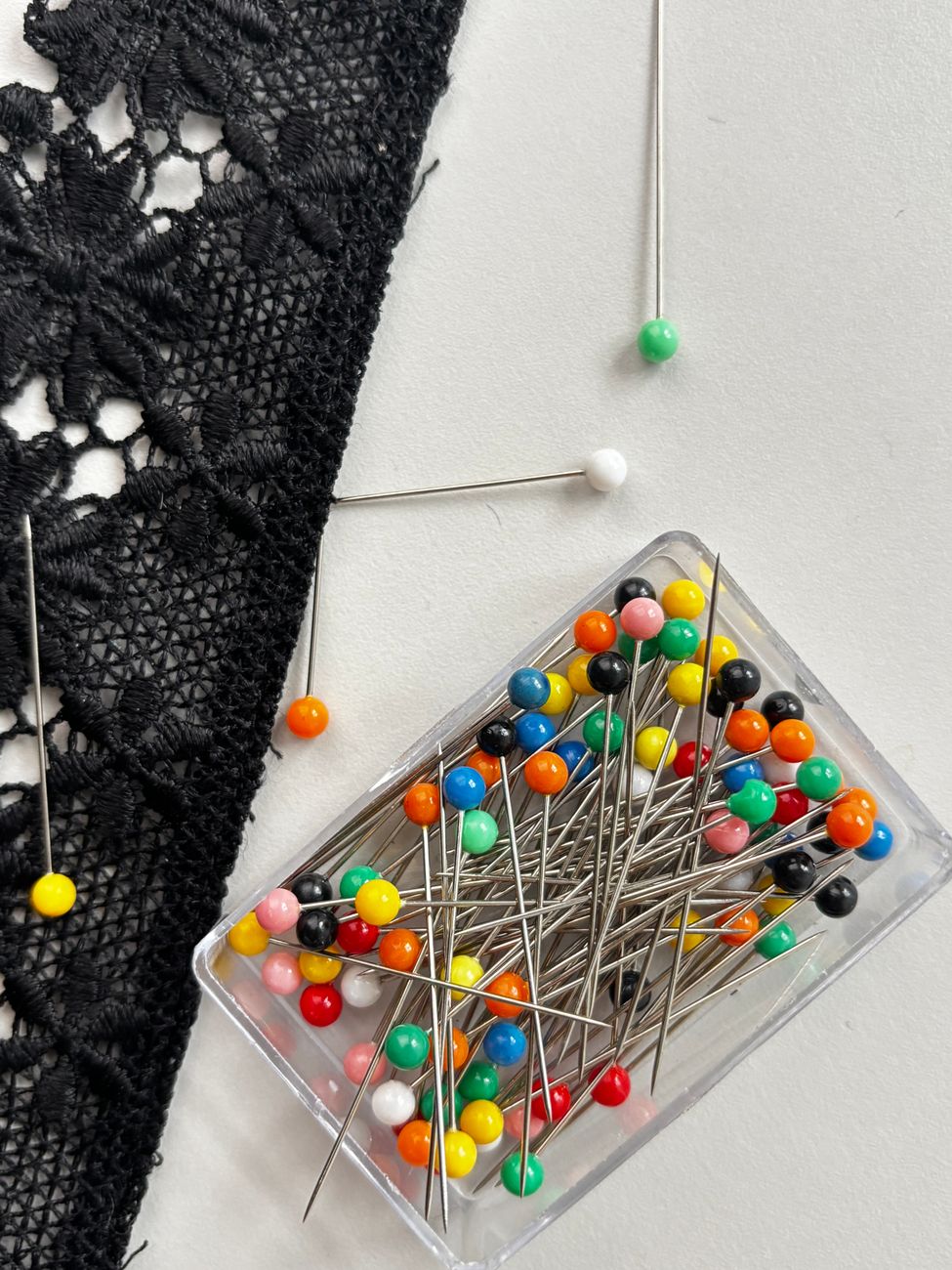
    Pins can help hold cords against a macramé board while you work. They are particularly useful for:

    • Small or detailed projects
    • Keeping cords separated
    • Holding a knot in position
    • Maintaining the shape of a design
    • Preventing your work from moving

    T-pins are commonly used because they can hold cord securely against a suitable foam or cork work surface. Some people use clips instead.

    Pins may be useful when making flat items such as macramé feathers, jewellery or decorative shapes. They are less important for a simple wall hanging or plant hanger that is already secured to a firm anchor.

    What Can You Use Instead of Pins?

    You could use:

    • A clipboard
    • Strong clips
    • A clamp
    • A macramé board
    • A stable hook or rail
    • A weighted object to hold the anchor

    A clipboard can work particularly well for keyrings, bracelets and other small beginner projects. Boards and looms are more useful when a design is complicated or needs to remain in a particular position.

    Should Beginners Buy Macramé Pins?

    Beginners don’t need to buy pins before they try out macramé for the first time.

    You can start with the cord, scissors and a suitable anchor for your project. Then, add pins later if you find that your cords move around or you want to make detailed flat designs.

    Pins can make macramé projects just that bit easier, but knots don’t need them to be formed or to stay in place.

  • Does Macramé Need Glue?

    Does Macramé Need Glue?

    No, most macramé projects don’t need any glue to hold together.

    Macramé is made by tying cord into knots. When the knots are tied and tightened correctly, they normally hold the project together without having to use adhesive.

    Wall hangings, plant hangers and many decorations can therefore be completed using only cord, scissors and something to attach the cord to.

    When Might You Use Glue?

    A small amount of fabric or craft glue may sometimes be useful for:

    • Securing a hidden finishing knot
    • Preventing a cut end from unravelling
    • Attaching small decorations
    • Stiffening a particular part of a project
    • Finishing some macramé jewellery designs

    Glue should normally be used as an optional finishing aid rather than as a replacement for tying proper, secure knots.

    Avoid applying too much; glue can still be visible even after it’s dry, make soft cord feel stiff. It can also prevent you from undoing the knot later on, should you need to.

    Do Macramé Plant Hangers Need Glue?

    A plant hanger should rely on properly tied knots rather than glue.

    The knots and cord need to support the weight of the pot safely. Check that each knot is tight, use suitable cord and test the hanger carefully before placing it in its final position.

    Can Beginners Make Macramé Without Glue?

    Yes. Most beginner projects are designed to be made without it.

    Learning how to tie and tighten a few basic knots is more important than buying adhesive. You can always add a small amount of suitable glue later on down the line if a particular pattern recommends it.

    For most macramé, the knots should do the work of holding it up.

  • Can You Undo Macramé Knots?

    Can You Undo Macramé Knots?

    Yes, you can usually undo macramé knots if you make a mistake or want to change part of a project. This is one reason macramé is quite good for beginners; you can often remove the knots you’ve without needing to restart the whole piece.

    Start with the last knot you tied. Loosen its outer loops gently with your fingers, then work backwards through the knot. A blunt needle, pin or small crochet hook can help you to lift a tight section, but take care not to split or pull the cord fibres.

    Knots are normally easiest to undo when:

    • They were tied recently
    • The cord is fairly thick
    • The knot hasn’t been pulled too tightly
    • No glue or stiffening product has been added

    Thicker macramé cord can be particularly easy for beginners to tie and undo, as it’s easier than thinner cord to grip.

    A tightly knotted section may leave bends, flattened areas or loose fibres in the cord but may still be able to reuse it, especially if the marks will be hidden inside the finished project. Replace the cord if it has become really badly frayed, stretched or damaged.

    Work slowly rather than pulling hard, as this can tighten the knot further. If you notice a mistake early, undoing a few knots is usually much easier than trying to hide it later on.

    Happy macramé!

  • Does Macramé Cord Shrink?

    Does Macramé Cord Shrink?

    Macramé cord can shrink, particularly when it is made from cotton or another natural fibre and becomes wet.

    The amount of shrinkage varies between products. It can be affected by things like the cord material, how it was made and whether it was washed or treated before being sold to you.

    Synthetic cords such as polypropylene are generally less likely to shrink under normal conditions.

    Will Cotton Macramé Cord Shrink?

    Cotton cord may become slightly shorter or change shape after it’s washed. Heat and vigorous washing can make this even more noticeable.

    A finished macramé project might also look uneven while it’s wet. Knots can tighten, fringe can become tangled and different sections may dry in slightly different positions.

    This doesn’t that every cotton project will shrink significantly, but it is worth checking the cord manufacturer’s care instructions before you attempt to wash it.

    How Can You Reduce Shrinkage?

    Use cool or lukewarm water and avoid a hot tumble dryer unless the cord supplier says that this is okay.

    Hand-washing is usually gentler than putting a macramé item through a normal washing-machine cycle. Reshape the project carefully while it’s damp, straighten the fringe and let it air-dry.

    For a project in which the final measurements are important, wet and dry a short sample of the cord first. You can then measure it again to see whether it has actually changed at all.

    Macramé cord doesn’t always shrink, but natural cotton cord is more likely to change than a weather-resistant synthetic cord. Testing a sample is the safest way to find out how your particular cord will behave before you commit to a project and find out the hard way!

  • What Is a Macramé Board?

    What Is a Macramé Board?

    A macramé board is a firm work surface used to hold cords in place while you tie knots.

    The cord can be secured to the board with pins, clips or notches, helping to stop the project from moving around as you work.

    What Is a Macramé Board Used For?

    A macramé board can help you to:

    • Keep your cords separated
    • Maintain even tension
    • Hold small projects in place
    • Measure and arrange knots
    • Reduce any twisting and tangling

    It can be especially useful for macramé projects such as bracelets, keyrings, plant hangers and knot-practice pieces.

    Do Beginners Need a Macramé Board?

    A macramé board is useful, but it’s not essential.

    Beginners can also attach their cords to:

    • A clipboard
    • A cork board
    • A piece of firm foam
    • A table using removable tape
    • A dowel secured to a stable surface

    The important thing is that you keep the cords secure, while still leaving enough room to work.

    What Are Macramé Boards Made From?

    Macramé boards are commonly made from cork, foam or another material that allows pins to be inserted.

    Some boards include printed measurements or grid lines, which can help with spacing and keeping the project even.

    Is a Macramé Board Worth Buying?

    A macramé board may be worthwhile if you regularly make small or detailed projects. It provides a portable work surface and can make it easier to keep your knots neat.

    For a first project, however, a clipboard or another secure surface may work just as well, without the need to make an extra purchase.

  • What Are Macramé Dowels?

    What Are Macramé Dowels?

    A macramé dowel is a straight rod used to support a hanging macramé project.

    Lengths of cord are attached to the dowel before knots are made. The dowel holds the cords in place and provides a straight top edge for the finished design.

    What Can You Make with a Macramé Dowel?

    Dowels are commonly used for projects such as:

    • Wall hangings
    • Small shelves
    • Hanging organisers
    • Decorative banners
    • Plant hangers
    • Beginner knot-practice pieces

    They are particularly useful for projects that are made in rows.

    What Can You Use as a Macramé Dowel?

    You could use:

    • A wooden dowel rod
    • A smooth stick or branch
    • A metal rod
    • A piece of bamboo
    • Another strong, straight support

    A natural branch can create a more rustic appearance, while a wooden dowel gives the project a neat and even finish.

    What Size Dowel Do You Need?

    The dowel should be slightly wider than the finished knotted design. It also needs to be strong enough to support the weight of the cord and any shelves, pots or decorations potentially added to the project.

    Small wall hangings can use a short, lightweight dowel. Larger or heavier projects need something thicker and more secure.

    Macramé dowels are inexpensive and reusable, making them a practical choice for beginners learning how to attach cords and create hanging designs.

    Read Next

  • Easy Macramé Projects For Beginners

    Easy Macramé Projects For Beginners

    Macramé is a flexible craft that uses knots to make decorative items. If you are a complete beginner, you don’t need to start with large wall hangings or other complicated patterns. Instead, smaller projects are best you allow you to learn the basic knots, plus they use less cord and take less time to finish.

    What Makes a Good Beginner Macramé Project?

    A suitable project for a beginner hobbyist should:

    • Only use one or two types of knot
    • Use a manageable amount of cord
    • Have a simple, repeated pattern
    • Be small enough to finish quickly
    • Still have a good result if the you make mistakes

    Basic knots such as the square knot, spiral knot, and lark’s head are enough for getting you started with a beginner project.

    Keyring

    A keyring is one of the quickest macramé projects to try.

    You normally need:

    • Macramé cord
    • A keyring or clasp
    • Scissors
    • A comb, if you want a fringed finish

    You can create a simple design using square knots or spiral knots. Because the project is small, it’s useful for practising tension without wasting much material.

    Plant Hanger

    A basic plant hanger is a popular beginner project; it usually combines several lengths of cord with repeated knots to form a holder around a plant pot.

    Start with a small, lightweight pot and a simple pattern. Check that every section is secure before you try to hang it.

    Plant hangers are larger than keyrings but still provide a manageable introduction to practical macramé.

    Coaster

    A coaster is a useful flat project that can help you to practise creating even rows.

    Some designs use repeated square knots, while circular coasters may involve more shaping. A simple square or rectangular coaster is usually the easiest place to begin.

    Cotton cord works well because it’s soft and easy to handle.

    Bookmark

    A bookmark requires only a small amount of cord and can be completed fairly quickly.

    You can make one using a narrow line of square knots, spiral knots, or a simple braided design. Add a fringe or bead at the end if you want a more decorative finish.

    Wall Hanging

    A small wall hanging is much easier than a large decorative piece.

    Use a short wooden dowel, stick or ring and create a straightforward repeated pattern beneath it. You can finish the bottom with a simple fringe rather than trying to add complicated, more advanced sections.

    Choose a small design so that you can practise arranging knots without committing to a long project.

    Jar or Bottle Cover

    A simple macramé cover can be tied around a clean jar, bottle or small plant pot.

    The container helps to support the shape whilst you work. A basic net-style pattern can be created using repeated knots around the outside.

    This can be used as a decorative holder for pens, craft tools or small items.

    Bracelet

    A bracelet is another small project that only uses a little cord.

    Simple bracelets may be made with square knots, alternating knots or a spiral pattern. You can add beads or a fastening once you are comfortable with the basic design.

    Make sure the finished bracelet is comfortable and not tied too tightly.

    Feather or Leaf

    Macramé feathers are made by knotting short pieces of cord around a central strand, then brushing and trimming the fibres into shape.

    The trimming doesn’t have to be perfect, so this can be an enjoyable decorative project for beginners. A comb or stiff brush helps separate the fibres.

    Which Macramé Project Should You Try First?

    A keyring, bookmark or bracelet is usually the easiest starting point, as these projects are small and inexpensive.

    Once you’re comfortable making consistent knots, you can move on to a plant hanger or a small wall hanging.

    As a general rule, use a project that uses a limited number of knots and materials. Finishing one simple item will usually teach you more than beginning an ambitious design that becomes frustrating and causes you to give up.

    Happy Macramé!

  • What Are Macramé Hoops Used For?

    What Are Macramé Hoops Used For?

    Macramé hoops are circular frames used as a base for decorative macramé projects.

    The cord is normally attached around the hoop using lark’s head knots or another simple attachment method. Knots, patterns and loose fringe can then be added inside or beneath the frame.

    What Can You Make with a Macramé Hoop?

    Hoops can be used to make:

    • Small wall decorations
    • Wreath-style designs
    • Plant holders
    • Hanging shelves
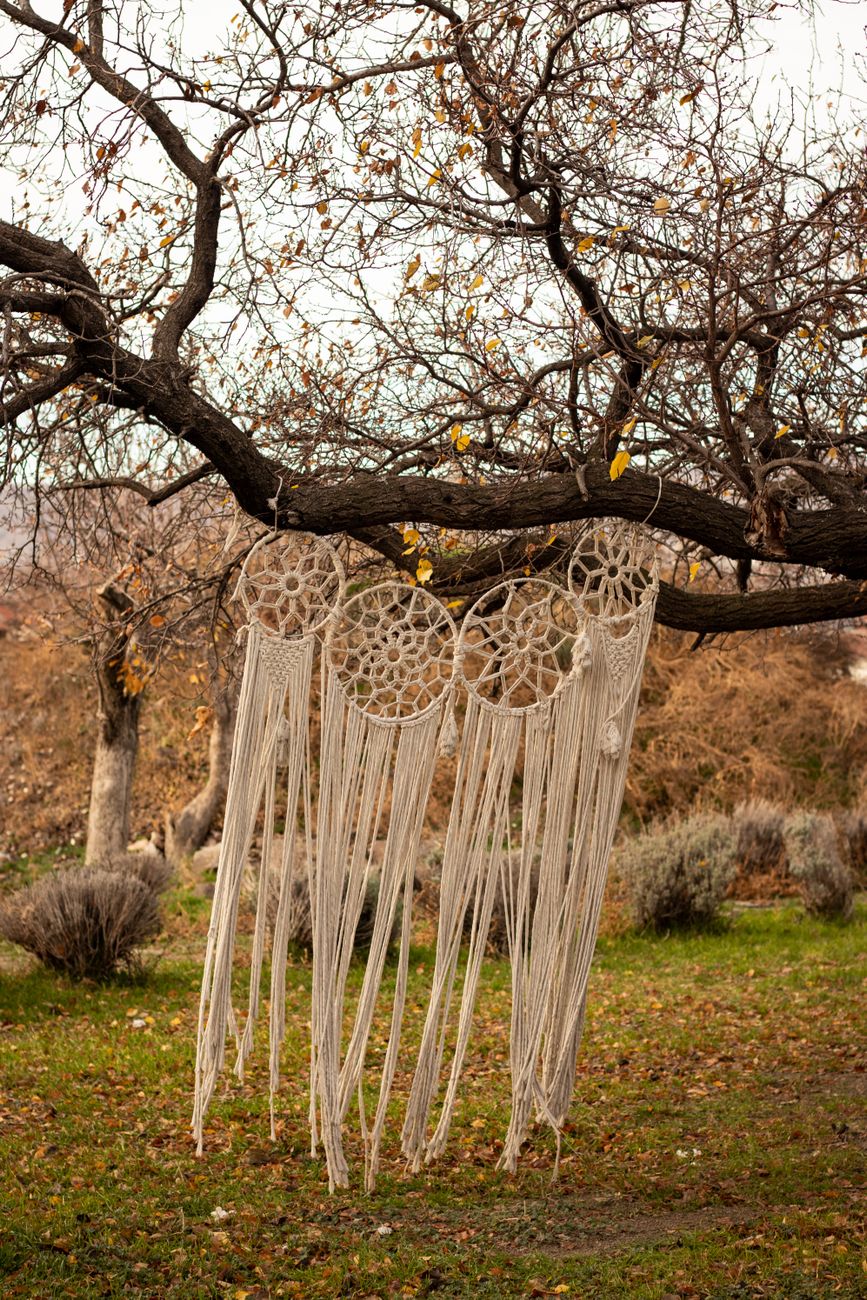
    • Dreamcatcher-inspired decorations
    • Circular flower or leaf designs

    Hoops are particularly useful when you want a project to hold a round shape.

    What Are Macramé Hoops Made From?

    Macramé hoops may be made from materials such as:

    • Wood
    • Bamboo
    • Metal
    • Plastic

    Wooden and metal hoops are common because they provide a firm base for the cord. Embroidery hoops can also work for some small projects, although they are normally made from two separate rings.

    Are Macramé Hoops Good for Beginners?

    A hoop can be a good base for a beginner project because its shape is already established. This means that you can concentrate on attaching the cord and practising a small number of beginner-friendly knots.

    Start off with a small hoop and a simple repeated design. Large circular projects can require more cord and careful spacing, so are probably not the best first project for beginners.

    Macramé hoops are not essential for learning the hobby, but they provide an easy way to create small decorative projects.