Knowing just how much cord to use for macramé can be quite confusing when you are getting started for the first time. This is because it’s not really obvious how much will get used up by knots and fringe, let alone mistakes.
Whilst something like a small keyring might only need a short piece of cord, a wall hanging or plant hanger can just much more. The amount of cord that you will need depends on the size of the project, the type of knots you use, the thickness of the cord, and how much fringe or hanging length you want at the end.
As a rule, a lot of people use cord that is four times the length of the finished project. If your design has a lot of knots, you might need a little more than this. It’s best to cut off too much cord than too little.
Why Does Macramé Use So Much Cord?
Macramé uses more cord than you might expect because the length gets shorter as you tie knots!
This means that a piece of cord that starts very long can quickly become much shorter once you start types of knots such as square, spiral, or half hitch. Dense patterns use more cord than loose designs.
This is exactly why it’s important not to cut your cord too short. If you run out halfway through your project, it can be a bit awkward to fix it.
A Simple Rule For Beginners
A useful rule that many creatives follow is to cut your cord to be four times the length of your desired finished project.
If you wanted your finished project to measure 50cm long, you could start with a cord length of 2m.This is only a rough guide, but it gives you an idea of how much cord to work with.
If your project has a lot of knots, you could opt for five or six times the length in cord instead.
If the design you are following gives you exact measurements, you are best to follow those.
What Factors Affect How Much Cord You Need?
There are several factors that influence the amount of cord you need to use.
The Size of the Project
Larger projects need longer cords. A wall hanging, plant hanger, or bag will need much more cord than a small bookmark or keychain.
A project that hangs down a long way will need extra cord as well.
The Type of Knots
Some knots will use more cord than others. A lark’s head doesn’t use very much length, but repeated square or spiral knots can use up cord very quickly.
If your design has a lot of dense knotting, cut more cord than you think you will need. Open designs with more gaps will use less.
The Thickness of the Cord
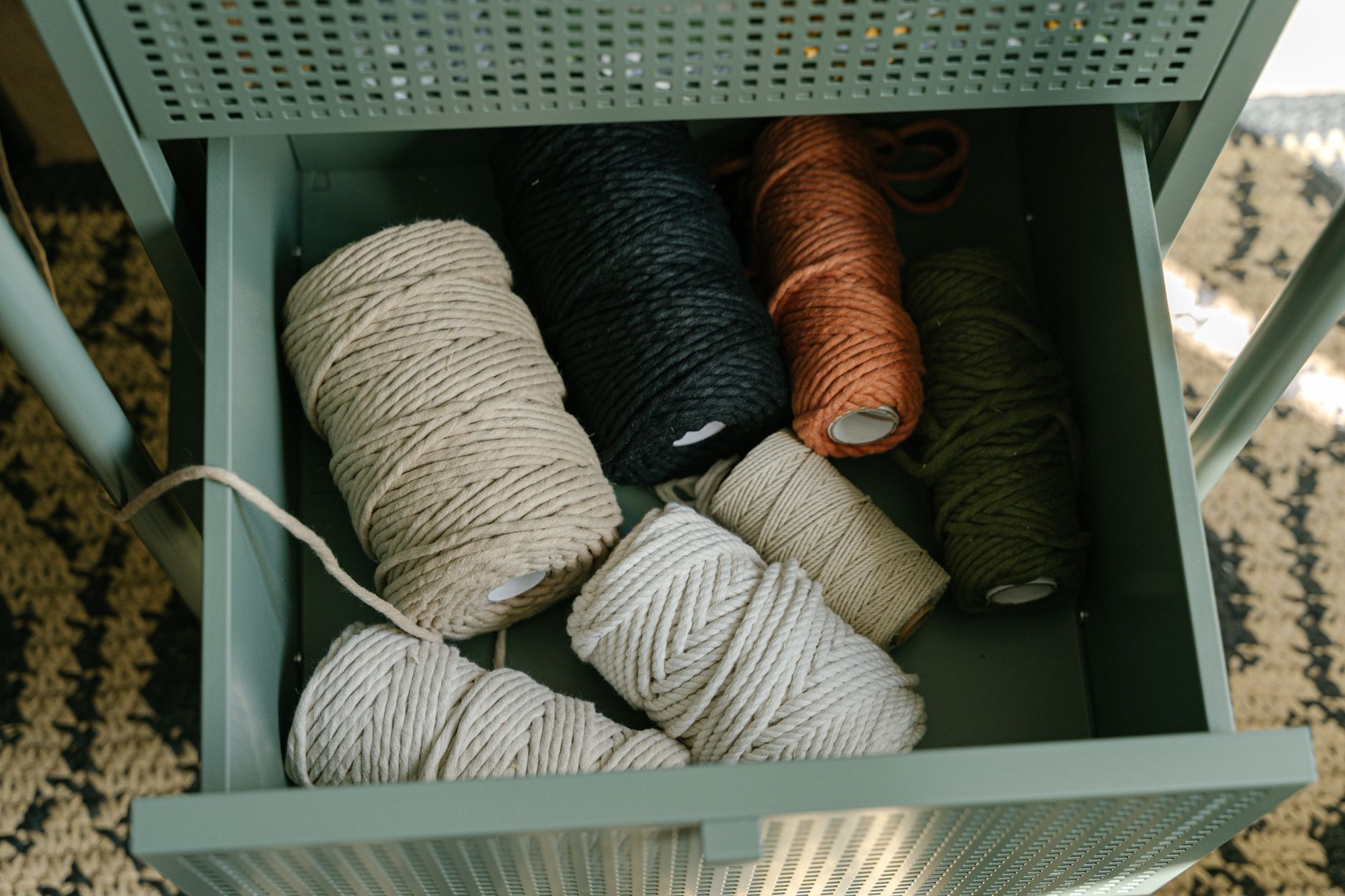
Thicker cord can create larger, bulkier knots. This can affect how much cord is used in the pattern. Thinner cord can be better for smaller, more intricate projects, whilst thicker cord is better for chunkier projects such as wall hangings or plant hangers.
How Tightly You Knot
Your knotting tension also matters. If you pull knots very tightly, you may use more cord. If your knots are looser, the project may look larger or less even.
It’s quite common for beginners to use uneven tension by accident. Cutting a little extra cord can give you room to practice without worrying about running out.
Fringe, Tassels, and Finishing Length
If your macramé project has a long tassel at the bottom, you will need to factor that in to your measurements. The same idea applies to tassels, hanging loops, or decorative loose ends.
A wall hanging may need enough cord for the knots, plus extra length for a fringe. If you forget to allow for a fringe, the finished piece may end up shorter than you wanted.
Examples of Cord Length By Project
Different projects need different amounts of cord. For instance, a small keyring needs less cord than something like a wall hanging. A keyring can be a great beginner project because it’s small and doesn’t waste a lot of material.
A coaster, despite being small, can actually use quite a lot of cord if it incorporates a dense pattern.
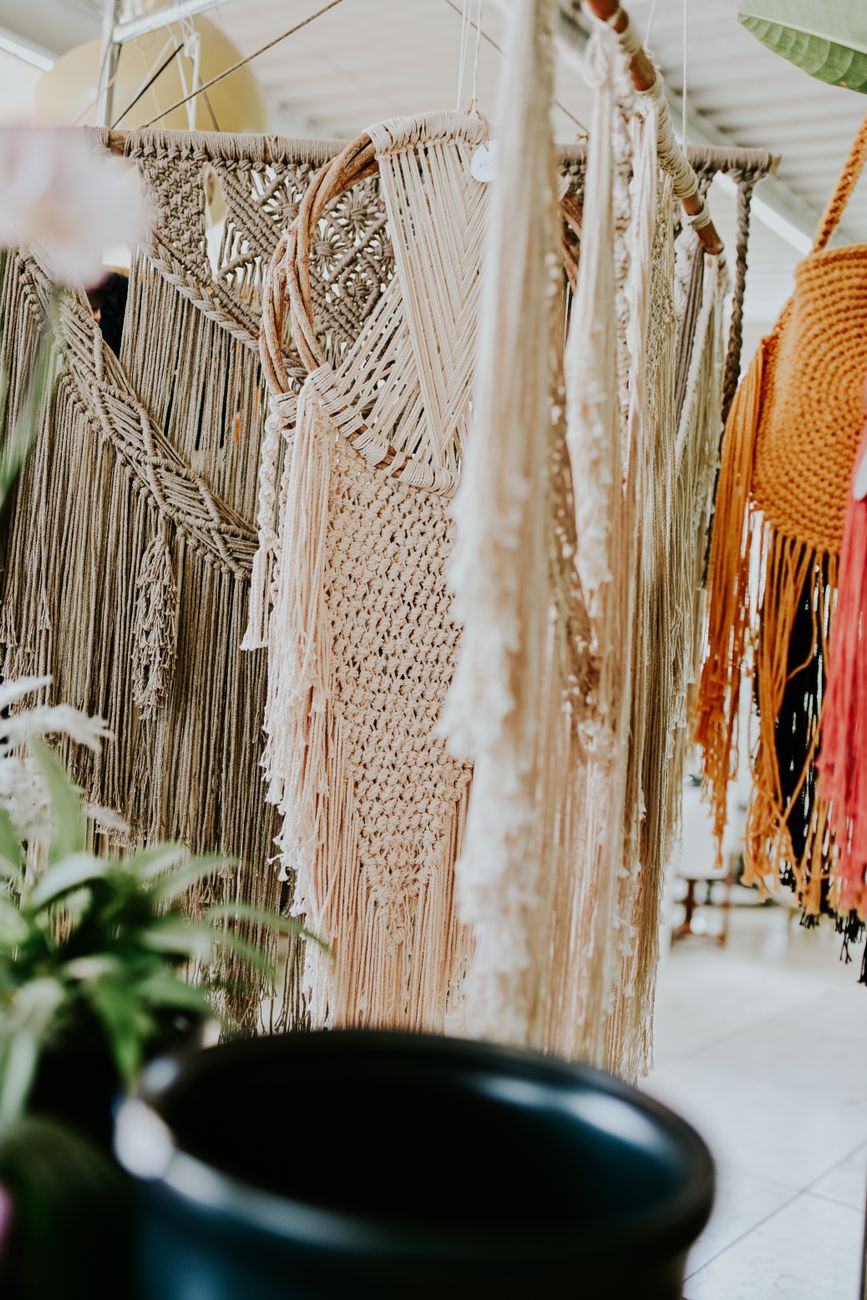
A wall hanging can use a lot of cord, especially as it can include a fringe at the bottom.
A plant hanger often needs longer cord because the finished piece has to hang from a hook and support a pot. Plant hangers also often use repeated knots in different sections, so your cord can get used up very quickly!
Is It Better to Cut Too Much Or Too Little?
It’s usually best to cut too much cord than too little, especially when you are brand new to macramé.
Whilst extra cord can be trimmed away at the end, too little cord is a harder problem to fix. If you run out of cord before the project is completely finished, you might need to add a new piece, change the design, or start again.
Keep in mind that any leftover cord doesn’t need to be wasted. Small offcuts can be used to make keychains, tassels, practice knots, or decorative details.
What Happens If You Run Out Of Cord?
You may be able to add another piece if you do run out of cord, but it depends on the project.
For some designs, it may be possible to hide the join inside a knot or at the back of your piece. In other designs, however, this may be visible, and so can make the piece look imperfect.
It’s much easier to prevent this problem in the first place by ensuring that you start out with enough cord for your project. Cut more cord than you think you will need, just to be safe.
Tips For Measuring Macramé Cord
Before you cut your cord, read the pattern carefully. Check whether the cord will need to be folded in half, as this can change the length that you need to cut.
It can also help to measure twice before cutting anything, especially if you are using a more expensive cord. If your project uses different cord lengths, label the pieces or keep them in separate groups.
Common Beginner Mistakes
The most obvious mistake is forgetting that knots use up cord length! A piece of cord that looks sufficient when it is straight may prove not to be enough.
Beginners may also forget to allow for fringe. If you want to incorporate long hanging ends, you need to include that extra length at the beginning.
Some people also make the mistake of cutting the same length of cords for different sections. A knotted section will need more cord than a holding cord that stays straight.
Finally, it can be tempting to trim the ends too soon. Wait until your project is completely finished before you cut any excess cord.
How Cord Choice Affects the Project
Cord length and type are connected. A soft cotton cord may be easier for beginners to handle, while a stiffer or more slippery cord may prove more challenging.
Thicker cord leads to a chunkier look and so might be better for things such as wall hangings or plant hangers. Thin cord can be good for detailed projects, jewellery-style pieces, or small decorations.
If you are brand new to macramé, start off with a simple cord and a small project. This will get you familiar with how much cord you need before you then move on to bigger designs.
Some Final Thoughts
There is no single perfect cord length for every macramé project. The amount you need depends on the project size, knot type, cord thickness, tension, and finishing details.
As a beginner, a useful tip is to cut the cord around four times the finished length of the project, or slightly more for knot-heavy designs. If you are ever unsure, you can always cut extra and trim any excess away at the end of the project. If you don’t have enough cord, however, it’s much harder to try to incorporate more mid-way through!
Start with small projects, master the basic knots and keep a note on how much cord you use. Over time, estimating what length of cord you need can become much easier.
Read Next
- What is Macramé? A Beginner’s Guide
- Macramé Knots: A Basic Beginner’s Guide
- What Cord Do You Need For Macramé?