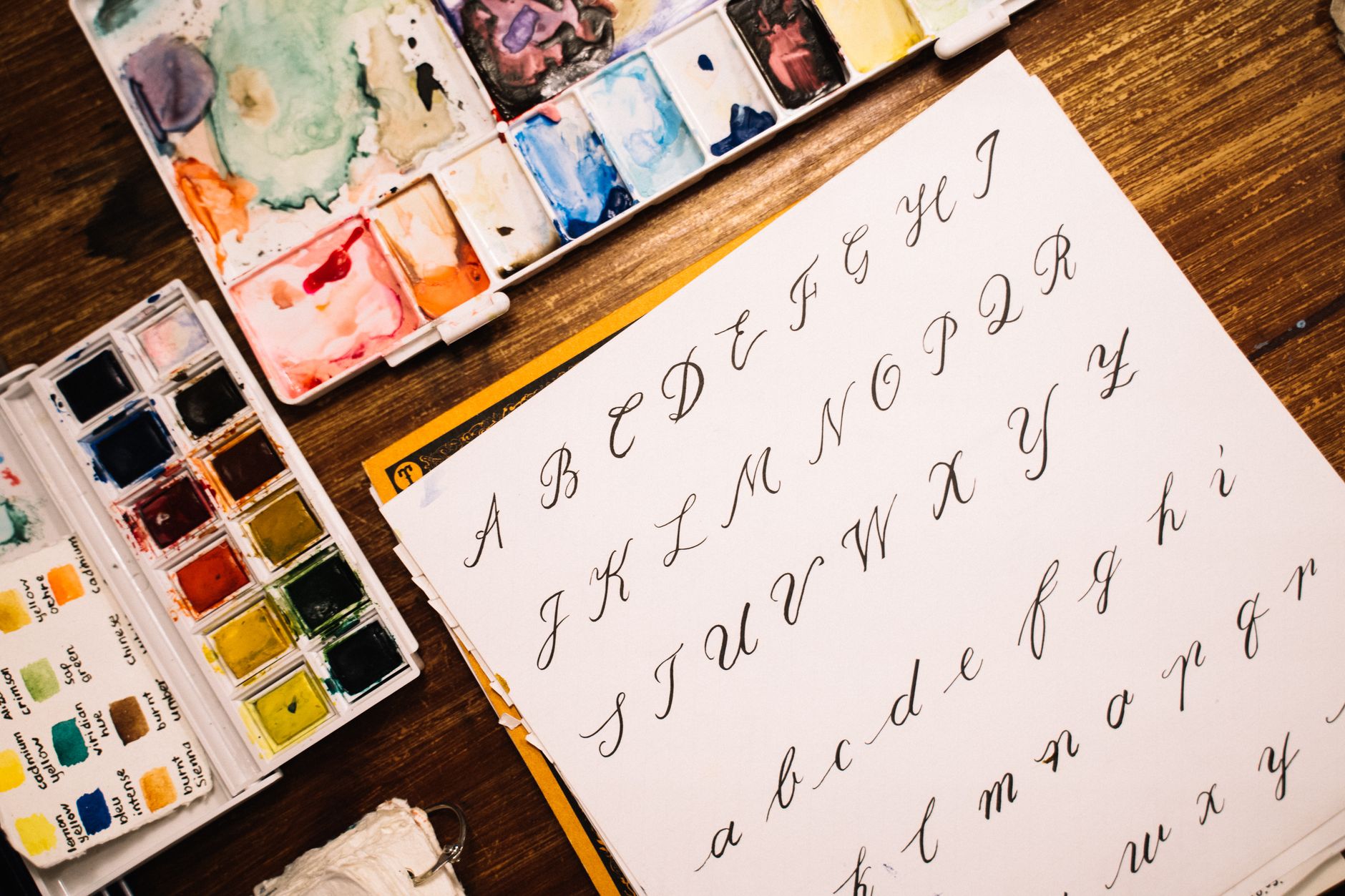
Brush lettering is a style of decorative writing that uses a brush pen or a flexible brush tip to create letters with thick and thin strokes. It’s often used for cards, quotes, bullet journals, envelopes, gift tags, wall art, and handmade stationery.
It’s quite similar to modern calligraphy, but is usually done with brush pens rather than a dip pen and ink. Brush lettering is a good starting point for beginners because the tools are easy to find, fairly low mess, and simple to practise at a desk.
How Does Brush Lettering Work?
Brush lettering works by changing the pressure on the pen as you write. When you press down harder, the brush tip creates a thicker line. When you use lighter pressure, it creates a thinner line.
A common beginner rule is:
- Use heavier pressure on downstrokes
- Use lighter pressure on upstrokes
A downstroke is when your pen moves downward. An upstroke is when your pen moves upward. This contrast between thick and thin lines gives brush lettering its calligraphy-style look.
At first, it can feel strange because you’re not just writing quickly. You are slowing down, controlling the pen, and building each letter carefully.
Is Brush Lettering the Same as Calligraphy?
Brush lettering and calligraphy are closely related, but they’re not exactly the same thing.
Calligraphy is a broader term for decorative, carefully formed writing. It can be done with dip pens, broad-edge pens, brush pens, markers, or other tools.
Brush lettering usually refers specifically to lettering created with a brush pen or brush-style marker. It is often modern, casual, and used for creative projects like cards, journaling, and quotes.
So brush lettering can be a type of calligraphy, but not all calligraphy is brush lettering.
What Can You Use Brush Lettering For?
Brush lettering can be used for many creative projects, including:
- Greeting cards
- Gift tags
- Envelopes
- Bullet journals
- Scrapbook pages
- Wall art
- Quotes
- Wedding signs
- Place cards
- Bookmarks
- Handmade labels
- Planners
- Seasonal decorations
Beginners often start with short words, names, or simple quotes because these are easier than long pieces of writing.
Is Brush Lettering Good for Beginners?
Yes, brush lettering is good for beginners, especially if you like stationery, paper crafts, card making, or decorative writing.
However, it does take a bit of practice. The main skill is learning how to control pressure. Many beginners press too hard all the time or struggle to make thin upstrokes at first. That is normal.
It is best to start with basic strokes before trying full words. Once you understand the main movements, letters become easier to build.
What Do You Need to Start Brush Lettering?
To start brush lettering, you only need a few basic supplies:
- Brush pens
- Smooth paper
- A pencil, if planning first
- An eraser
- Practice sheets or guide lines
Smooth paper is important because rough paper can damage brush pen tips. It can also make the lettering look scratchy or uneven.
You don’t need a huge set of pens at the beginning. One or two beginner-friendly brush pens are enough to practise the basics.
What Are Brush Pens?
Brush pens are pens with a flexible tip that acts like a small brush. The tip bends slightly when you press down, which creates thicker lines. When you use less pressure, the tip makes thinner lines.
Brush pens come in different sizes and firmness levels. Some have large flexible tips, while others have smaller, firmer tips.
For beginners, a smaller or firmer brush pen can sometimes feel easier to control than a very soft, large brush tip.
What Paper Is Best for Brush Lettering?
Smooth paper is usually best for brush lettering. Brush pen tips can wear down quickly on rough or textured paper, so it helps to use paper that lets the pen glide.
Good beginner options include:
- Smooth marker paper
- Layout paper
- Smooth printer paper
- Lettering practice pads
- Bullet journal paper that is not too rough
Watercolour paper and rough sketchbook paper are not usually ideal for brush pens because they can fray the tips.
What Are Basic Brush Lettering Strokes?
Brush lettering is built from simple strokes. Common beginner strokes include:
- Thin upstroke
- Thick downstroke
- Overturn
- Underturn
- Oval
- Compound curve
- Ascending loop
- Descending loop
These shapes are used to form letters. For example, letters like “A,” “D,” and “G” use oval shapes. Letters like “H,” “I,” and “B” use loops and downstrokes.
Practising basic strokes may feel slow, but it helps your lettering become more consistent.
Is Brush Lettering Expensive?
Brush lettering does not have to be expensive. You can start with one or two brush pens and some smooth paper.
It can become more expensive if you buy large pen sets, specialist paper, workbooks, templates, storage, and different colours. However, beginners don’t need everything straight away.
A sensible beginner setup is:
- One black brush pen
- One small set of coloured brush pens
- Smooth practice paper
- Simple guide sheets
That is enough to start learning.
Is Brush Lettering Messy?
Brush lettering is usually very low mess. It does not need paint, glue, water, or ink pots if you are using brush pens.
This makes it a good hobby for small spaces. You can practise at a desk, table, or even in a notebook, then pack the supplies away quickly.
The main thing to watch is ink bleeding through thin paper. If you are using juicy brush pens, place scrap paper underneath or choose thicker paper.
What Is the Easiest Brush Lettering Project?
One of the easiest brush lettering projects is a simple gift tag or greeting card with one word, such as “Hello,” “Thanks,” or “Happy Birthday.”
Other easy beginner projects include:
- A bookmark
- A short quote
- A name card
- A bullet journal heading
- A simple envelope design
- A handmade label
- A small wall art print
It’s better to start with short words rather than long quotes. This lets you practise letter shapes without feeling overwhelmed.
Common Beginner Brush Lettering Mistakes
Common beginner mistakes include:
- Pressing too hard on every stroke
- Rushing the letters
- Using rough paper
- Trying long quotes too soon
- Skipping basic stroke practice
- Making letters too close together
- Not using guide lines
- Expecting normal handwriting to look like lettering immediately
A useful beginner tip is to slow down. Brush lettering is not normal handwriting. It is more like drawing letters one stroke at a time.
Do You Need Good Handwriting for Brush Lettering?
No, you don’t need naturally neat handwriting to learn brush lettering.
Brush lettering is a separate skill. It uses controlled strokes, pressure changes, spacing, and repeated letter shapes. Even if your everyday handwriting is messy, you can still learn brush lettering with practice.
It may help to think of it as drawing letters rather than simply writing them.
Who Might Enjoy Brush Lettering?
Brush lettering may suit you if you enjoy stationery, journaling, paper crafts, card making, or decorative writing.
It may also be a good hobby if you want something:
- Low mess
- Affordable to start
- Suitable for small spaces
- Useful for cards and gifts
- Relaxing and repetitive
- Easy to practise in short sessions
- Creative without needing lots of equipment
However, brush lettering may feel frustrating at first if you expect instant neat results. The pressure control takes time, and early practice pages may look uneven. That is part of learning.
Final Thoughts
Brush lettering is a decorative writing style that uses a flexible brush pen to create thick and thin strokes. It is often used for cards, quotes, journals, envelopes, and handmade paper crafts.
If you are new to brush lettering, start with one or two brush pens, smooth paper, and basic stroke practice. Focus on light upstrokes, heavier downstrokes, and slow controlled movement. Once you understand the basic strokes, you can begin forming letters, words, and simple projects.