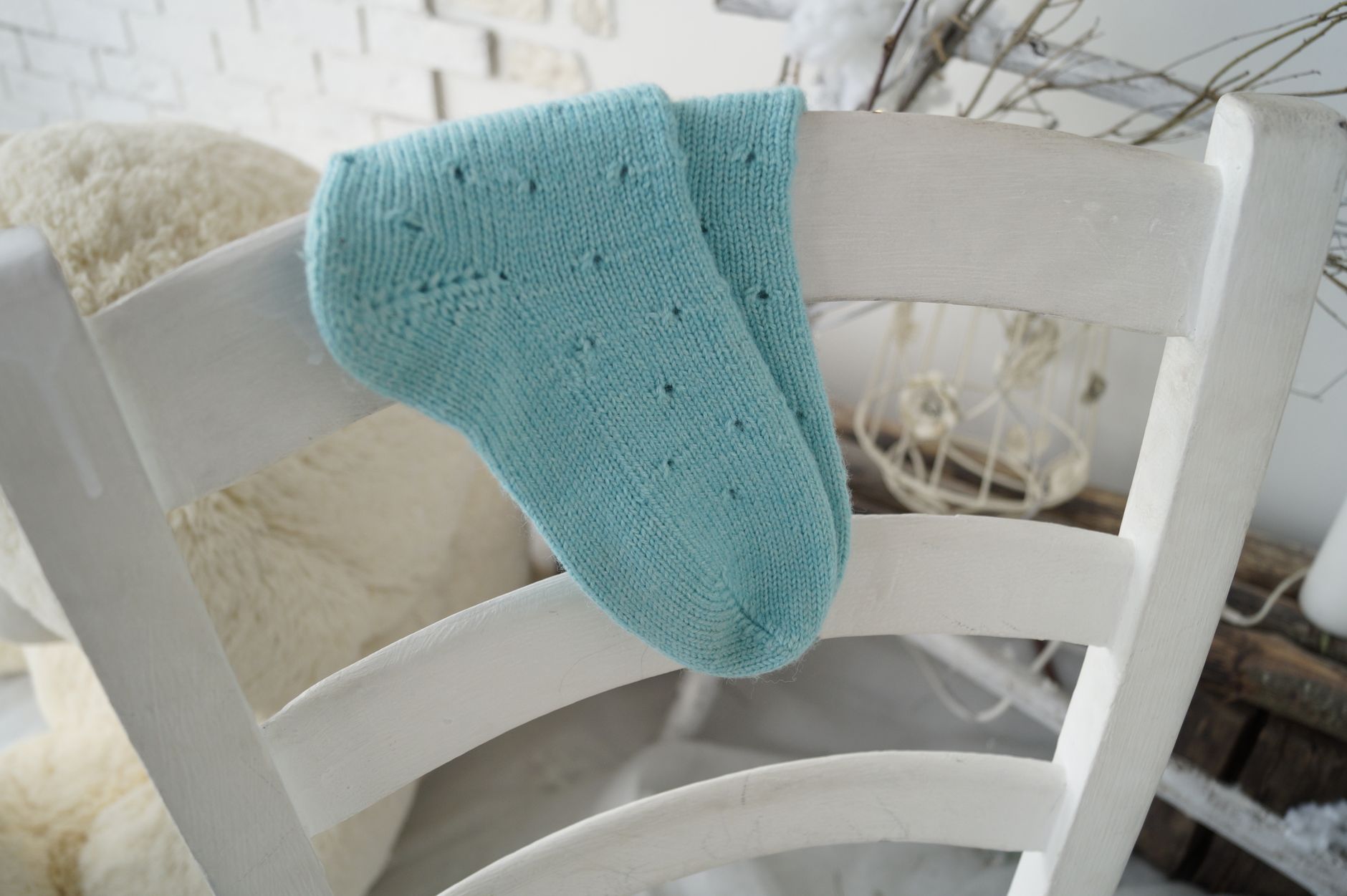
Darning is a sewing repair technique that is used to mend holes, worn areas, and thinning fabric. It is most often used on items such as socks, jumpers, cardigans, and knitted items, but can also be used on some woven fabrics.
The basic idea is to rebuild the missing or damaged fabric with thread or yarn. Instead of throwing an item away because it has a hole, darning allows you to repair it and keep using it.
How Does Darning Work?
Darning works by stitching new threads across a hole or worn patch to create a small woven repair. You usually stitch in one direction first, then stitch across those threads in the opposite direction.
This creates a grid or woven patch that covers the damaged area. The repair can be made in a way to blend in with the fabric, or it can be made decorative with a contrasting colour.
For instance, if a sock has a hole in its toe or heel, you can use darning to fill the gap with thread and make the sock wearable again.
What Can You Repair With Darning?
Darning is useful for repairing fabric that has become thin, worn, or has holes in it.
Common things you can darn include:
- Socks
- Woollen jumpers
- Cardigans
- Gloves
- Scarves
- Blankets
- Knitted hats
- Elbows on jumpers
- Small holes in clothing
- Worn patches before they turn into proper holes
Darning is especially useful for knitted items because the repair can fit in quite well with the fabric.
What Do You Need for Darning?
You do not need many supplies to start darning. A basic darning kit might include:
- A darning needle
- Thread, wool, or yarn
- Scissors
- Darning mushroom or egg
- Embroidery hoop (optional)
- Matching or contrasting thread
- Good lighting to work
A darning mushroom or darning egg is placed under the hole to hold the fabric in shape whilst you stitch. If you do not have one, you can use a small jar, tennis ball, or rounded object to achieve the same thing.
What Thread Is Used for Darning?
The best thread depends on which item you are repairing. For socks and knitted items, you may use wool, sock yarn, embroidery thread, or strong sewing thread.
For a neat repair, choose a thread close to the colour and thickness of the original fabric. For a visible repair, choose a contrasting colour so the mend becomes part of the design.
Very thick yarn can make the repair bulky, while very thin thread may not be strong enough. You need to choose something that suits the weight and texture of your fabric.
Is Darning Difficult?
Darning is not difficult to start, but neat darning takes practice. The first repair may look a bit uneven, especially if the hole is large or the fabric is quite stretchy.
Small holes are easier to repair than large ones, so it is best to mend worn areas early before they grow or become proper holes. Beginners can start with thick socks, old jumpers, or practice fabric before turning their hand to any beloved items of clothing.
That said, things don’t always need to be perfect. A slightly uneven darn can still be useful if it closes a hole and strengthens the fabric.
What Is Visible Mending?
Visible mending is when you repair clothing in a way that is purposefully decorative rather than hidden. Darning can be part of visible mending.
Instead of trying to make the repair disappear, you might use a bright thread, patterned stitching, or bold colours. This can turn a hole or worn patch into a design feature or ‘upgrade’ on a piece.
Visible mending is popular because it celebrates repair rather than hiding it. It can make clothes feel more personal and unique.
Is Darning the Same as Patching?
Darning and patching are both ways to repair fabric, but they are not the same.
Darning rebuilds the damaged area using stitches. It is often used for holes in socks, knitwear, and small worn patches.
Patching adds a separate piece of fabric over or behind the damaged area. It is often used for jeans, jackets, bags, and larger holes.
For knitted items, darning is often better because it can create a flexible repair. For larger tears or heavy fabrics such as denim, a patch may be stronger.
Why Is Darning Useful?
Darning is useful because it helps clothes and textiles last longer. It can help you save money, reduce waste, and keep your favourite items around for longer.
It is especially helpful for:
- Repairing expensive wool socks
- Saving handmade knitwear
- Fixing small holes before they get worse
- Extending the life of clothing
- Learning practical sewing skills
- Reducing textile waste
Darning is a small skill, but it can make clothing care feel much more manageable.
Is Darning Good for Beginners?
Darning is a good beginner sewing skill because it is practical, affordable, and easy to practise. You only need a needle, thread, scissors, and something to repair.
It is also a reasonably forgiving craft. The repair does not have to look perfect to work. Once you understand the basic woven stitch, you can use the same method on socks, jumpers, blankets, and other fabric items.
Final Thoughts
Darning is a traditional repair technique used to mend holes and worn areas by stitching new thread into the damaged fabric. It is commonly used on socks and knitwear, but it can also be useful for other textiles.
For beginners, the easiest way to start is with a small hole, a darning needle, suitable thread, and a rounded object such as a darning egg or mushroom to support the fabric. With a little practice, darning can become a useful way to repair clothing and reduce waste.