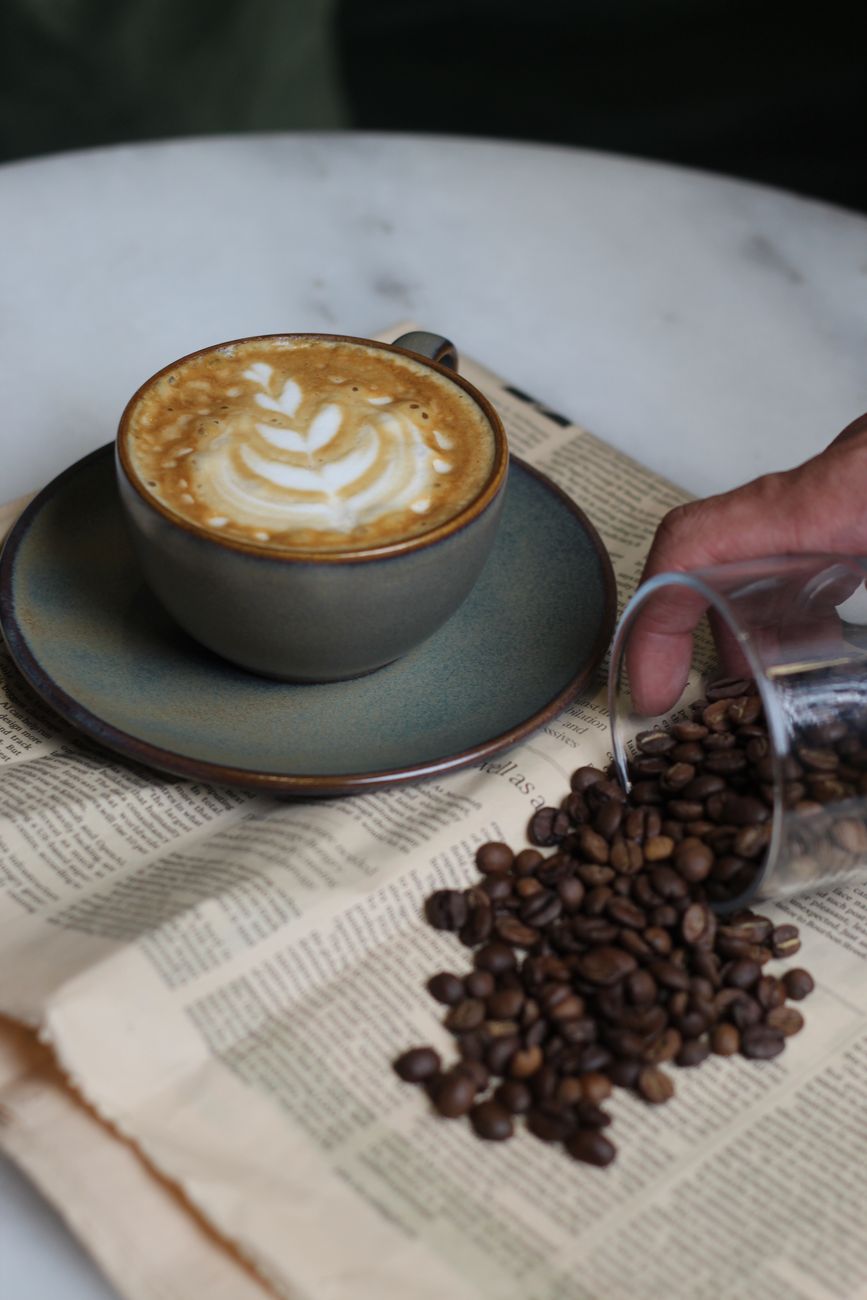
Home coffee making is the process of preparing café-style or everyday coffee in your own kitchen. It can be as simple as adding hot water to instant coffee, or you can add some finesse to process by starting with whole beans that you grind yourself, and then experimenting with different brewing methods.
You don’t need an expensive coffee machine or in depth coffee knowledge to get started. A basic cafetière, some ground coffee and a kettle are enough to start exploring how factors such as the beans, grind size, water and milk affect your finished drink.
Is Home Coffee Making a Hobby?
Home coffee making can be treated as a practical skill, a daily routine or a hobby in its own right.
As a hobby, it gives you several things to experiment with:
- Coffee beans from different countries and roasters
- Different roast levels
- Grind sizes
- Brewing equipment
- Coffee-to-water ratios
- Milk textures
- Hot, iced and flavoured drinks
You can keep it very simple or gradually learn more about each part of the process. This makes it a relatively flexible hobby that you can add into your daily routine!
Is Home Coffee Making Good for Beginners?
Home coffee making is suitable for beginners because you can start with equipment that you already own.
You don’t need to understand all the terminology or buy an expensive coffee machine immediately. It’s usually easier to choose one brewing method, learn how it works and make small adjustments from there.
A cafetière is one approachable starting point because it doesn’t require paper filters or electricity. Pour-over coffee and AeroPress-style brewers are other relatively compact options you may want to look into.
The main challenge when you start off with coffee making is that there are many variables; if you change the beans, grind size, amount of coffee and brewing time simultaneously, it can be difficult to work out why the result tastes different. Changing one thing at a time makes the learning process more manageable and scientific.
How Does Home Coffee Making Work?
Most home coffee methods work by bringing ground coffee into contact with water. The water extracts flavour from the grounds, producing a bitter, brown drink.
The basic process is as follows:
- Choose which coffee beans or ground coffee you want to use.
- Measure the amount of coffee and water.
- Grind your beans if necessary.
- Brew the coffee using your chosen method.
- Add milk, sugar or flavourings (such as syrups) if wanted.
- Taste the result and adjust it next time. Tweaks such as adding more sugar can be made on the spot.
Different brewing methods handle this process quite differently. In a cafetière, the coffee grounds sit in the water before being separated by a plunger. With pour-over coffee, water passes through the grounds and a filter. Espresso machines force pressurised water through finely ground coffee.
These differences affect the strength, texture and flavour of the resulting drink.
What Coffee Beans Can You Use at Home?
Coffee beans are available in different varieties, origins, blends and roast levels.
A coffee blend combines beans from more than one source to create a particular flavour profile. A single-origin coffee comes from one country, region or producer, although the precise meaning can vary between sellers. For instance, the phrase could be used to denote beans from one country only, even if these beans are from many different farms.
Roast level also affects the finished drink. Lighter roasts may retain more delicate, fruity or acidic flavours, whilst darker roasts often taste deeper, smokier or more bitter.
For a first experiment, you could buy a small bag from a boutique roaster. Where you can, opt for something that is described as suitable for the brewing method you intend to use.
Coffee is best kept sealed and protected from heat, moisture, light and strong odours. Buying smaller quantities can help you use it while it’s still fresh. You can also keep leftover, home-ground coffee in a glass container or jar in the fridge; just be sure to use it as soon as you can.
Do You Need to Grind Coffee Beans?
Not necessarily; you can choose whether you buy whole beans or pre-ground coffee.
Pre-ground is convenient because you don’t need to invest in a grinder. However, whole beans generally retain their freshness for longer and allow you to choose a grind size that suits your brewing equipment.
Grind size affects how quickly the water extracts flavour from the coffee:
- Coarse grounds are commonly used for cafetières.
- Medium grounds can suit some filter and pour-over methods.
- Fine grounds are usually used for espresso.
- Very fine coffee may be required for certain traditional brewing methods, such as Turkish style coffee.
If the grind is much too fine or coarse for the method, the coffee may taste unpleasantly bitter, sour, weak or muddy.
A grinder can therefore be a useful upgrade, but it’s essential for your first attempt. You can start by deciding on your brewing method first and then adapting your coffee to that (not the other way around.
If you do choose to invest in a coffee grinder, you have the option of a cheaper hand-crank device or an electric grinder. Electric grinders take away a lot of the manual effort, but may be more expensive (and less fun and ‘authentic’ feeling).
What Coffee Machines and Brewers Can You Use?
There are several different types of coffee machine or adjacent equipment that you could consider using.
Cafetière
A cafetière, also known as a French press, steeps coffee grounds directly in hot water. It’s straightforward, reusable and available in small sizes if you are just making a serving for yourself and don’t want to feel wired!
Pour-over brewer
A pour-over brewer sits over a mug or jug. Hot water is poured over coffee held in a filter. This method gives you control over how quickly and evenly you add the water.
Pod machine
A pod machine prepares coffee from pre-portioned capsules. It’s convenient and consistent, although it gives you less control over the coffee and creates ongoing capsule costs. Systems like Keurig, Tassimo, Nescafé Dolche Gusto, and Nespresso are varieties of capsule machine.
Filter coffee machine
A filter machine heats water and passes it through ground coffee into a jug or carafe. It can be useful when making several cups.
Espresso machine
An espresso machine produces a small, concentrated coffee using pressure. Espresso can be drunk by itself or used as the base for coffee house favourites such as lattes, cappuccinos and Americanos.
Espresso machines vary considerably in price and complexity. They are not necessary for learning about home coffee making, especially if you are still deciding whether the hobby interests you.
If you do choose to invest in an espresso machine, there are compact options on the market that you can try first. If you fall in love with home espresso making, you might then consider investing in a more premium model; you don’t need a professional machine to get started!
What Milk Can You Use in Coffee?
You can use dairy milk or a plant-based alternative, depending on your preferences.
Milk changes the strength, texture and perceived sweetness of coffee. Some types are also easier to foam than others.
Common choices include:
- Whole, semi-skimmed or skimmed dairy milk
- Oat drink
- Soya drink
- Almond drink
- Coconut-based drink
“Barista” versions of plant-based drinks are formulated to foam more reliably and to resist separating when added to hot coffee.
If you prefer something richer and more indulgent than milk, you could opt for cream or half-and-half (in available markets).
You do not necessarily need a steam wand to make foamed milk, although basic wands are increasingly included in even entry-level espresso makers. A handheld frother, pump frother or other simple method can introduce air into warm milk. The result may not precisely match café microfoam, but it can still add texture to a homemade drink.
Take care when heating milk. It should be hot enough for the drink without being allowed to scorch or boil over.
What Do You Need to Start Making Coffee at Home?
A simple beginner setup could include:
- Ground coffee
- A cafetière or other basic brewer
- A kettle
- A mug
- A spoon
- A timer
- Milk, a sweetener, or flavoured syrup, if wanted
Kitchen scales are helpful because they allow you to repeat the same coffee-to-water ratio. However, you can begin with a measuring spoon if you want avoid investing in equipment.
A grinder, milk frother and temperature-controlled kettle are possible later upgrades rather than essential starter items.
Does Home Coffee Making Require Much Space?
Home coffee making can work in a small kitchen.
A cafetière, hand grinder and bag of beans require relatively little storage space, whilst a pour-over brewer may fit inside a mug or cupboard. Larger espresso machines need more permanent counter space and room to access the water tank, drip tray and controls.
Before buying a machine, check its full measurements and consider where you will store accessories, coffee, mugs and cleaning supplies. You don’t want to find that you don’t have the counter space for your new machine, or that it’s interfering with the space you have available for cooking.
Starting with one brewing method helps to keep your setup contained.
Is Home Coffee Making Expensive?
Making coffee at home doesn’t need to be expensive, although it can be if you invest in lots of equipment or expensive coffee blends.
The initial cost depends heavily on the method you choose. A simple manual brewer can be inexpensive, while an espresso machine and electric grinder can cost considerably more.
There are also ongoing costs to consider:
- Coffee beans or ground coffee
- Milk
- Paper filters
- Cleaning products
- Water filters
- Coffee pods, if applicable
- Replacement parts and machine maintenance
It is sensible to learn with inexpensive equipment before investing in a more elaborate setup. Better technique and freshly ground coffee may make a more noticeable difference than buying several gadgets at once.
Keep in mind, however, that making your own coffee can save you money in the long term over getting takeout from places like Starbucks. However, this advantage can still be eroded if you go overboard with your equipment purchases!
What Is a Good First Coffee to Make?
A good first project is to prepare the same basic coffee several times, but changing only one variable.
For example, you could use a cafetière and try:
- The same coffee and water quantities each time.
- A slightly shorter or longer brewing time.
- A different grind size, if you have access to a grinder.
- The coffee black and then with milk.
- A second type of bean using the same method.
Keep a brief note of what you used and whether the result tasted weak, strong, bitter, sour or balanced to you. There is no need to use professional tasting language or treat coffee like wine; just experiment and work out what tastes you prefer.
What Coffee Drinks Can You Make at Home?
The drinks available to you depend partly on your equipment, but possible options include:
- Black filter coffee
- Cafetière coffee
- Espresso
- Americano
- Latte
- Cappuccino
- Flat white
- Mocha
- Iced coffee
- Cold brew
- Flavoured coffee
Some café drinks are traditionally made with espresso and steamed milk. You can still make informal home versions using strong brewed coffee and warmed or frothed milk, although the taste and texture might be different.
Is Home Coffee Roasting Part of the Hobby?
Coffee roasting can be a related hobby, but it is a separate stage from ordinary home brewing.
Roasting is when you apply heat to green coffee beans to develop their flavour and aroma. It requires suitable equipment, ventilation and careful attention to heat and smoke. Beginners don’t need to roast their own beans to explore coffee making!
You are much better off buying pre-roasted beans or grounds as a beginner. You can then investigate home roasting later if you enjoy different roasting styles, and want to customise your own creations. However, it may be more sensible to attend a course or class to get going with roasting.
Final Thoughts
Home coffee making is an accessible hobby that can be adapted to your space, budget and level of interest. You can start with ground coffee and a basic brewer, then explore fresh beans, grinding, different brewing equipment and milk drinks over time.
There is no need at all to build a complete coffee station immediately. Choose one method, make the same drink several times and pay attention to what changes the result. This provides a practical introduction, without making coffee too complicated or expensive to explore.