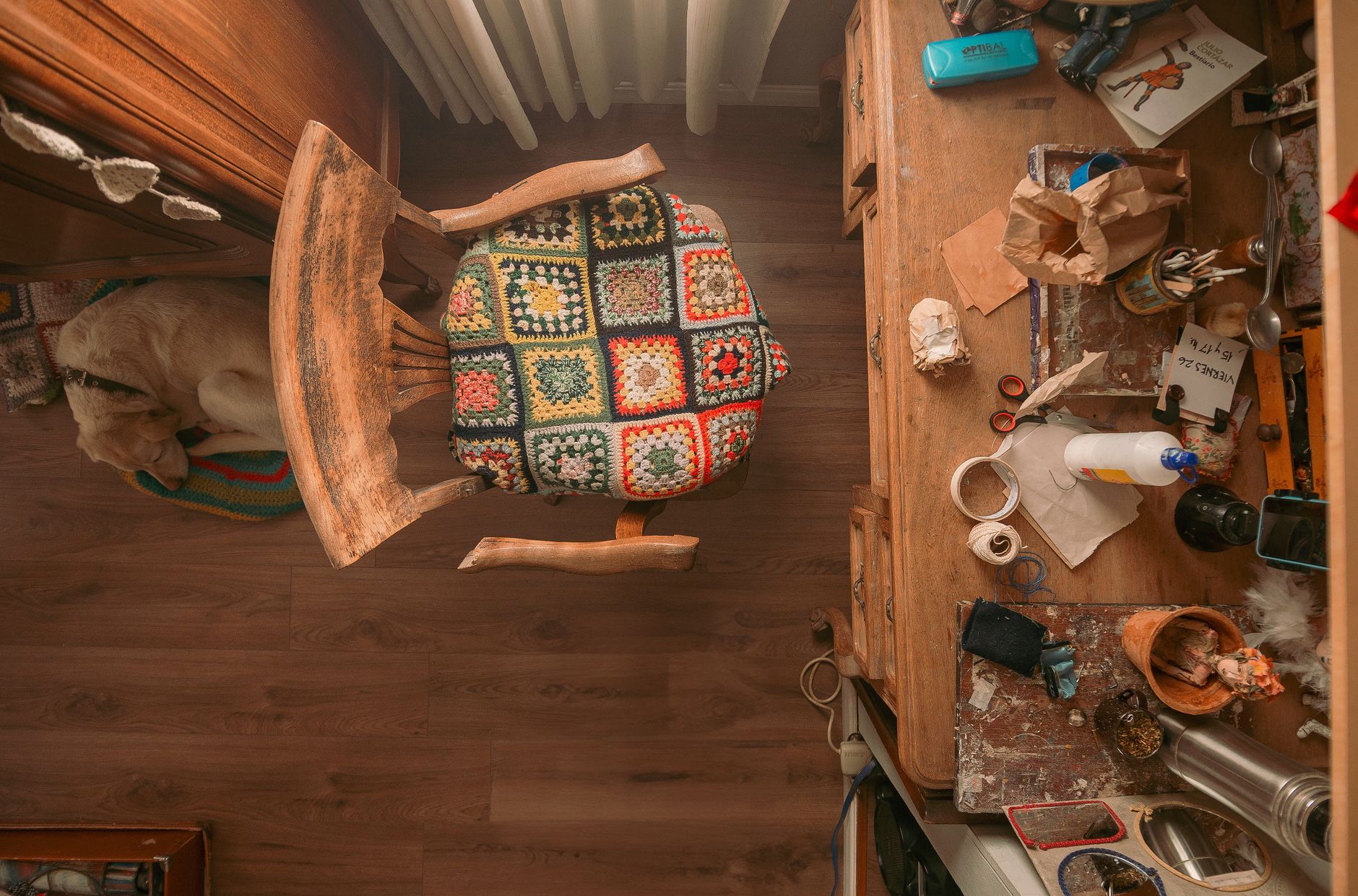
When you are new to crafting, it’s easy to think you need to set up a dedicated room. After all, it seems that all the serious people have a space for their hobby where they can store as many supplies as they want, from a 27th colour of yarn to a shape of sequin you’ve never seen before.
The problem is that not everyone has the luxury of a spare room; maybe you live in a studio flat or a student dorm, or you do have an extra room or two in the house but you need these for guests or kids. And not everyone has the space or disposable income for a studio shed at the bottom of the garden.
The good news is that you don’t need a dedicated room to start a new craft hobby; a little corner in a room will do.
Pick One Craft to Start With
You don’t need to target everything at once. As exciting as this new world can be, it may be overwhelming if you try to jump into croqueting, candle making, and macramé all at once!
This is where it buys not to try and compare yourself for others. Just because a friend, neighbour, or someone in a magazine is a jack of all crafts, that doesn’t mean you have to be too (at least not off the bat). Work out which areas truly capture your interest and what you are willing to dedicate time, effort and resources to learning.
Create a Small Work Surface
You don’t need a special table or workshop. Any work surface that you are prepared to get slightly messy will do. This may mean the kitchen table with plenty of newspaper or a sheet put down. Or, if your kitchen table is not suitable or too nice (!) for crafting, you could consider getting a pop up table that can be set up in the corner of a room.
Other hobbies like knitting obviously don’t require a hard surface and can be done in a more traditionally cosy area such as a living room or conservatory. So your ‘surface’ is wherever on the sofa you can set down your supplies.
Although it’s usually best to choose a hobby based on interest alone, if you really don’t have a spare table or area for more ‘messy’ pursuits that need paint or glue, you might consider pursuing knitting, crocheting, or embroidery instead. Plus, once you get into your stride, these crafts can be done in front of the TV!
Keep Your Set Up Simple
Keep supply purchases to a minimum. If you are learning to knit, you just need needles, scissors, couple of colours of yarn and a simple pattern. Your set up doesn’t need to look like your own personal haberdashery.
Make It Easy to Pack Away
You don’t need an elaborate storage solution when you are just starting out. A simple box or basket will do the job. Whatever keeps your supplies in one place and out of the reach of children or pets.
If you have any chemical or liquid supplies, such as glue, it’s a good idea to keep them in a cool, dry place, out of the reach of direct sunlight. If you are concerned about children or pets coming to harm or creating mess with paint, glue, oils, or any chemicals, you may consider using a lock on a box or through the zip of a bag if possible.
Whilst you may look at investing in a proper storage solution in time, at the very beginning it’s probably better to use something you already have at home. If you do need to go out and buy a bag, basket, or box, keep it as barebones as possible. Keep your initial investment low-stakes.
Make it Comfortable
A good craft area only has one real requirement; you have to want to use it. That means choosing somewhere with good lighting (enough sun or artificial light, or making sure the sun doesn’t shine in your eyes at the exact time of day you usually do your crafting). It’s also a good idea to avoid an area with extremes in temperature, if possible. You don’t want to be constantly trying to cool yourself off or put on an extra layer.
Your space doesn’t have to look fancy or impressive to others. It just needs to be somewhere where you enjoy spending time and are comfortable. Ideally, it will put you ‘in the zone’ to enjoy your new interest.
The Golden Rule: Don’t Overcomplicate Things
A first craft corner doesn’t need to be a professional studio, it just needs to help you get your new hobby off the ground.
Choose one craft, find a small area to make your own, and incorporate a storage solution so you can pack everything away neatly.