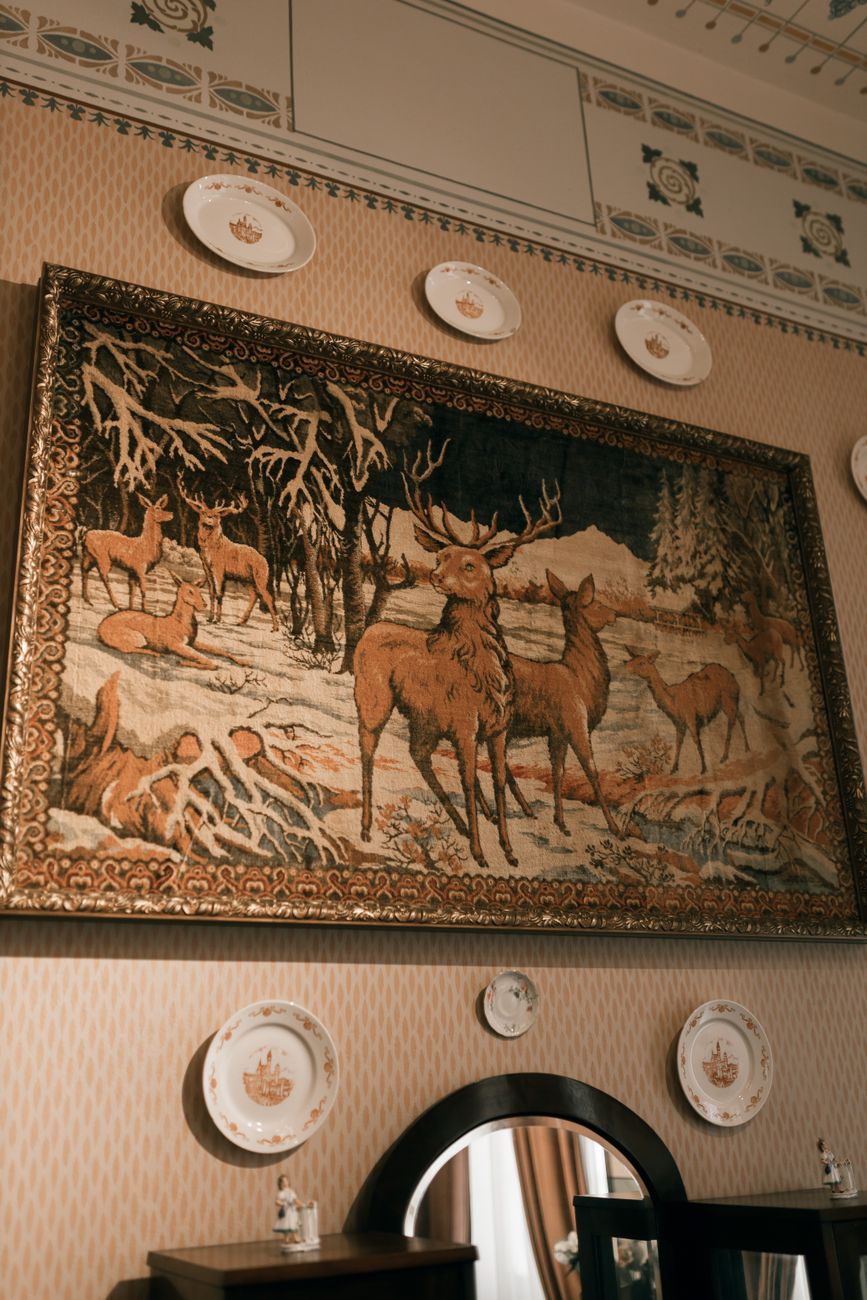
Tapestry is a textile craft where coloured threads are used to create pictures, patterns, or decorative designs on fabric or a woven surface. The word can refer to traditional woven wall hangings, but it’s also commonly used for a type of needlework where you stitch designs onto canvas.
For beginners, tapestry usually means tapestry needlework. This involves using a blunt needle and wool or thread to stitch across a canvas, gradually filling in the design. It’s a relaxing craft that can be used to make pictures, cushions, bags, wall hangings, bookmarks, and decorative panels.
How Does Tapestry Work?
Tapestry needlework works by stitching thread through a special canvas. The canvas has an even grid of holes, which helps you place each stitch neatly.
A design may be printed directly onto the canvas, or you may follow a separate chart. Each colour is stitched into the correct area until the picture or pattern is complete.
Many beginner tapestry kits include everything you need, such as the canvas, needle, threads, and instructions. This makes it easier to start without needing to choose all the supplies separately.
Is Tapestry the Same as Needlepoint?
Tapestry and needlepoint are very similar, and the terms are often used in overlapping ways.
Needlepoint usually refers to stitching onto canvas using different types of stitches. Tapestry is often used to describe canvas work that creates a picture or decorative design, especially when using wool.
In everyday craft language, many people use “tapestry” and “needlepoint” to mean almost the same thing. Both involve stitching onto a canvas to build up a design.
Is Tapestry the Same as Embroidery?
Tapestry and embroidery are also related, but they are not exactly the same.
Embroidery is a broad term for decorating fabric with thread. It can be done on many types of fabric and often uses stitches such as back stitch, satin stitch, chain stitch, and French knots.
Tapestry is usually worked on canvas and often fills the whole design area with stitches. It tends to be more structured because the canvas grid guides where each stitch goes.
A simple way to think of it is this; embroidery decorates fabric, while tapestry often builds a design across a canvas.
What Do You Need for Tapestry?
You do not need a large kit to start tapestry. A basic beginner setup might include:
- Tapestry canvas
- Tapestry needle
- Wool, yarn, or embroidery thread
- Scissors
- Printed design or chart
- Frame or hoop (optional)
- Needle threader (optional)
A tapestry needle has a blunt tip, which makes it suitable for working through canvas holes without splitting the threads as easily.
What Can You Make With Tapestry?
Tapestry can be used for both decorative and practical craft projects. Traditional tapestries were often large wall hangings, but modern beginner projects are usually smaller and easier to finish.
Common tapestry projects include:
- Wall art
- Cushion covers
- Bookmarks
- Bags
- Coasters
- Decorative panels
- Christmas decorations
- Small framed pictures
- Glasses cases
- Needle cases
Beginners often start with a small kit because it gives a clear design and manageable project size.
Is Tapestry Difficult?
Tapestry is not difficult to start because the canvas grid makes it easier to place stitches evenly. This can make it feel more structured than freehand embroidery.
The main challenge is patience. Tapestry can take time because many designs involve filling in large areas with stitches. It is best to start with a small project rather than a large cushion or wall hanging.
Once you understand the basic stitch and how to follow the pattern, tapestry becomes a calm and repetitive craft.
What Stitches Are Used in Tapestry?
The most common beginner stitch is tent stitch, which is a small diagonal stitch worked across the canvas. It is simple, neat, and useful for filling in designs.
Other tapestry stitches may include:
- Half cross stitch
- Basketweave stitch
- Continental stitch
- Long stitch
- Cross stitch
- Decorative canvas stitches
Beginners don’t need to learn many stitches straight away. One simple stitch is enough for many starter tapestry kits.
Is Tapestry Good for Beginners?
Tapestry can be a good craft for beginners because it is structured, portable, and easy to practise. The canvas grid helps guide the stitches, and kits make it clear which colours to use.
It is especially good for people who enjoy slow crafts, textile projects, colour patterns, and repetitive stitching. It may not be the best choice if you want a very quick craft, but it is satisfying if you like seeing a design gradually build up.
Final Thoughts
Tapestry is a textile craft that uses thread, wool, or yarn to create decorative designs on canvas or woven fabric. For beginners, tapestry usually means stitching a design onto canvas with a blunt needle and coloured threads.
The easiest way to start is with a small tapestry kit that includes the canvas, needle, thread, and instructions. Once you learn the basic stitch, tapestry can become a relaxing way to make handmade pictures, cushions, bookmarks, and decorative items.