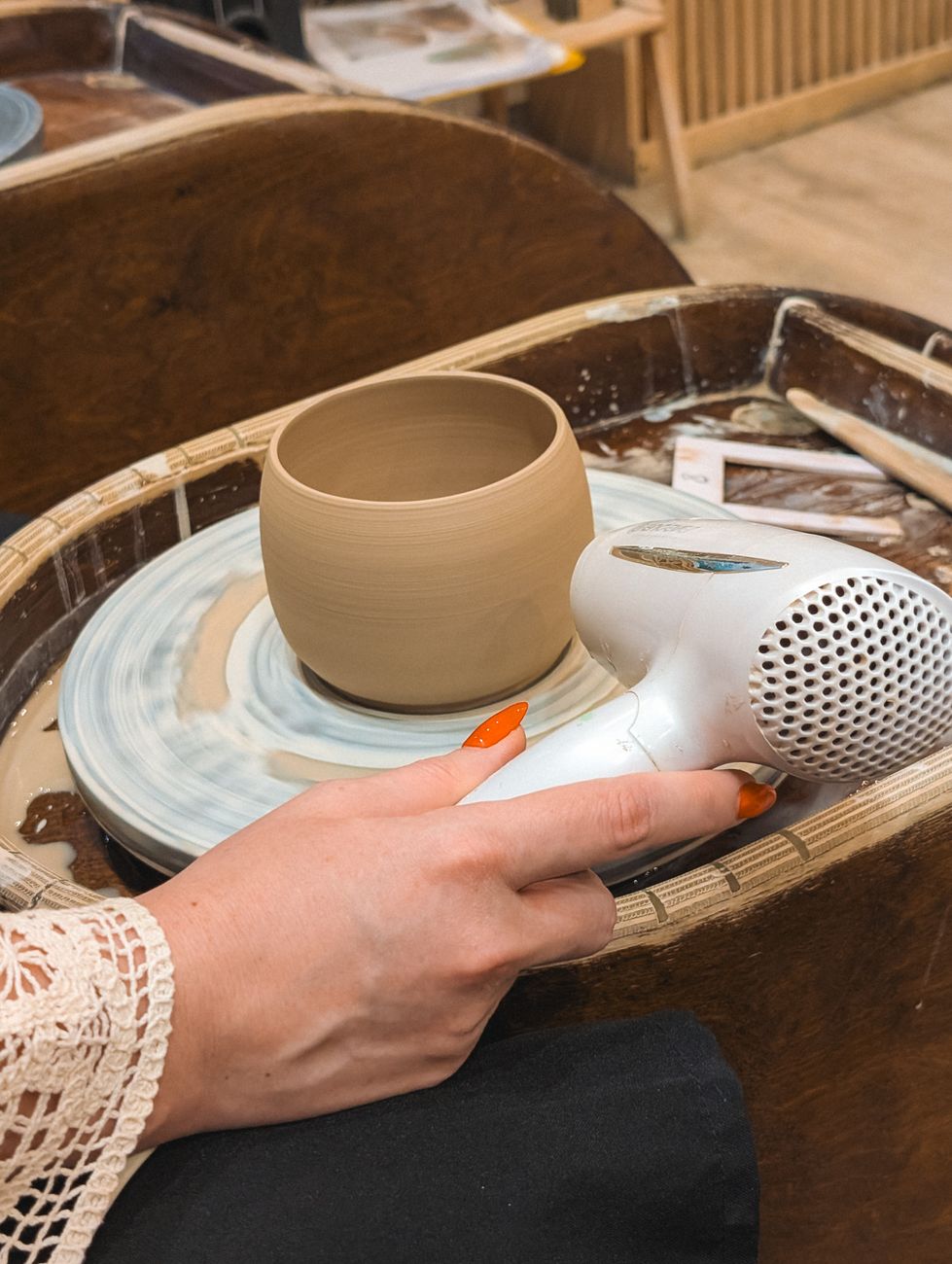
Air-dry clay can survive a small accidental splash after it’s dried, but it should not be repeatedly exposed to water (let alone submerged in liquid!)
Most air-dry clay remains porous after drying. Water can soak into the material, causing it to soften, swell, lose its shape or eventually begin to break apart.
Is Dried Air-Dry Clay Waterproof?
No, ordinary air-dry clay is not waterproof.
Even if the surface feels completely hard, the clay can still absorb moisture. Crayola, for instance, states that its dried air-dry clay is not waterproof, even if it has been sealed. The company therefore suggests that you display finished pieces indoors.
Air-dry clay is therefore better for decorative projects than objects that need to hold water or organic materials. It’s also not food safe, so shouldn’t be used to attempt to make crockery.
What Happens If Air-Dry Clay Gets Wet?
The effect depends on how much water reaches the clay and how long it remains wet.
A few drops may not cause obvious damage if you wipe them off quickly. More prolonged exposure, however, can make your clay:
- Become soft or sticky
- Develop marks or discolouration
- Warp or lose its shape
- Crack as it dries again
- Separate from paint or decorations
- Gradually begin to break down
Thin sections and unsealed edges may be particularly vulnerable because moisture can enter them more easily.
Can You Seal Air-Dry Clay Against Water?
A suitable varnish or sealant can make air-dry clay more water-resistant, but it can’t make it more waterproof.
Can Air-Dry Clay Be Used Outside?
Air-dry clay is generally unsuitable for permanent outdoor decorations.
Rain, humidity, frost and changing temperatures can all affect the clay. Even a sealed piece may deteriorate when it is repeatedly exposed to outdoor conditions. Crayola specifically recommends keeping dried and sealed air-dry clay pieces indoors.
A temporary outdoor display may survive for a while, but it should be brought indoors before rain and stored somewhere dry.
Can Air-Dry Clay Hold Water?
You should not normally use air-dry clay to make working mugs, bowls, vases or plant pots that will remain in contact with water.
You can create a decorative vase cover or plant-pot sleeve, but place a waterproof glass, jar or plastic container inside it. This keeps the water separate from the clay.
What Should You Do If It Gets Wet?
Wipe away the water without rubbing the clay. Place the object somewhere dry with good airflow and allow it to dry naturally.
Do not use intense heat, such as attempting to bake your clay, as drying the surface too rapidly may encourage cracking. Once the piece is completely dry, inspect it for softness, warping or damaged paint before resealing it if necessary.
Air-dry clay can tolerate an occasional minor splash, but keeping it dry remains the best way to protect your finished project and keep it looking good.