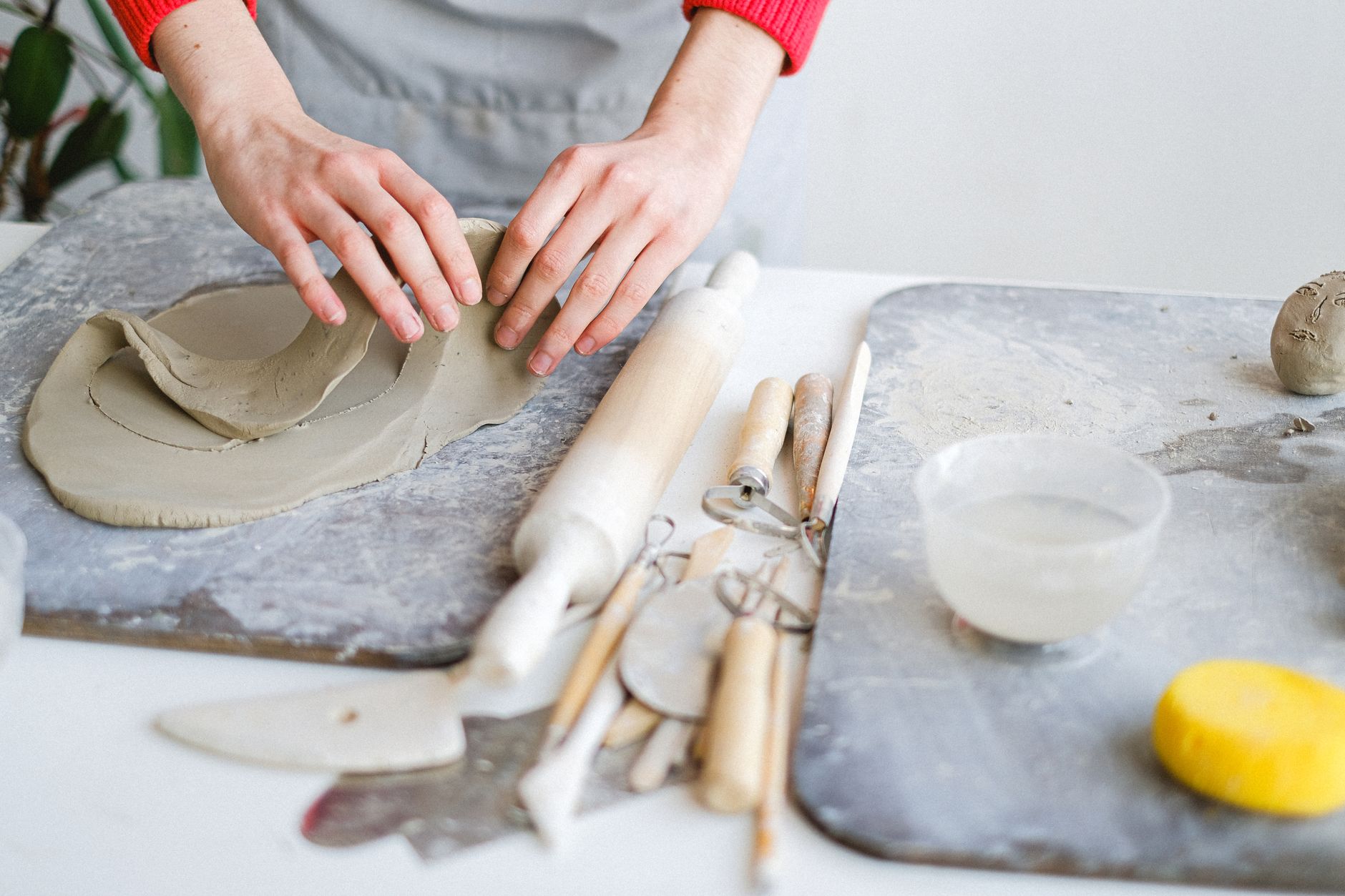
Air-dry clay is designed to harden naturally when it is left exposed to the air. Unlike polymer clay or pottery clay, it doesn’t normally need to be baked in an oven.
In most cases, you should not bake air-dry clay unless the manufacturer specifically says that the product can be heated. Putting ordinary air-dry clay in a household oven may cause cracking, warping, discolouration, or other damage.
The safest approach is to let the clay dry slowly at room temperature and follow the instructions on the packaging.
Does Air-Dry Clay Need to Be Baked?
Air-dry clay does not need to be baked.
The moisture inside the clay gradually evaporates when the finished project is left in a dry, well-ventilated place. As the moisture leaves, the clay becomes firm.
This is one reason air-dry clay is popular with beginners. You can make small decorations, models, dishes, ornaments, and other projects without needing a kiln or specialist oven.
However, air-dry clay usually takes longer to harden than oven-bake clay.
What Happens If You Bake Air-Dry Clay?
The result depends on the type of clay, the temperature, the thickness of the project, and how much moisture is still inside it.
Possible problems include:
- Cracking
- Splitting
- Warping
- Bubbling
- Scorching
- Discolouration
- Brittle edges
- Uneven drying
Heat may dry the outside of the clay much faster than the inside, which can create tension in the piece and cause cracks.
Some air-dry clays also contain paper fibres, glue-like binders, or other ingredients that are not intended for heating.
Can You Put Air-Dry Clay in a Normal Oven?
You should not put air-dry clay in a normal oven unless the product instructions clearly state that it’s safe to do so.
Most air-dry clay is made for room-temperature drying. A kitchen oven may become much hotter than the clay can safely tolerate, even if you only put it on a low setting.
There may also be a risk of smells, smoke, or damage to the project if the clay contains ingredients that react badly to heat.
Don’t assume that air-dry clay can be baked just because polymer clay can. They are different materials and harden in different ways.
Can You Bake Air-Dry Clay to Make It Dry Faster?
Baking air-dry clay may make the surface feel dry more quickly, but it doesn’t necessarily dry out the whole piece safely.
A thick project may still contain moisture inside. Heating it too quickly can cause the outside to harden while the inside remains damp.
This can lead to cracking later.
It’s normally better to speed up drying by improving airflow rather than using direct heat.
Place the project in a dry room with good ventilation. Turn it occasionally so that different sides are exposed to the air.
Can You Put Air-Dry Clay in a Low Oven?
Some people experiment with very low oven temperatures, but this still carries a risk.
Even low heat can cause a project to crack or change shape. Household ovens can also fluctuate in temperature, making it difficult to control the drying process.
Unless the clay manufacturer provides oven-drying instructions, room-temperature drying is the safer option.
If the packaging says that gentle heat can be used, follow the stated temperature and time carefully.
Can You Use a Microwave to Dry Air-Dry Clay?
Air-dry clay should not normally be placed in a microwave.
Microwaves heat moisture quickly and unevenly. This can cause the clay to become extremely hot, crack, bubble, or break apart.
Some parts may remain damp while others overheat.
Only use a microwave if the clay packaging specifically says that the product is microwave-safe and gives clear instructions.
Can You Use a Hairdryer on Air-Dry Clay?
A hairdryer may help dry the surface, but it should be used cautiously.
Strong or hot airflow can cause uneven drying, cracks, or curled edges. It may also move or damage delicate parts of the project.
If you use a hairdryer, choose a cool or low setting and keep it at a distance. Move the airflow around rather than heating one area continuously.
Natural drying is still usually safer.
Can You Put Air-Dry Clay on a Radiator?
It’s best not to try to dry air-dry clay directly on a radiator.
The side closest to the heat may dry too quickly, while the other side remains moist. This can cause warping or cracking.
Direct heat may also make thin pieces curl.
Place the project in a warm but not hot room instead. Keep it away from radiators, heaters, fires, and strong sunlight.
How Long Does Air-Dry Clay Take to Dry?
Many small air-dry clay projects take around 24 to 72 hours to dry, but the exact time varies.
Thick or large pieces may take several days or longer.
Drying time can be affected by:
- The thickness of the clay
- The size of the project
- The type of air-dry clay
- Room temperature
- Humidity
- Airflow
- Whether the project is turned during drying
The outside may feel dry before the inside has fully hardened.
How Can You Help Air-Dry Clay Dry Evenly?
Make the project an even thickness where possible. Very thick areas take longer to dry than thin sections.
Avoid placing the clay on a completely non-absorbent surface for the entire drying period. The underside may stay damp.
You can dry the project on cardboard, wood, baking paper, or another suitable surface, depending on the clay instructions.
Turn the project carefully after the upper surface has become firm enough to handle.
Good airflow around the piece will help moisture escape.
Can Thick Air-Dry Clay Projects Be Baked?
Thick projects are particularly likely to crack if they are heated.
The surface can harden while moisture remains trapped in the centre. As the inside continues to dry, the project may split.
For larger models, it’s often better to use a lightweight centre made from foil or another suitable material, then add a thinner layer of clay around it.
This reduces the amount of clay that needs to dry.
Make sure that any internal material is appropriate for the project and does not trap moisture.
Can You Bake Painted Air-Dry Clay?
You should not normally bake air-dry clay after it has been painted.
Paints, sealers, varnishes, and glues may react badly to heat. They may bubble, discolour, release unpleasant smells, or become damaged.
Paint air-dry clay only after the clay has dried fully.
Allow the paint to dry naturally as well.
Is Air-Dry Clay the Same as Oven-Bake Clay?
Air-dry clay and oven-bake clay are not the same thing.
Air-dry clay hardens as water evaporates from it. It is usually intended to dry at room temperature.
Oven-bake clay, often called polymer clay, remains soft until it’s heated according to the manufacturer’s instructions.
Pottery clay is different again. It normally needs to be fired in a kiln at a much higher temperature.
Always identify which type of clay you actually have before you try to use and harden it.
Is Baked Air-Dry Clay Waterproof?
Baking air-dry clay doesn’t automatically make it waterproof.
Most air-dry clay remains porous after it has hardened. It can absorb water and may soften, stain, swell, or break down if it becomes very wet.
A suitable sealer may improve water resistance, but it doesn’t always make the project completely waterproof.
Air-dry clay is usually better for indoor decorative items than for objects that will be submerged in water.
How Do You Know When Air-Dry Clay Is Fully Dry?
The clay should feel firm and dry on all sides.
It may also become lighter in colour as moisture leaves it.
Check the bottom and any thick areas carefully, as these sections often take longer to dry.
A project that feels cool may still contain moisture. Leave it for longer before painting or sealing if you are unsure.
What Should You Do If Air-Dry Clay Cracks While Drying?
Small cracks can often be filled with a little fresh clay or a mixture made from clay and water, depending on the product.
Allow the repair to dry fully before sanding or painting.
Large cracks may mean that the project dried too quickly or that part of it was much thicker than the surrounding clay.
For future projects, use more even layers and avoid direct heat.
Final Thoughts
You don’t normally need to bake air-dry clay, as it’s designed to harden naturally when moisture evaporates from it.
Putting it in an oven, microwave, or near strong direct heat may cause cracks, warping, discolouration, or other damage.
For the best results, leave the project in a dry, well-ventilated room and allow it enough time to harden throughout. Always follow the care and drying instructions supplied with the clay.