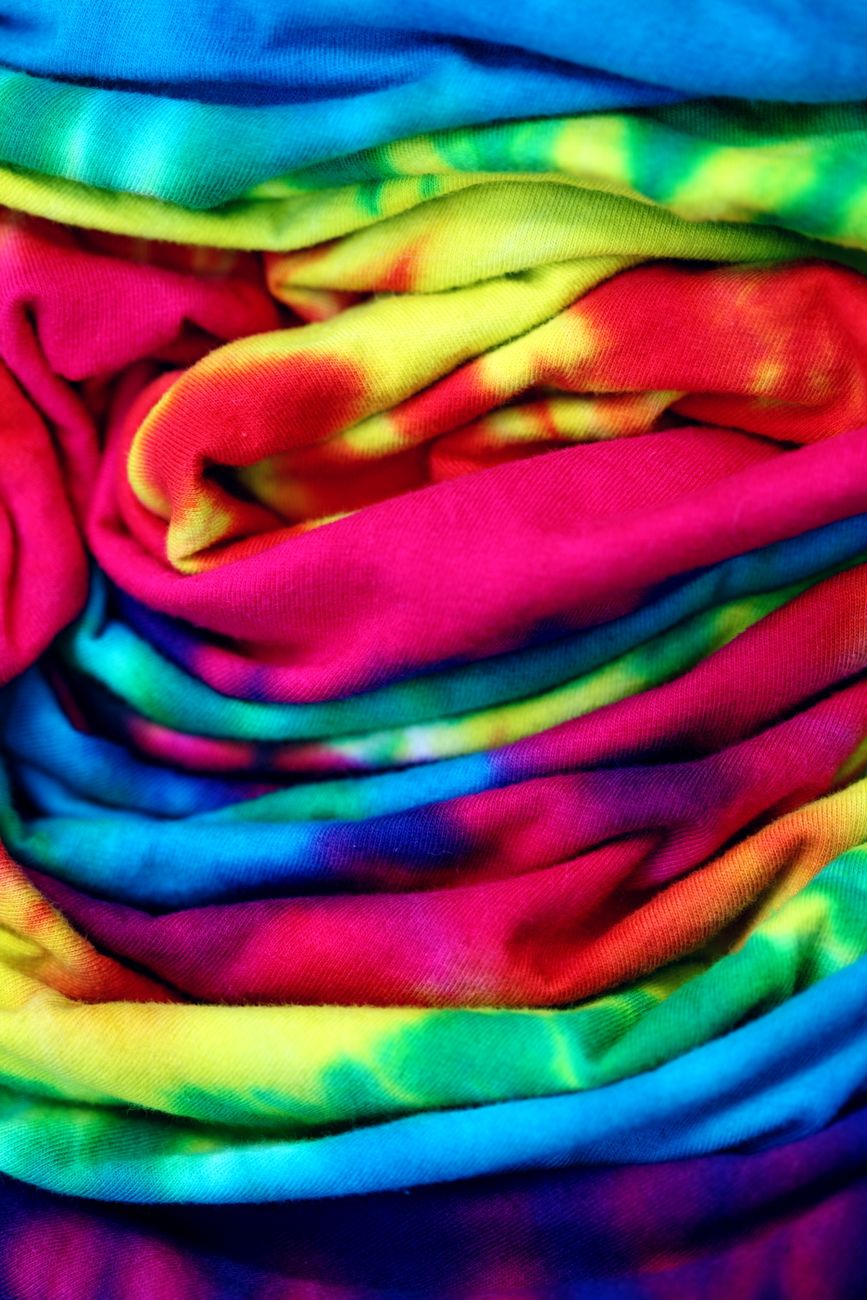
Tie dye is a fabric dyeing technique where fabric is folded, twisted, tied or scrunched before dye is then added. The tied areas resist some of this dye, which creates colourful patterns when the fabric is opened out.
Tie dye is often used on t-shirts, tote bags, socks, hoodies, pillowcases and other fabric items. It is popular because every finished piece looks slightly different, even when you use the same colours and the same method.
What Does Tie Dye Mean?
Tie dye is when you tie or bind fabric before you then dye it. The ties create areas where the dye can’t fully reach, resulting in patterns, lines, rings, spirals or lighter sections in the finished design.
The technique can be as simple or complex as you wish. A beginner might start with a scrunched up t-shirt and a few colours, while more advanced tie dye can involve careful folding, colour planning and more complex patterns.
Tie dye is usually associated with bright colours, but it can also be done in softer, pastel or single-colour designs.
How Does Tie Dye Work?
Tie dye works by controlling where the dye reaches the fabric. First, the fabric is folded, twisted, pleated or scrunched into a shape. Then it is held in place with elastic bands, string or ties.
Dye is applied to different sections of the fabric. The tied areas stay lighter because less dye is able to reach them. Once the dye has had time to set, the fabric is rinsed, washed and dried.
When the ties are removed, the pattern reveals itself.
What Do You Need for Tie Dye?
A basic tie dye project does not need many supplies. You may need:
- A plain white or light-coloured cotton item
- Fabric dye
- Elastic bands or string
- Gloves
- Squeeze bottles or a bowl
- A plastic sheet or bin bags to protect the surface
- An apron or old clothes
- Water
- A plastic bag or wrap for setting the dye
- A washing machine or sink for rinsing clothes out
Many beginners use a tie dye kit because it usually includes dye, bottles, gloves, bands and instructions.
What Fabric Is Best for Tie Dye?
Cotton is one of the best fabrics for tie dye because it absorbs dye well. White cotton t-shirts are a common beginner choice.
Other natural fibres, such as linen, rayon and bamboo, can also work well depending on the dye. Synthetic fabrics like polyester are usually harder to dye with standard tie dye kits.
For beginners, a 100% cotton t-shirt, tote bag or pair of socks is usually the easiest option.
Is Tie Dye Easy for Beginners?
Tie dye is very beginner-friendly. The basic process is simple, and you don’t need to be precise or very artistic to get good results. It’s not really a precise craft like cross stitch.
The main thing to remember is that tie dye can be messy. It is best to protect your table, wear gloves and use old clothes whilst you work.
A simple scrunch design or spiral T-shirt is a good first project because it doesn’t require complicated folding or planning things out.
What Are the Main Tie Dye Patterns?
There are many tie dye patterns, from very simple to more advanced. Common beginner patterns include:
- Spiral tie dye
- Scrunch tie dye
- Bullseye tie dye
- Stripes
- Crumple patterns
- Ombre dye
- Heart designs
The scrunch method is one of the easiest to do as a beginner. You just need to scrunch the fabric together, tie it with bands and apply dye in different areas.
What Is Spiral Tie Dye?
Spiral tie dye is one of the most recognisable tie dye patterns. To make it, you pinch the centre of the fabric and twist it into a spiral shape. The fabric is then secured with elastic bands and dyed in sections.
When the shirt is opened out, the colours form a spiral pattern from the centre. This method is popular for t-shirts because it creates a bold, classic tie dye look.
How Long Does Tie Dye Take?
Tie dye doesn’t usually take long to apply, but the dye needs time to cure. The actual tying and dyeing may take less than an hour, depending on the project.
After the dye is applied, the fabric usually needs to sit for several hours or overnight. This helps the colour bond with the fabric.
Once the dye has cure, the item needs to be rinsed until the water runs mostly clear, then washed separately before wearing or using.
Does Tie Dye Wash Out?
Good tie dye should not fully wash out if the correct dye is used and the fabric is prepared properly. However, some extra dye may rinse out during the first few washes.
To help tie dye last longer:
- Use fabric dye suitable for the fabric
- Follow the dye instructions
- Let the dye set for the recommended time
- Rinse thoroughly before washing
- Wash the item separately at first
- Avoid harsh washing if possible
Colours may soften slightly over time, especially with repeated washing.
Can You Tie Dye Without a Kit?
Yes, you can tie dye without a kit if you decide to buy your supplies separately. You need fabric dye, something to apply the dye with, bands or string, gloves and a suitable fabric item.
However, a kit is usually easier for beginners because the dye colours, bottles and instructions are already included.
If you only want to try tie dye once, a small kit can be more convenient than buying everything individually.
What Can You Tie Dye?
Tie dye can be used on many fabric items. Popular tie dye projects include:
- T-shirts
- Socks
- Tote bags
- Pillowcases
- Hoodies
- Sweatshirts
- Baby clothes
- Fabric scraps
- Bandanas
- Tea towels
- Canvas shoes, depending on the material
Light-coloured cotton items are usually the easiest things to dye.
Why Do People Like Tie Dye?
People like tie dye because it is colourful, fun, and unpredictable. Even simple patterns can create dramatic results.
It is also a good group craft because several people can dye items at the same time, and everyone’s finished piece will look unique.
Tie dye is especially good for customising plain clothes, refreshing old fabric items and making handmade gifts.
Final Thoughts
Tie dye is a fabric dyeing technique where fabric is folded, tied and dyed to create colourful patterns. It’s easy to start, beginner-friendly and works well on cotton items such as T-shirts, socks and tote bags.
For beginners, the easiest way to try tie dye is with a small kit and a plain cotton item. Start with a simple scrunch or spiral pattern, protect your work surface, and follow the dye instructions carefully.
Tie dye can be messy, but that is part of the fun. The reveal at the end is what makes it such a satisfying craft.