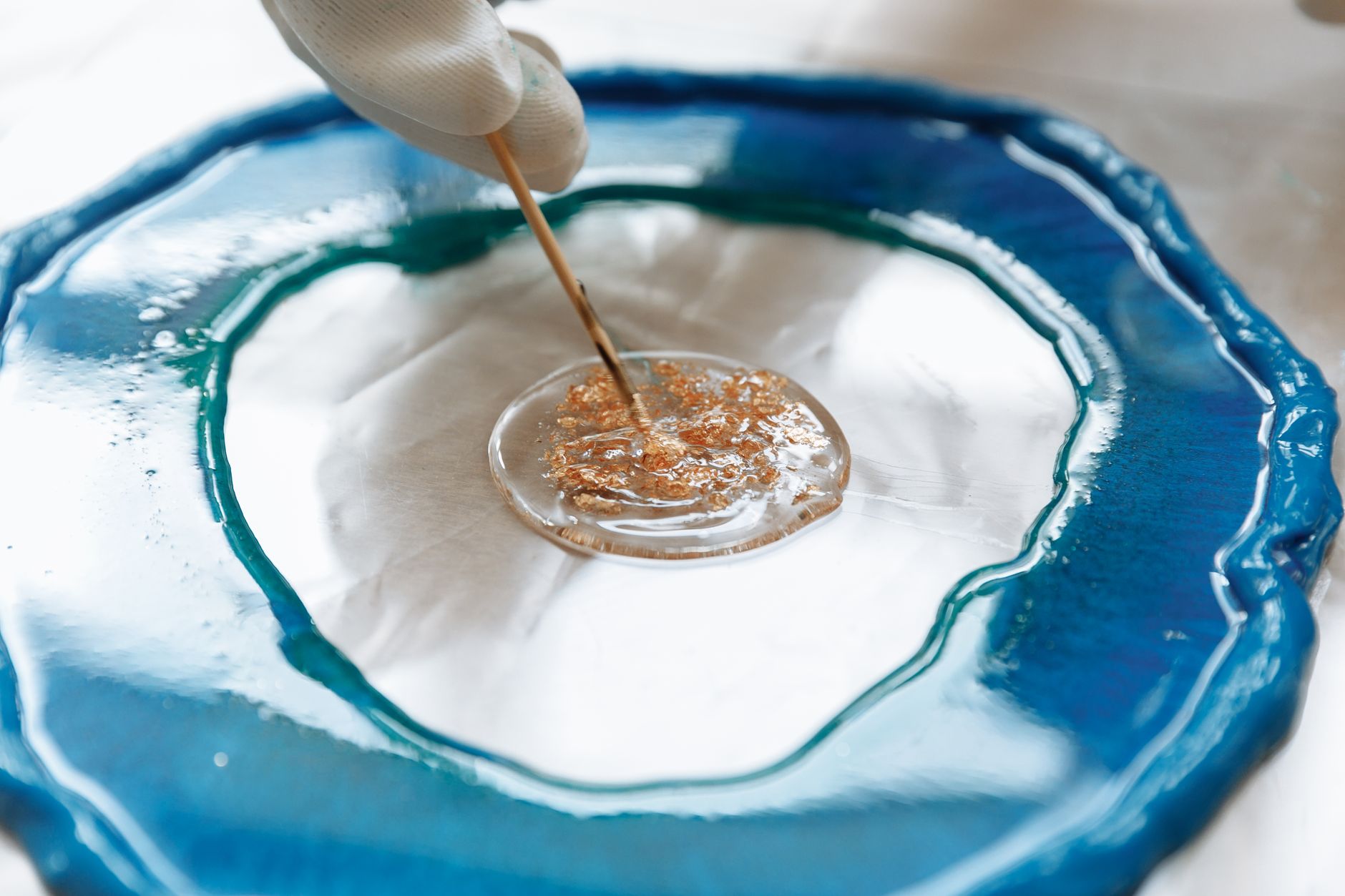
Resin art is a craft where liquid resin is mixed, poured, coloured, and left to harden into a clear, glossy, plastic-like finish. It’s often used to make jewellery, coasters, trays, keyrings, ornaments, wall art, and decorative home accessories.
The most common type used for crafts is epoxy resin. It usually comes in two parts: resin (known as part A) and hardener (part B). When the two parts are mixed together, a chemical reaction begins and the resin gradually cures into a solid surface.
How Does Resin Art Work?
Resin art works by mixing resin and hardener in the correct ratio, then pouring the mixture into a mould or onto a surface.
Once mixed, the resin stays liquid for a limited amount of time. This is sometimes called the working time. During this stage, you can add colour, glitter, dried flowers, shells, mica powder, alcohol ink, or small decorations.
After pouring, the resin needs time to cure. Depending on the product, this may take several hours or a few days. Once fully cured, the piece becomes hard, glossy, and durable.
What Can You Make With Resin?
Resin is popular because it can be used for many decorative projects. It is especially good for clear, shiny, colourful, or layered effects.
Beginner resin project ideas include:
- Coasters
- Keyrings
- Jewellery
- Bookmarks
- Trinket trays
- Ornaments
- Paperweights
- Small signs
- Wall art
- Decorative boxes
- Phone grips
- Hair clips
Small mould projects are usually easier for beginners than large resin pours or furniture projects.
What Do You Need for Resin Art?
A basic resin art setup might include:
- Epoxy resin and hardener
- Silicone moulds
- Mixing cups
- Stirring sticks
- Gloves
- Protective mat or covering
- Pigments, mica powder, or alcohol inks
- Small decorations, optional
- Heat gun or lighter, optional
- Respirator mask, depending on the resin and workspace
- Good ventilation
Resin can be messy, so it is important to protect your table and work slowly. You should also check the instructions for the exact resin you are using, because mixing ratios and curing times can vary.
Is Resin Art Easy?
Resin art is easy to start, but it is not quite as simple as just pouring liquid into a mould. Beginners need to measure carefully, mix slowly, avoid bubbles, and work safely.
Common beginner problems include:
- Sticky resin
- Bubbles
- Cloudy patches
- Uneven curing
- Dust settling on the surface
- Colours blending too much
- Resin leaking from moulds
Most of these problems improve with practice. Starting with small projects helps because you use less resin and can learn without wasting too much material.
Is Resin Art Safe?
Resin art needs more safety care than many of the crafts covered on this site. Uncured resin can irritate skin, and some resin products may release fumes while being mixed and cured.
You should always follow the safety instructions on the resin packaging. As a general rule, work in a well-ventilated area, wear gloves, avoid touching uncured resin, and do not use resin near food preparation areas.
It is also sensible to keep resin away from children, pets, and soft furnishings while you are working. Once resin is fully cured, it’s usually much safer to handle, but the liquid stage should be treated carefully.
What Is Epoxy Resin?
Epoxy resin is the type of resin most often used for craft projects. It comes as two separate liquids: resin and hardener. These are mixed together before use.
Epoxy resin is popular because it can create a clear, glossy finish and works well with pigments, glitter, dried flowers, and small decorative objects.
There are different types of epoxy resin for different projects. Some are designed for coating surfaces, while others are better for deep moulds. Beginners should choose a resin that matches the type of project they want to make.
What Is UV Resin?
UV resin is another type of craft resin. Unlike two-part epoxy resin, UV resin cures when exposed to ultraviolet light, usually from a UV lamp.
UV resin is often used for small jewellery pieces, charms, and quick projects. It can cure much faster than epoxy resin, but it is usually used in thinner layers.
Epoxy resin is often better for larger moulds and pours, while UV resin can be useful for small details and quick accessories.
Is Resin Art Expensive?
Resin art can be more expensive than many beginner crafts because you need resin, safety supplies, moulds, pigments, and disposable mixing tools. However, you can start small with a basic kit and a few simple moulds.
The best beginner approach is to avoid buying too many moulds at once. Start with one or two projects, such as coasters or keyrings, and see whether you enjoy the process before spending more.
Is Resin Art Good for Beginners?
Resin art can be suitable for beginners, but it’s better for careful beginners than very young or impatient hobbyists. It requires measuring, mixing, waiting, and following safety instructions.
It is a good choice if you enjoy glossy finishes, colourful effects, handmade gifts, jewellery, or decorative home accessories. It may not be the best first craft if you want something completely mess-free or instant.
Final Thoughts
Resin art is the craft of mixing and pouring resin to create glossy, colourful, solid objects and decorative surfaces. It can be used for coasters, jewellery, trays, keyrings, ornaments, wall art, and many other projects.
For beginners, the best way to start is with a small epoxy resin kit, simple silicone moulds, good ventilation, gloves, and one or two easy projects. Resin art can be beautiful and satisfying, but it’s important to work safely, measure carefully, and give each piece enough time to cure properly.