Tag: macrame

  • Is a Macramé Wall Hanging a Good Beginner Project?

    Is a Macramé Wall Hanging a Good Beginner Project?

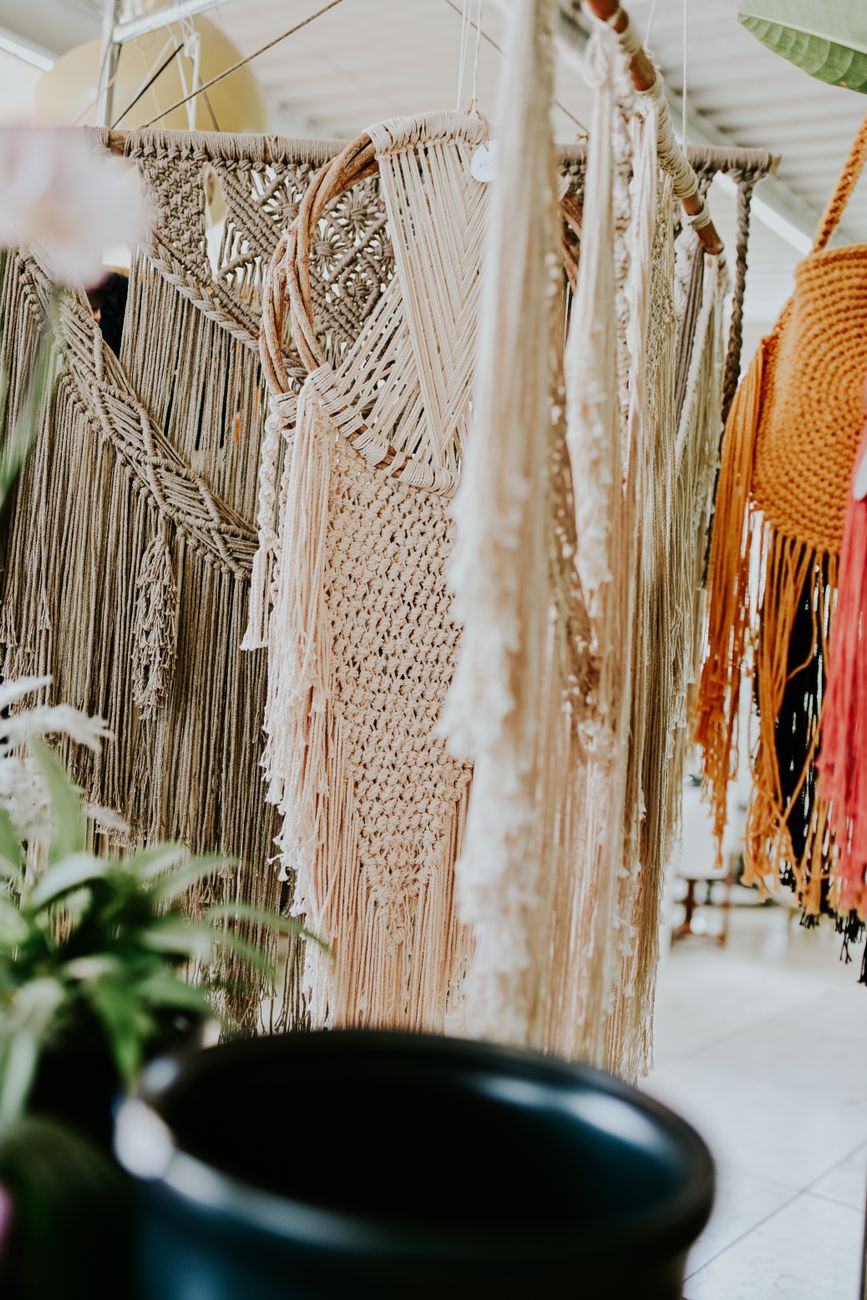
    A macramé wall hanging can be a good beginner project, especially if you choose a small and simple design.

    Many wall hangings only need a few basic knots, such as square knots, lark’s head, and gathering knots. This makes them a practical way to learn the basics of macramé whilst making something decorative.

    Why Are Wall Hangings Good For Beginners?

    A simple wall hanging can help you practise:

    • Attaching a cord to a dowel or wooden ring
    • Keeping knots even
    • Following a basic pattern
    • Measuring and cutting cord
    • Trimming the finished fringe

    Wall hangings are relatively forgiving. Small differences between knots may not be very noticeable, particularly in loose or textured designs.

    What Type of Wall Hanging Should a Beginner Choose?

    Look for a project that:

    • Uses only one or two types of knot
    • Has clear written or video instructions
    • Is fairly small
    • Does not require complicated shaping
    • Uses a thicker cord that is easy to handle

    A simple rectangular wall hanging is usually easier for a beginner than a large design with several layers, colours, or detailed patterns.

    What Do You Need?

    For a basic macramé wall hanging, you usually need:

    • Macramé cord
    • A wooden dowel, branch, or ring
    • Scissors
    • A tape measure
    • Somewhere to hang the project while working

    Some patterns may also suggest using pins, a comb, or fabric stiffener, but these aren’t also necessary, especially for a first project.

    Is It Better Than Starting With a Smaller Project?

    A keyring, plant hanger, or small decorative piece be be quicker to finish than a wall hanging. However, the latter can still be suitable as a first project if you don’t mind repeating the same knots several times.

    Choose a project that seems manageable rather than selecting a large or detailed design.

    Final Thoughts

    A macramé wall hanging is a good beginner project when the pattern is simple and clear.

    It gives you a chance to practise basic knots, learn how cord behaves, and create a finished piece that you can display. Start with a small design before moving onto large or more complicated wall hangings.

  • Easy Macramé Projects For Beginners

    Easy Macramé Projects For Beginners

    Macramé is a flexible craft that uses knots to make decorative items. If you are a complete beginner, you don’t need to start with large wall hangings or other complicated patterns. Instead, smaller projects are best you allow you to learn the basic knots, plus they use less cord and take less time to finish.

    What Makes a Good Beginner Macramé Project?

    A suitable project for a beginner hobbyist should:

    • Only use one or two types of knot
    • Use a manageable amount of cord
    • Have a simple, repeated pattern
    • Be small enough to finish quickly
    • Still have a good result if the you make mistakes

    Basic knots such as the square knot, spiral knot, and lark’s head are enough for getting you started with a beginner project.

    Keyring

    A keyring is one of the quickest macramé projects to try.

    You normally need:

    • Macramé cord
    • A keyring or clasp
    • Scissors
    • A comb, if you want a fringed finish

    You can create a simple design using square knots or spiral knots. Because the project is small, it’s useful for practising tension without wasting much material.

    Plant Hanger

    A basic plant hanger is a popular beginner project; it usually combines several lengths of cord with repeated knots to form a holder around a plant pot.

    Start with a small, lightweight pot and a simple pattern. Check that every section is secure before you try to hang it.

    Plant hangers are larger than keyrings but still provide a manageable introduction to practical macramé.

    Coaster

    A coaster is a useful flat project that can help you to practise creating even rows.

    Some designs use repeated square knots, while circular coasters may involve more shaping. A simple square or rectangular coaster is usually the easiest place to begin.

    Cotton cord works well because it’s soft and easy to handle.

    Bookmark

    A bookmark requires only a small amount of cord and can be completed fairly quickly.

    You can make one using a narrow line of square knots, spiral knots, or a simple braided design. Add a fringe or bead at the end if you want a more decorative finish.

    Wall Hanging

    A small wall hanging is much easier than a large decorative piece.

    Use a short wooden dowel, stick or ring and create a straightforward repeated pattern beneath it. You can finish the bottom with a simple fringe rather than trying to add complicated, more advanced sections.

    Choose a small design so that you can practise arranging knots without committing to a long project.

    Jar or Bottle Cover

    A simple macramé cover can be tied around a clean jar, bottle or small plant pot.

    The container helps to support the shape whilst you work. A basic net-style pattern can be created using repeated knots around the outside.

    This can be used as a decorative holder for pens, craft tools or small items.

    Bracelet

    A bracelet is another small project that only uses a little cord.

    Simple bracelets may be made with square knots, alternating knots or a spiral pattern. You can add beads or a fastening once you are comfortable with the basic design.

    Make sure the finished bracelet is comfortable and not tied too tightly.

    Feather or Leaf

    Macramé feathers are made by knotting short pieces of cord around a central strand, then brushing and trimming the fibres into shape.

    The trimming doesn’t have to be perfect, so this can be an enjoyable decorative project for beginners. A comb or stiff brush helps separate the fibres.

    Which Macramé Project Should You Try First?

    A keyring, bookmark or bracelet is usually the easiest starting point, as these projects are small and inexpensive.

    Once you’re comfortable making consistent knots, you can move on to a plant hanger or a small wall hanging.

    As a general rule, use a project that uses a limited number of knots and materials. Finishing one simple item will usually teach you more than beginning an ambitious design that becomes frustrating and causes you to give up.

    Happy Macramé!

  • How Much Cord Do You Need For Macramé?

    How Much Cord Do You Need For Macramé?

    Knowing just how much cord to use for macramé can be quite confusing when you are getting started for the first time. This is because it’s not really obvious how much will get used up by knots and fringe, let alone mistakes.

    Whilst something like a small keyring might only need a short piece of cord, a wall hanging or plant hanger can just much more. The amount of cord that you will need depends on the size of the project, the type of knots you use, the thickness of the cord, and how much fringe or hanging length you want at the end.

    As a rule, a lot of people use cord that is four times the length of the finished project. If your design has a lot of knots, you might need a little more than this. It’s best to cut off too much cord than too little.

    Why Does Macramé Use So Much Cord?

    Macramé uses more cord than you might expect because the length gets shorter as you tie knots!

    This means that a piece of cord that starts very long can quickly become much shorter once you start types of knots such as square, spiral, or half hitch. Dense patterns use more cord than loose designs.

    This is exactly why it’s important not to cut your cord too short. If you run out halfway through your project, it can be a bit awkward to fix it.

    A Simple Rule For Beginners

    A useful rule that many creatives follow is to cut your cord to be four times the length of your desired finished project.

    If you wanted your finished project to measure 50cm long, you could start with a cord length of 2m.This is only a rough guide, but it gives you an idea of how much cord to work with.

    If your project has a lot of knots, you could opt for five or six times the length in cord instead.

    If the design you are following gives you exact measurements, you are best to follow those.

    What Factors Affect How Much Cord You Need?

    There are several factors that influence the amount of cord you need to use.

    The Size of the Project

    Larger projects need longer cords. A wall hanging, plant hanger, or bag will need much more cord than a small bookmark or keychain.

    A project that hangs down a long way will need extra cord as well.

    The Type of Knots

    Some knots will use more cord than others. A lark’s head doesn’t use very much length, but repeated square or spiral knots can use up cord very quickly.

    If your design has a lot of dense knotting, cut more cord than you think you will need. Open designs with more gaps will use less.

    The Thickness of the Cord

    Thicker cord can create larger, bulkier knots. This can affect how much cord is used in the pattern. Thinner cord can be better for smaller, more intricate projects, whilst thicker cord is better for chunkier projects such as wall hangings or plant hangers.

    How Tightly You Knot

    Your knotting tension also matters. If you pull knots very tightly, you may use more cord. If your knots are looser, the project may look larger or less even.

    It’s quite common for beginners to use uneven tension by accident. Cutting a little extra cord can give you room to practice without worrying about running out.

    Fringe, Tassels, and Finishing Length

    If your macramé project has a long tassel at the bottom, you will need to factor that in to your measurements. The same idea applies to tassels, hanging loops, or decorative loose ends.

    A wall hanging may need enough cord for the knots, plus extra length for a fringe. If you forget to allow for a fringe, the finished piece may end up shorter than you wanted.

    Examples of Cord Length By Project

    Different projects need different amounts of cord. For instance, a small keyring needs less cord than something like a wall hanging. A keyring can be a great beginner project because it’s small and doesn’t waste a lot of material.

    A coaster, despite being small, can actually use quite a lot of cord if it incorporates a dense pattern.

    A wall hanging can use a lot of cord, especially as it can include a fringe at the bottom.

    A plant hanger often needs longer cord because the finished piece has to hang from a hook and support a pot. Plant hangers also often use repeated knots in different sections, so your cord can get used up very quickly!

    Is It Better to Cut Too Much Or Too Little?

    It’s usually best to cut too much cord than too little, especially when you are brand new to macramé.

    Whilst extra cord can be trimmed away at the end, too little cord is a harder problem to fix. If you run out of cord before the project is completely finished, you might need to add a new piece, change the design, or start again.

    Keep in mind that any leftover cord doesn’t need to be wasted. Small offcuts can be used to make keychains, tassels, practice knots, or decorative details.

    What Happens If You Run Out Of Cord?

    You may be able to add another piece if you do run out of cord, but it depends on the project.

    For some designs, it may be possible to hide the join inside a knot or at the back of your piece. In other designs, however, this may be visible, and so can make the piece look imperfect.

    It’s much easier to prevent this problem in the first place by ensuring that you start out with enough cord for your project. Cut more cord than you think you will need, just to be safe.

    Tips For Measuring Macramé Cord

    Before you cut your cord, read the pattern carefully. Check whether the cord will need to be folded in half, as this can change the length that you need to cut.

    It can also help to measure twice before cutting anything, especially if you are using a more expensive cord. If your project uses different cord lengths, label the pieces or keep them in separate groups.

    Common Beginner Mistakes

    The most obvious mistake is forgetting that knots use up cord length! A piece of cord that looks sufficient when it is straight may prove not to be enough.

    Beginners may also forget to allow for fringe. If you want to incorporate long hanging ends, you need to include that extra length at the beginning.

    Some people also make the mistake of cutting the same length of cords for different sections. A knotted section will need more cord than a holding cord that stays straight.

    Finally, it can be tempting to trim the ends too soon. Wait until your project is completely finished before you cut any excess cord.

    How Cord Choice Affects the Project

    Cord length and type are connected. A soft cotton cord may be easier for beginners to handle, while a stiffer or more slippery cord may prove more challenging.

    Thicker cord leads to a chunkier look and so might be better for things such as wall hangings or plant hangers. Thin cord can be good for detailed projects, jewellery-style pieces, or small decorations.

    If you are brand new to macramé, start off with a simple cord and a small project. This will get you familiar with how much cord you need before you then move on to bigger designs.

    Some Final Thoughts

    There is no single perfect cord length for every macramé project. The amount you need depends on the project size, knot type, cord thickness, tension, and finishing details.

    As a beginner, a useful tip is to cut the cord around four times the finished length of the project, or slightly more for knot-heavy designs. If you are ever unsure, you can always cut extra and trim any excess away at the end of the project. If you don’t have enough cord, however, it’s much harder to try to incorporate more mid-way through!

    Start with small projects, master the basic knots and keep a note on how much cord you use. Over time, estimating what length of cord you need can become much easier.

    Read Next

  • What Cord Do You Need For Macramé?

    What Cord Do You Need For Macramé?

    Choosing which type of cord to use for macramé can be an overwhelming choice for complete beginners.

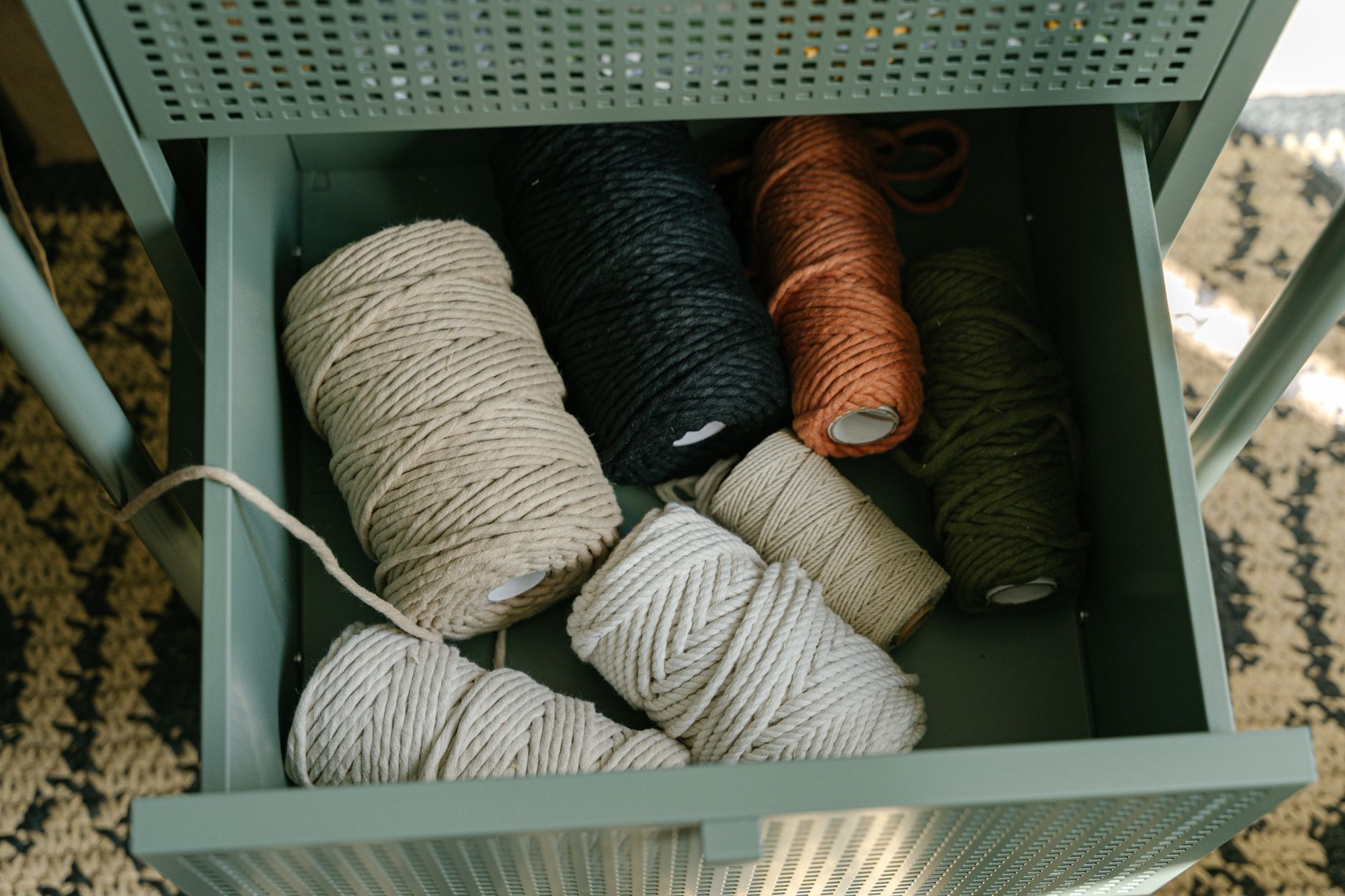
    The good news is that you don’t need lots of supplies to get started. Macramé cord comes in different styles, materials, and thicknesses. For most beginner projects, a medium thickness cotton cord is a good place to start.

    What is Macramé Cord?

    In macramé, the cord is the material that you use to tie knots. It’s thicker than the yarn you would use for knitting, or thread you would need for sewing.

    A good choice of cord needs to be strong enough to hold knots, soft enough to work with, and suitable for the size of your project. For beginners, it’s also helpful if the cord is easy to untie, so that you can correct mistakes.

    What Type of Cord Is Best For Beginners?

    Cotton macramé cord is probably the best choice for complete beginners.

    This is because it’s soft to the touch and easy to tie knots in. It’s also widely available and gives you a classic ‘macramé look’.

    Cotton cord is a superb choice for projects such as plant hangers, wall hangings, keychains, and other small projects.

    Single Strand vs Three-Ply vs Braided Cord

    There are three main structures of macramé cord; single strand, three-ply, and braided cord.

    Single Strand

    This is made out of one twisted strand of cord. It has a soft look and is good for wall hangings, tassels, and projects with brushed out fringe.

    Three-Ply

    Three-ply cord is made of three twisted sections that are wrapped together. It is rope-like, which makes it produce stronger knots with better definition. It’s a good choice for projects where you really need knots to hold their shape, such as plant hangers and wall hangings.

    Braided Cord

    This is woven together. It’s quite strong and less likely to unravel than other types of cord structure. However, it doesn’t brush out into fringe as easily.

    What Materials Are Macramé Cords Made From?

    Macramé cord can be made from different materials. The material affects how the cord feels, how easy it is to knot, and what the finished project looks like.

    Cotton is the most common choice for beginners. It is soft, easy to work with, and gives a classic macramé look. Cotton cord can be a variety of structures, such as single-strand, three-ply, or braided.

    Jute and hemp are natural fibres that give a more rustic look. They can work well for decorative projects, but they are rougher on your hands than cotton. This means that they are not usually the best option for beginners.

    Nylon and polyester are synthetic materials. They can be strong and durable, which can make them useful for outdoor projects. However, they are more slippery to the touch than cotton, possibly making knots harder to do when you are just learning.

    For most beginner projects, cotton is the best material to get started with.

    What Thickness of Cord Should Beginners Use?

    For most beginners to macramé, 3mm to 5mm is probably your best option for cord.

    3mm cord is good for smaller projects and detailed work, 4mm is a decent all-round size for beginners, and 5mm is a great option for wall hangers and chunkier pieces.

    If you want a good all-rounder, 4mm is probably your best bet.

    Can You Use Yarn For Macramé?

    You can use yarn for some projects, but it doesn’t work very well for weight-bearing pieces. Also keep in mind that yarn doesn’t hold the shape of knots as neatly as cord does.

    If you have yarn on hand, it can be a good material to experiment with. For long term macramé, traditional cord is probably a better bet.

    Can You Use String, Rope, or Twine?

    It is possible to use string, rope, or twine for macramé, but some materials are easier to work with than others. Your material of choice needs to be strong enough to hold its shape, thick enough for the knots to show clearly, and soft enough to be able to handle well.

    How Much Cord Do You Need?

    The amount of cord you need depends on factors such as the size of your project, the thickness of the cord, the number of knots you need to make, and whether the design has a long fringe.

    What Colour Cord Should Beginners Use?

    Cream, beige, or another light coloured cord is probably your best bet. Opting for colours such as these makes it easier to see the knots, matches traditional styles, and hides any small mistakes you make better than darker cord.

    Best Beginner Choice

    For most beginners, 4mm cotton macramé cord is probably the best option to start with. It’s soft enough to work with and thick enough so that you can see the knots well. It’s also versatile enough to be used for projects such as plant hangers and wall hangings.

    Read Next

  • Macramé Knots: A Basic Beginner’s Guide

    Macramé Knots: A Basic Beginner’s Guide

    Macramé is the hobby of tying knots out of cord to make decorative patterns. Thankfully, you don’t need to know lots of types of knot to get started, as most beginner macramé projects use a small number of basic knots.

    There are many things you can make once you know a few common knots, including wall hangings, keyrings, coasters, bookmarks, and other decorative projects.

    What Are Macramé Knots?

    Macramé knots are the tied sections that create a shape and pattern of a project. Some of these knots are used in order to attach the piece to a ring or dowel. Others are used to create decorative sections such as rows, diamonds, twists, or lines.

    Even the same knots can look different depending on factors such as the type of cord you use, how tightly you pull that cord, and how far the knots are spaced from each other.

    For complete beginners, the most useful knots are; the lark’s head knot, the square knot, half square knot, spiral knot, half hitch knot, double half hitch knot, and gathering knot.

    Lark’s Head Knot

    The lark’s head knot is one of the first types of knot that beginners often learn. It is used to attach cords to a dowel or ring.

    The lark’s head is often used in wall hangings, plant hangers, keyrings, and hanging decorations.

    To make this knot, you fold the cord in half, place the loop over or under your support, then pull the loose ends through the loop.

    Whilst it’s more of a starting knot than a proper decorative knot, it’s still important to be able to hold things in place.

    Square Knot

    Square knots are one of the most fundamental knots used in macramé. They are strong and simple yet still decorative.

    Square knots are made out of four cords. The two middle cords stay in the centre, whilst the other two cords wrap around them.

    Square knots are great for plant and wall hangers, bracelets, bag straps, keyrings, and decorative panels.

    Half Square Knot

    A half square knot is made from the first half of a square knot. If you repeat the same half knot, the cord will naturally start to twist, creating a spiral effect.

    Half knots are great for creating spiral plant hanger sections, twisted straps, or decorative hanging cords.

    This is a particularly useful knot for beginners, as it can make even a very simple project look more interesting.

    Spiral Knot

    The spiral knot is made by repeating half square knots in the same direction. As you keep making knots, the cord twists into a spiral shape.

    This type of knot is often used in plant hangers because it adds nice decoration to the long hanging sections.

    A spiral knot can be a great choice for plant hangers, hanging shelves, key chains, and straps.

    Half Hitch Knot

    A half hitch is a simple knot that is made by looping one cord around another. Whilst it can be used alone, it is more often used in a double half hitch knot (detailed below).

    Half hitches are great for lines, curves, diagonal patterns, borders, and shaped sections. Whilst it’s more fiddly to do than a square knot, beginners can definitely master it with some practice.

    Double Half Hitch Knot

    The double half hitch is one of the most useful macramé knots for making lines and shapes. It is made by tying two half hitch knots around a guide cord.

    This knot is most often used to make diagonal shapes, V shapes, diamonds, leaf shapes, borders, and wall hanging patterns.

    The guide cord controls the direction of the line. If you hold the guide cord diagonally then the knots will form in a diagonal row. If you hold it horizontally, they will form a horizontal row instead.

    Once you are comfortable making square knots first, the double half hitch is a very useful knot to learn.

    Gathering Knot

    A gathering knot is used to wrap several knots together. It’s often used at the top or bottom of plant hangers.

    To tie this knot, you use a separate cord to wrap around a group of cords, and then tuck the end away so that it looks neat.

    Gathering knots can be useful for things such as plant hangers, tassels, finishing off projects and grouping cords together. Is knot is an excellent way to make pieces look more finished.

    Final Thoughts

    Macramé may seem like a complicated hobby but it’s important to realise that most beginner projects are actually made out of a small set of basic knots. Once you learn the lark’s head, square, half square, spiral, half hitch, double half hitch, and gathering knot, you can make interesting beginner projects with confidence.