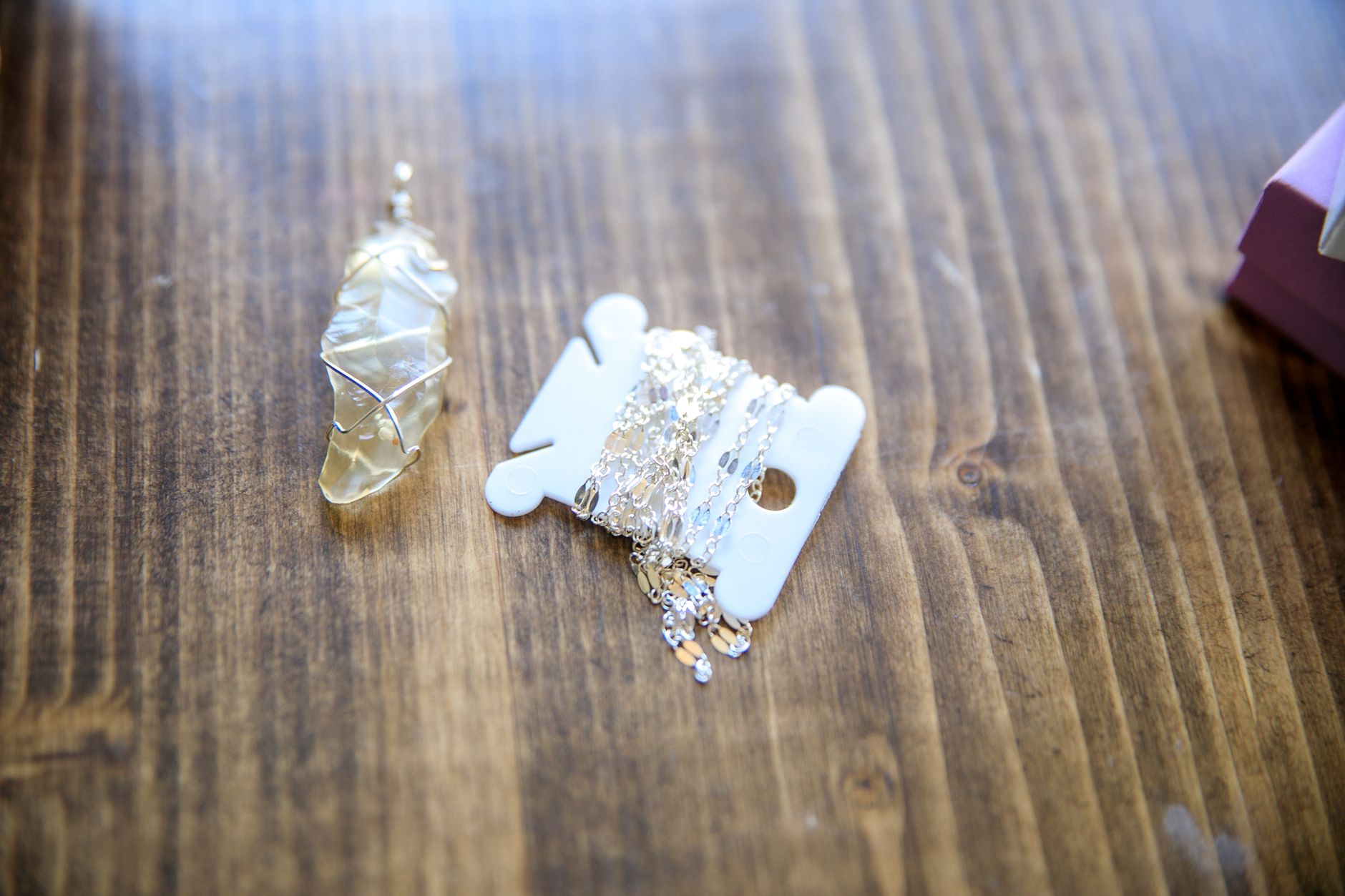
Wire wrapping is a craft where you use wire to hold, decorate, or frame objects without soldering or glue. It is most commonly used in jewellery making, especially for pendants, rings, earrings, beads, crystals, and gemstones.
Instead of using heat to join metal pieces together, wire wrapping uses bends, loops, coils, and twists to secure everything in place. This makes it a popular beginner jewellery craft because you can start with a few basic tools and materials.
How Does Wire Wrapping Work?
Wire wrapping works by shaping wire around an object or around itself. The wire can be wrapped tightly to hold a stone, bead, or charm, or it can be used decoratively to create patterns.
A simple wire-wrapped pendant might involve placing a stone in the centre, wrapping wire around it to create a frame, and making a loop at the top so it can hang from a chain.
More detailed wire wrapping can include things like swirls, spirals, woven wire, layered frames, and decorative coils. Some designs are simple and neat, while others are more artistic and sculptural.
What Can You Make With Wire Wrapping?
Wire wrapping is especially popular for handmade jewellery, but it can also be used for decorative crafts.
Common wire wrapping projects include:
- Pendants
- Rings
- Earrings
- Bracelets
- Beaded charms
- Crystal jewellery
- Keyrings
- Hair accessories
- Decorative ornaments
- Tree of life designs
Beginners often start with a simple bead charm or wrapped stone pendant because these projects teach the basic movements without being too complicated.
What Do You Need for Wire Wrapping?
As ever, you don’t need a huge kit to start with wire wrapping. A few basic tools and some craft wire are enough for simple beginner projects.
A basic wire wrapping setup might include:
- Jewellery wire
- Round nose pliers
- Chain nose pliers
- Wire cutters
- Beads, stones, or charms
- A ruler or measuring tape
- Ring mandrel or shaping tool (optional)
- Polishing cloth (optional)
Round nose pliers are useful for making loops and curves, whilst chain nose pliers help grip and bend the wire. Wire cutters are used to trim the ends cleanly.
What Type of Wire Is Used for Wire Wrapping?
Craft wire, copper wire, silver-plated wire, aluminium wire, brass wire, and sterling silver wire can all be used for wire wrapping. Beginners can start off with cheaper craft wire or copper wire before moving on to more expensive materials.
Wire comes in different thicknesses, usually measured by gauge. A thicker wire is stronger and better for frames, while thinner wire is easier to wrap, coil, and weave.
For beginners, medium wire is usually easier to control than very thin or very thick wire. Very thin wire can bend out of shape easily, while very thick wire may be harder to shape by hand.
Is Wire Wrapping Difficult?
Wire wrapping is fairly easy to start, but it takes practice to make the finished piece look neat. The wire can kink, bend unevenly, or show marks from the pliers if you grip too hard.
The great thing is that beginner projects really don’t need to be perfect. Simple loops, wrapped beads, and basic pendants are enough to learn the main skills.
As you improve, you can learn more advanced techniques such as wire weaving, decorative frames, spiral designs, and setting stones without holes.
Is Wire Wrapping the Same as Jewellery Making?
Wire wrapping is one type of jewellery making, but jewellery making is a much broader craft. Jewellery making can include things like beading, resin jewellery, metal stamping, clay jewellery, silversmithing, chain making, and many other techniques.
Wire wrapping is popular because it doesn’t need soldering, casting, or any expensive metalworking equipment. It is a good way to make handmade jewellery at home with relatively simple tools.
What Are the Best Beginner Wire Wrapping Projects?
The best beginner projects are small, simple, and forgiving. It’s easier to practise on beads or inexpensive stones before using more delicate or valuable materials.
Good beginner wire wrapping ideas include:
- Wrapped bead charms
- Simple loop earrings
- Spiral pendants
- Wrapped crystal points
- Basic stone pendants
- Beaded rings
- Wire heart shapes
- Tree of life pendants
These projects help you practise cutting, bending, looping, wrapping, and finishing the wire ends safely.
Is Wire Wrapping Good for Beginners?
Wire wrapping can be a good craft for beginners because it doesn’t need many supplies, and you can make finished pieces quite quickly. It is also a useful craft if you enjoy jewellery, crystals, beads, or small detailed work.
However, it does require patience. Wire can be fiddly, and the neatness of the finished piece depends on control and practice. Starting with simple designs is the best way to avoid frustration and potentially giving up too early.
Final Thoughts
Wire wrapping is the craft of shaping and wrapping wire to make jewellery and decorative items. It is often used to hold beads, stones, crystals, and charms without needing glue or soldering.
For beginners, wire wrapping is a flexible and affordable way to start making handmade jewellery. With a few basic tools, some craft wire, and simple practice projects, you can learn how to create pendants, earrings, rings, and other personalised pieces.