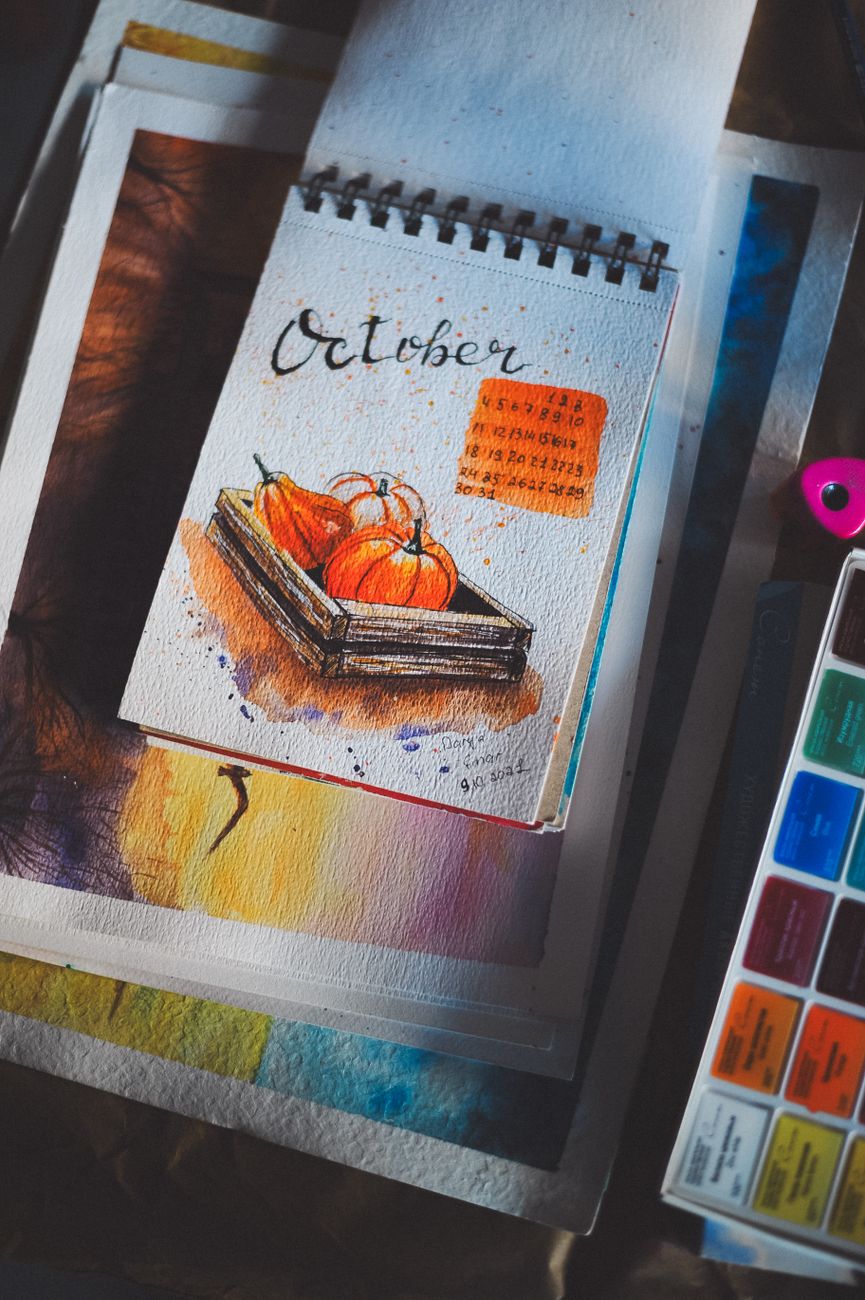
Art journaling is a creative hobby where you use a journal or sketchbook to combine art, writing, colour, and collage with personal expression. Instead of keeping a plain written diary, an art journal allows you to explore your thoughts, ideas, memories, moods, and creativity in a visual way.
An art journal can include media such as drawing, painting, stamping, stickers, washi tape, magazine cut-outs, quotes, handwriting, photos, scraps of paper, or anything else that helps to you create an interesting page. There are no strict rules at all, which makes it a flexible and beginner-friendly craft.
How Does Art Journaling Work?
Art journaling works by filling pages with a mixture of images, colours, textures, and words. Some pages might be carefully planned, while others might be quick, messy, or experimental.
You could start with something like a painted background, add collage pieces, write a quote, draw small shapes, or layer different materials over the top. The page really doesn’t have to be perfect. The point is to enjoy the creative process rather than produce a masterpiece.
Some people use art journaling as a relaxing hobby, whilst others prefer to use it for self-reflection, creative practice, memory keeping, or trying out new art supplies.
What Do You Put in an Art Journal?
An art journal can include almost anything that fits on a page! Common art journal elements include:
- Paint
- Markers
- Coloured pencils
- Pens
- Ink
- Stickers
- Washi tape
- Magazine cut-outs
- Photos
- Quotes
- Poems
- Personal notes
- Doodles
- Stamps
- Fabric scraps
- Pressed flowers
Some pages may be mostly visual, while others may include a lot of writing. You can make the journal private and personal, or you can use it simply as a place to experiment with different colours and designs.
What Do You Need to Start Art Journaling?
You really don’t need many supplies to start art journaling. A simple beginner setup might include the following:
- A sketchbook or notebook
- Pens or markers
- Glue stick
- Scissors
- Scrap paper or magazine pages
- Stickers or washi tape
- Watercolour paints or acrylic paint (optional)
- A pencil (optional)
You can start with whatever you already have at home, instead of buying lots of new supplies. If you find that you enjoy art journaling, you can buy more inventory.
What Is the Difference Between Art Journaling and Junk Journaling?
Art journaling and junk journaling can overlap somewhat, but they are not exactly the same.
Art journaling usually focuses on creating expressive pages with drawing, painting, colour, writing, and mixed media. The journal is usually made as a creative outlet or a visual diary.
Junk journaling, on the other hand, usually focuses more on using waste paper that might otherwise be thrown away. You can use materials such as old book pages, envelopes, tickets, packaging, or tags. It often has a vintage, scrapbook-like, or memory-keeping feel.
Both crafts can use elements of collage, layering, writing, and decoration. The difference is mainly the purpose and style.
Is Art Journaling the Same as Scrapbooking?
Art journaling and scrapbooking are also similar, as both can include paper, photos, decoration, and both require thinking through layouts. However, scrapbooking is usually more focused on preserving memories, events, and photographs, as opposed to mere creative expression.
Art journaling is often more of a personal, experimental, and expressive outlet than scrapbooking. A page might be about a feeling, a colour palette, a quote, a random idea, or simply testing a new painting technique.
Is Art Journaling Easy?
Art journaling is easy to start because there are no fixed rules. You really don’t need to be good at drawing, painting, or handwriting. You can use collage, colour blocks, simple shapes, stickers, or words if you don’t feel confident making ‘art’.
The hardest part for many beginners is getting over the fear of ruining a page. A good way to start is to treat the journal as a practice space rather than a finished artwork. When this is the case, your pages become a part of the process.
Also keep in mind that your art journal is for you, not for other people. You can keep it as something highly personal, rather than needing to try to impress others.
What Are Some Beginner Art Journal Ideas?
Beginner art journal pages can be as simple as you need them to be. You don’t need to use any advanced artistic techniques if you are not confident with them.
Easy art journal ideas could include:
- A page using your favourite colours
- A collage from magazine cut-outs
- A page based on a single word that has importance to you or is on your mind
- A quote page
- A mood page
- A gratitude page
- A page using only circles or lines
- A painted background with simple writing
- A nature-inspired page
- A page made from scraps on your desk
Is Art Journaling Good for Beginners?
Art journaling is a good beginner craft because it is flexible, affordable, and forgiving. You can use simple supplies, work in short sessions, and make each page as easy or detailed as you wish.
It is especially good for people who enjoy colour, paper crafts, journaling, mixed media, or creative self-expression. It can also be a useful way to practise art without the pressure of making something polished or display-ready.
Final Thoughts
Art journaling is the practice of using a journal as a creative space for art, writing, collage, colour, and personal expression. It can be neat or messy, simple or layered, private or decorative.
For beginners, the best way to start is with a notebook, a few basic supplies, and an experimentation mindset; you really don’t need to make perfect pages. The value of art journaling is in the process of creating, exploring, and building confidence one page at a time, rather than the final result (although you should take the time to savour this as well).